Lend yourself to others, but give yourself to yourself. Rita Ackermann at Galerie Allen
Artist Rita Ackermann
Interview Baptiste Renoux
Photography Felix Onfermann
Introduction Veronica Tlapanco Szabó
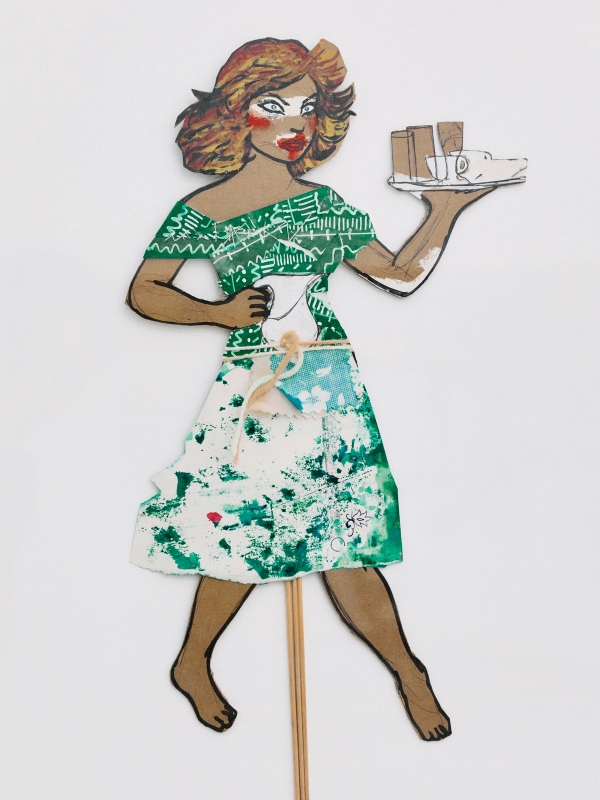
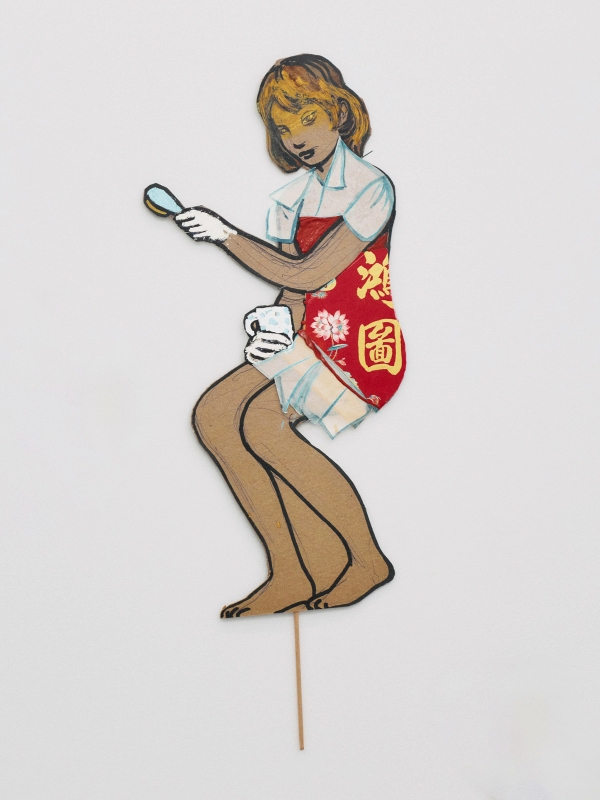
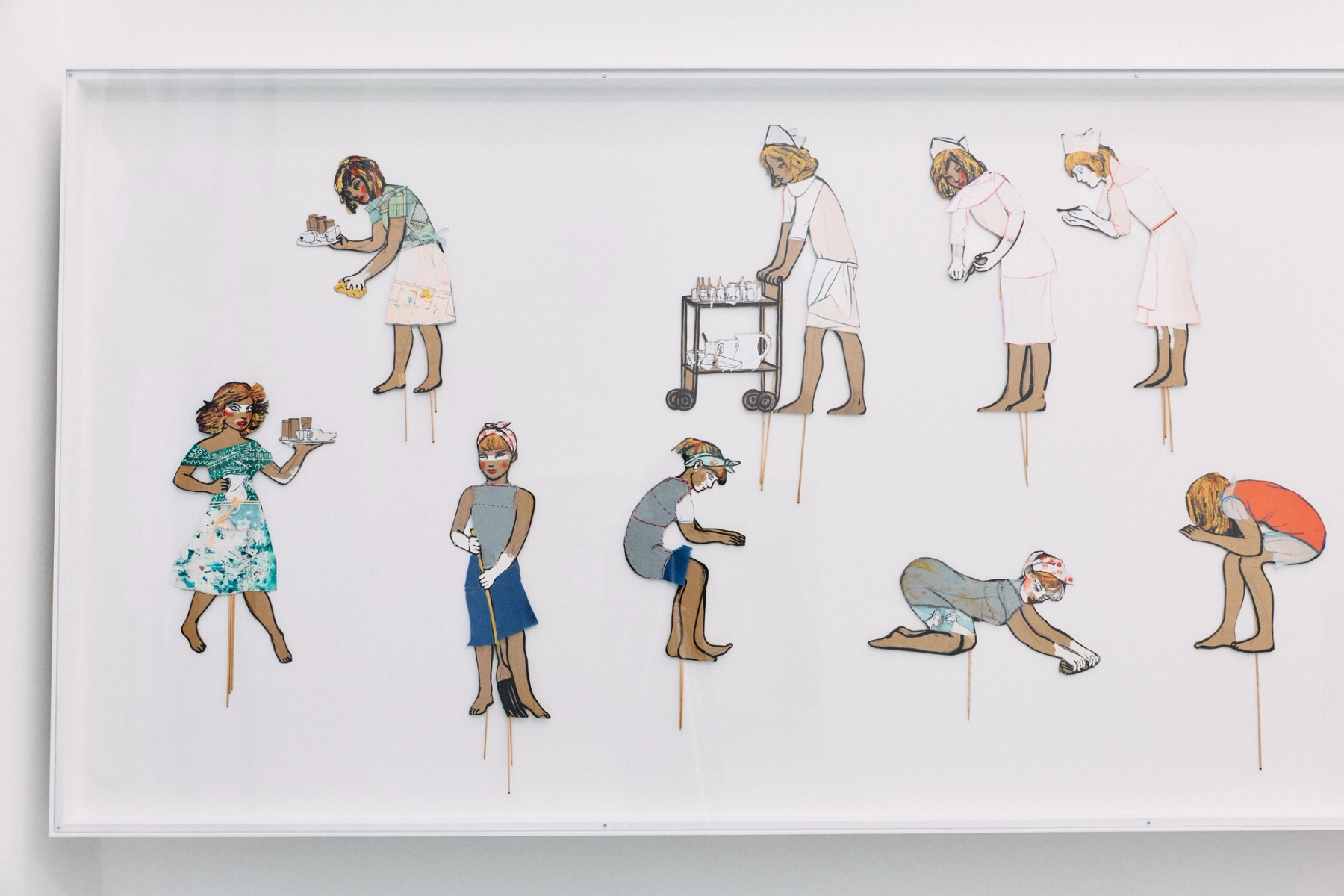
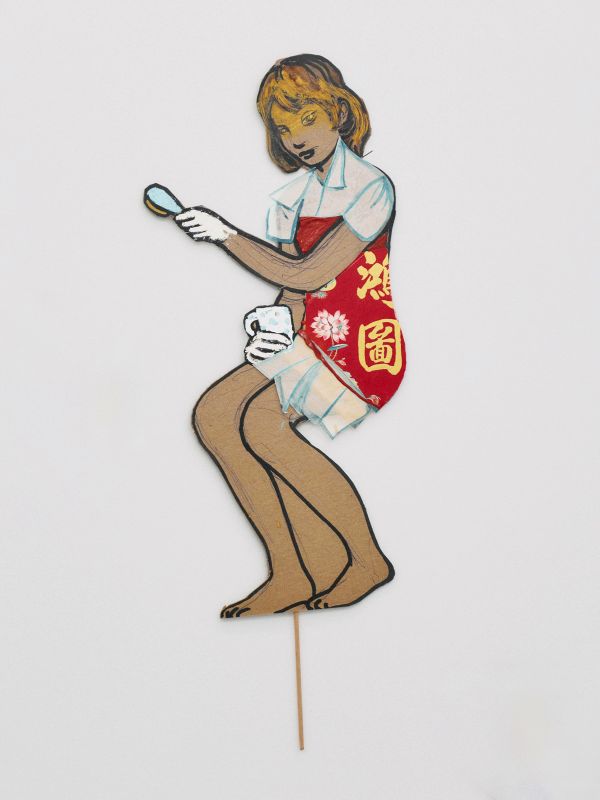
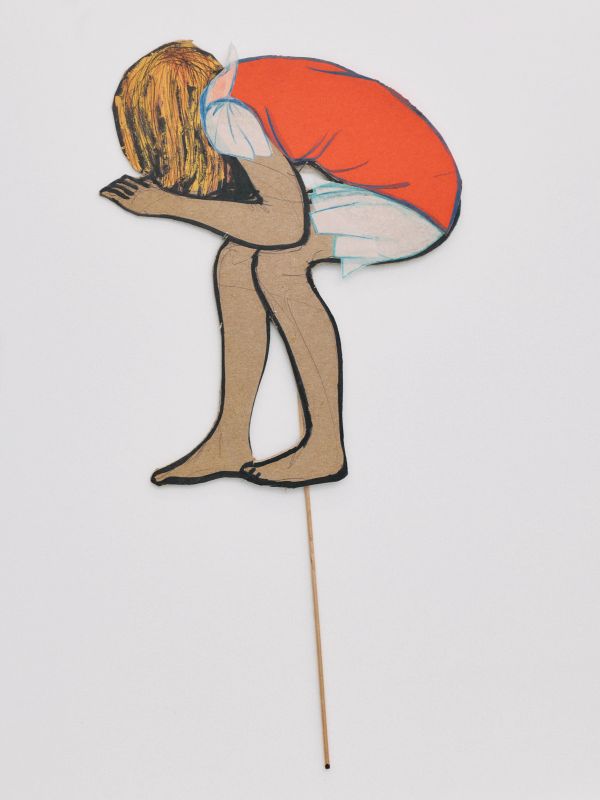
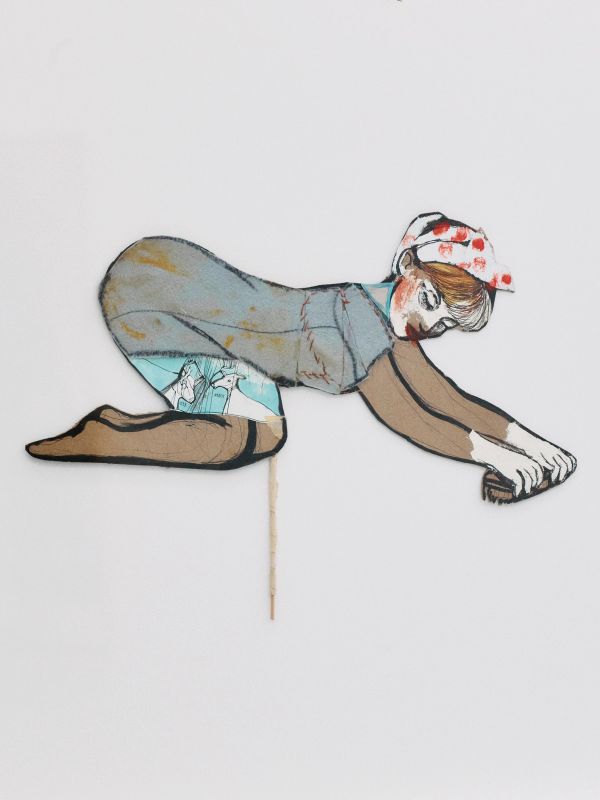
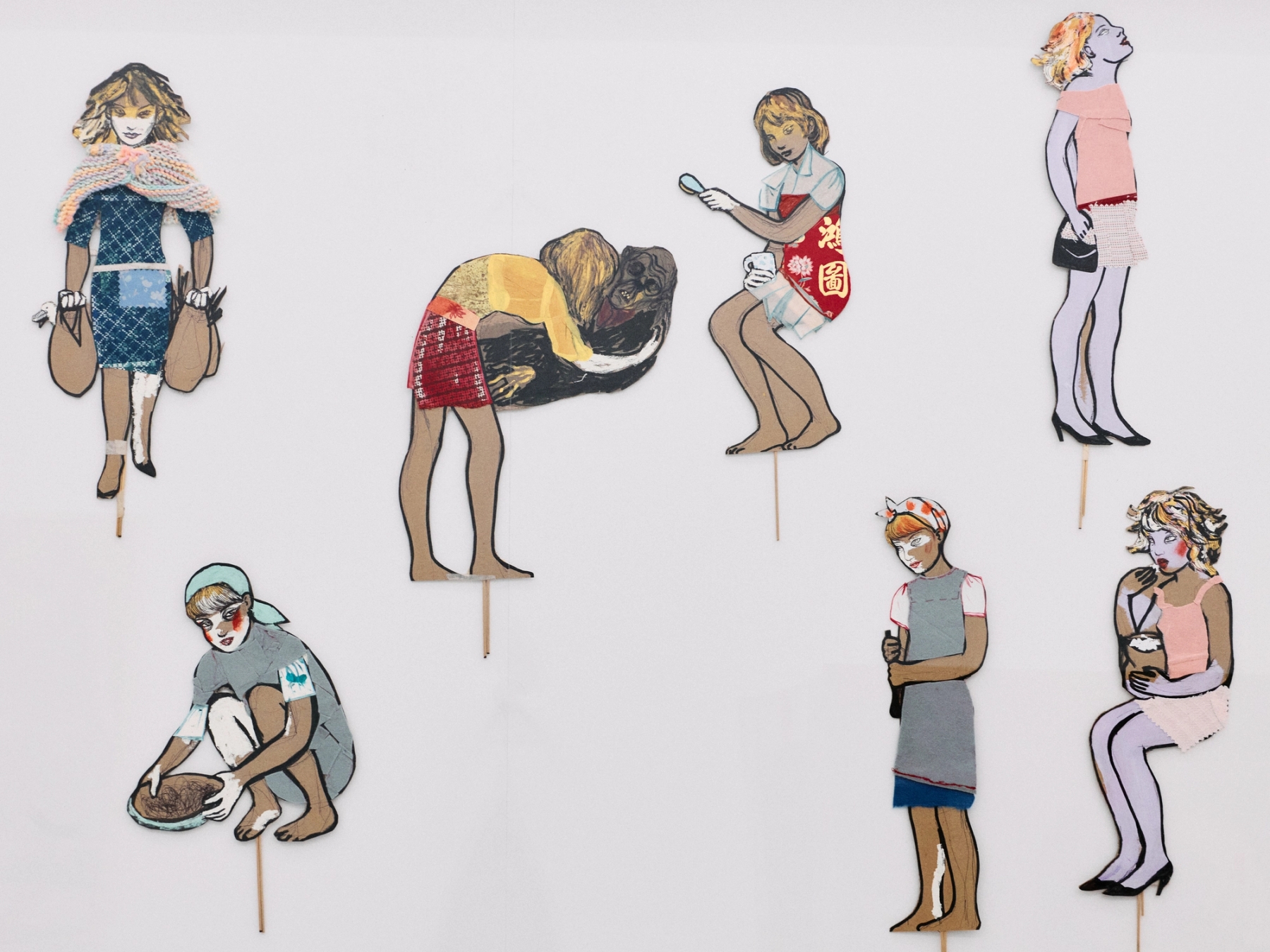
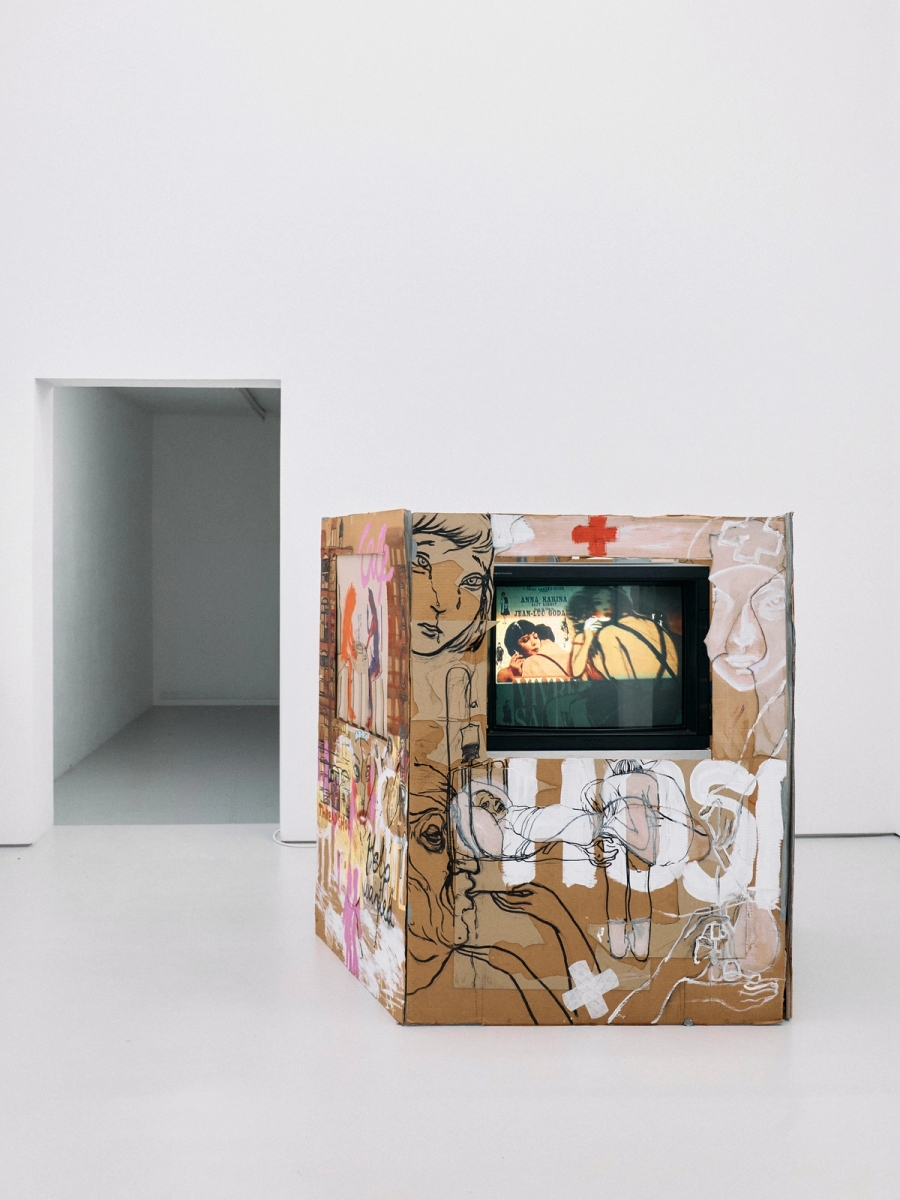
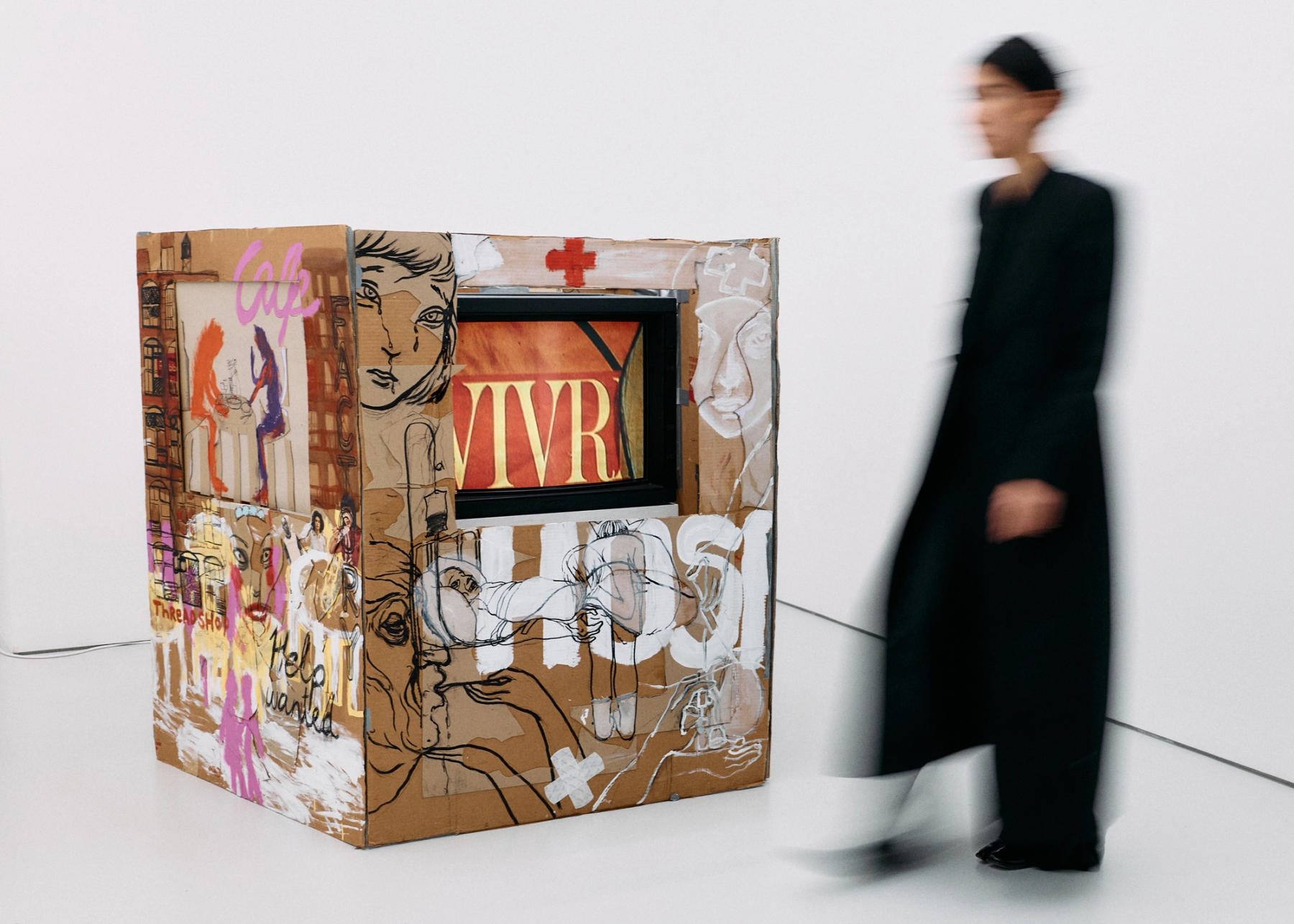
The delightfully charming nymphetish girls of Rita Ackermann are once again gathered beneath the same cardboard roof, after a few decades spent in obscure storage. Vivre sa Vie was first conceived as a live puppet performance, bringing together underground music, experimental cinema and fashion from the riveting scene of 1990s Downtown New York. A niche medium in many regards, puppet theatre was given a new lease of life by Ackermann, who pulled the strings to stage a multimedia performance in 1996. The work is a timeless capture of What It Feels Like for a Girl in the words of Madonna, demonstrating the devotion, desire, surrender and sacrifice all embedded in care. The delicate ephemerality of the work does little to diminish the imposing stance the girls assume. Their drive and determination to labour remain entirely unscathed. Bold in their rosy blush and wilfully naive they remain entirely self-possessed.
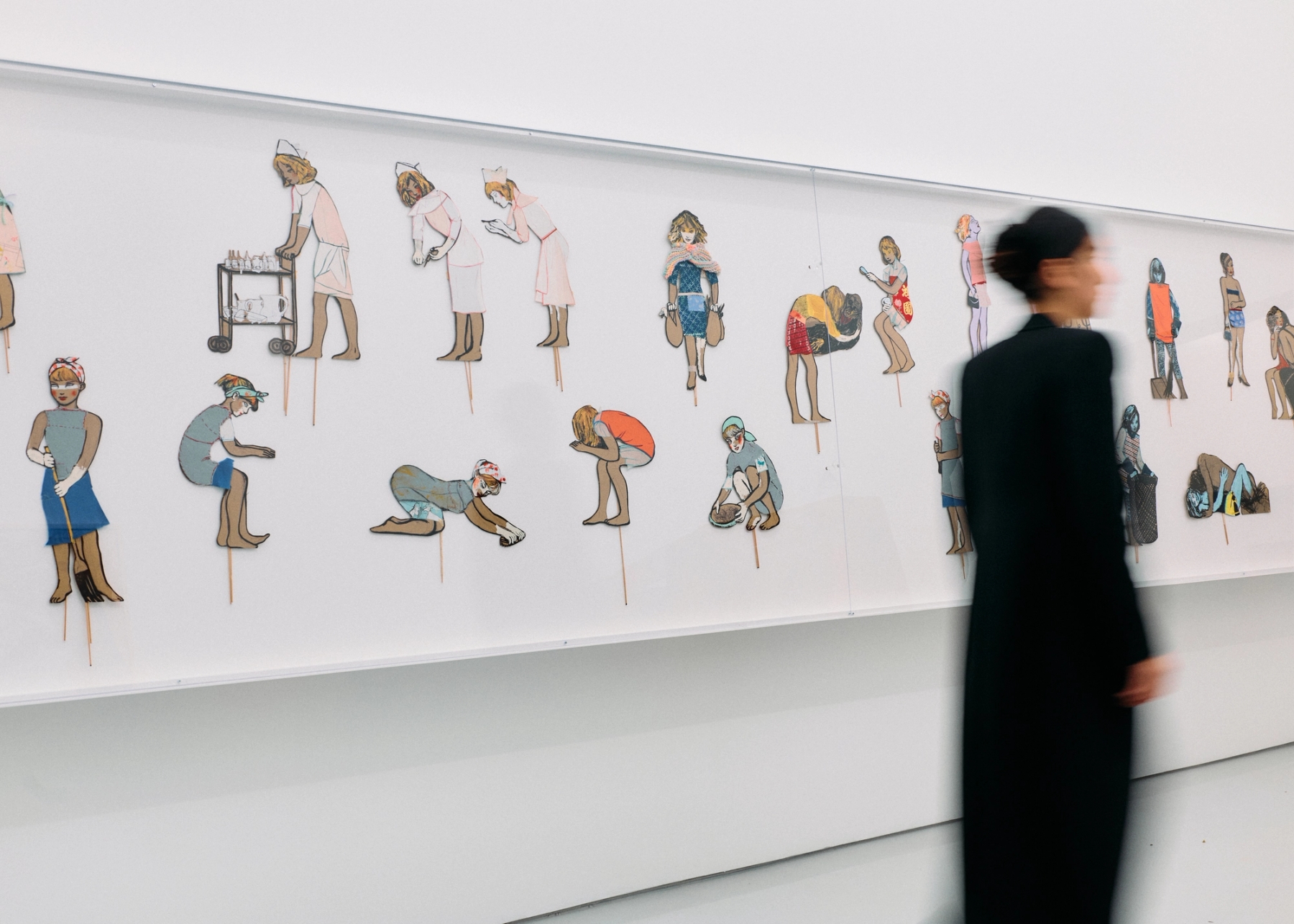
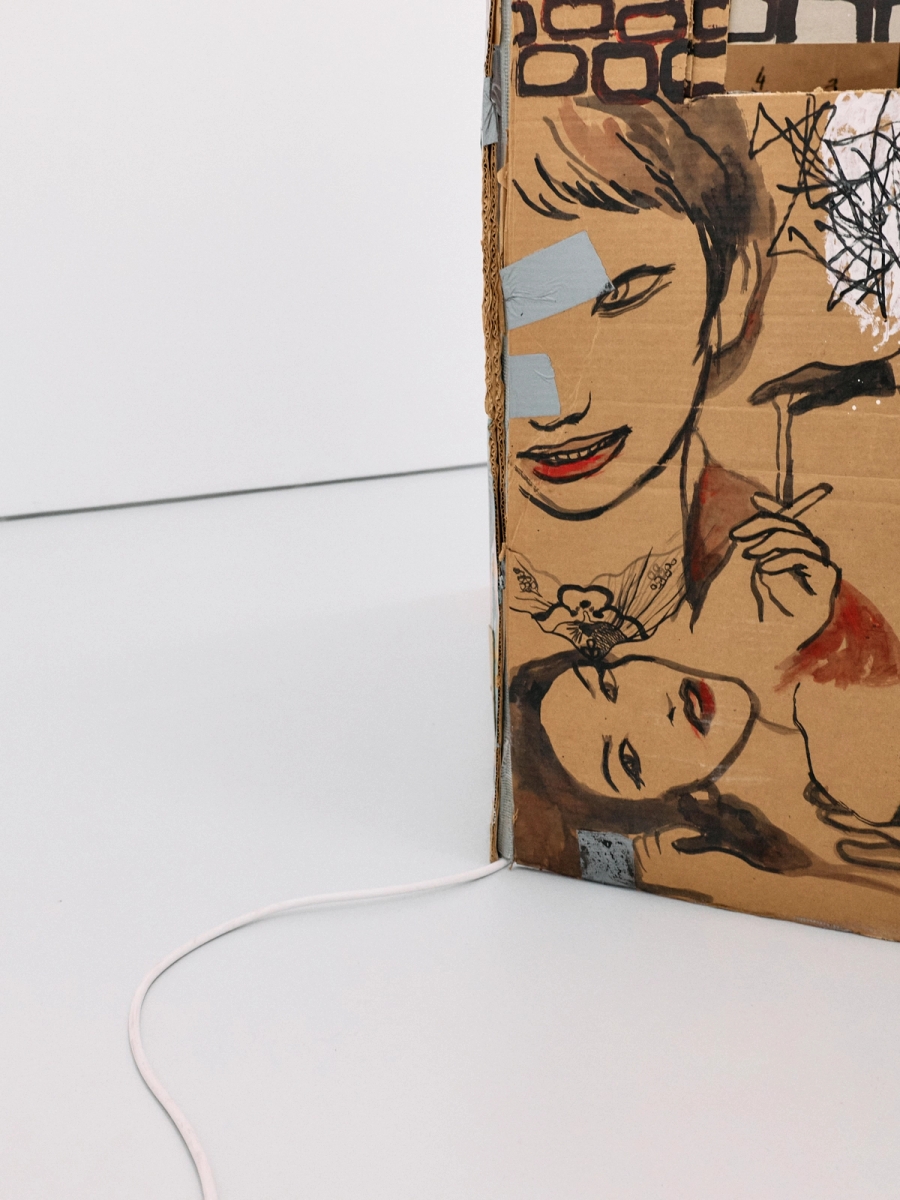
Behind the puppets collective presence lies an equally collaborative approach to the project, emblematic of the Big Apples era’s wonderfully porous boundaries between art, music and fashion. Rita Ackermann moved from Budapest to roam the concrete jungle of 1990s New York. Soon she struck a chord with the local scene for the unabashed emotional candour at the center of her oeuvre. Playing in the tune of the cultural zeitgeist, the narration was lent its voice by musician Kim Gordon of Sonic Youth, Free Kitten, Body/Head. The sound was brought to life by members of the No-Neck Blues Band. The girls were dressed by fashion designer and artist Susan Cianciolo in delicately tied teal headscarves, colourful prismatic crochet and fit-and-flare dresses adorned with folk-inspired motifs. The cardboard surfaces were all enlivened with hand-painted details, one look even invited textile accents in contrasting diamond-lattice patterns reminiscent of traditional argyle.
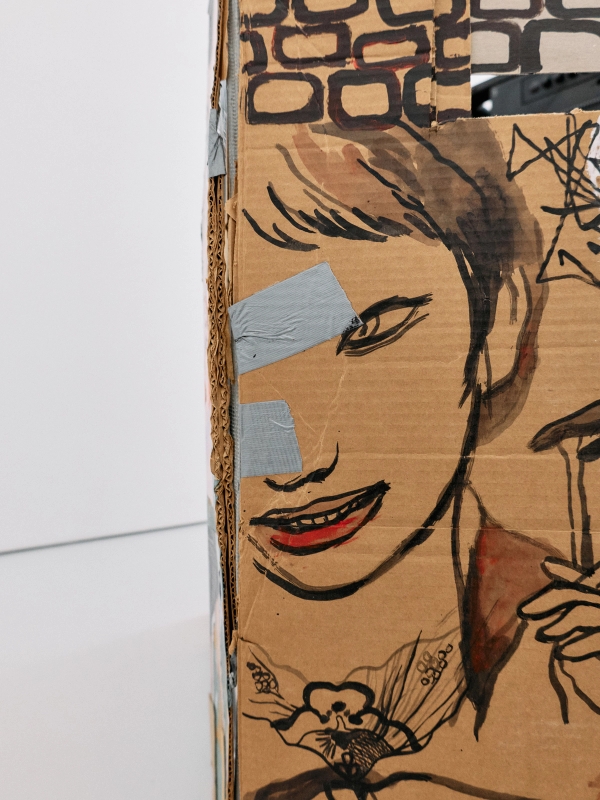
The meticulous costuming and the setting as a whole conjure the silver screen with a particular affinity for the cinematic universe of Godard. Vivre sa Vie borrowed its title from Godard, with Ackermann transplanting the various vignettes of Nana’s journey across occupations onto her own nameless puppet girl. Unlike her cinematic counterpart, the puppet girls seem to possess an altogether different sense of purpose, steadfast in their duties and radically generous. The story now unfolds through a new screen laden sculptural display, replete with intricate painted details, occupying the centre of Galerie Allen in Paris. At its heart, footage from the original and only performance in 1996 plays, reawakening its values for a new audience.
Ackermann's evocative renderings of the female form find another expression in Blind Touch, a new work made this year that explores the rather literal matter of… touch. Ackermann now breaks the fourth wall, extending an invitation to viewers to step beyond spectatorship and take an “active hand” in bringing her art to life. The experience extends beyond the tactile, finding its way into the auditory, too. A track from Ackermann’s solo record Slave Songs (Sunny Expends) accompanies the sensory topography. Image and sound bound in a reciprocal pull. A collage that comes full circle, folding past and present into one another, in a perpetual ouroboros. Traversing the distance between figuration and abstraction, philosophical underpinnings and media references, Ackermann's work lends itself to a multitude of readings, some of which are explored in conversation with Baptiste Renoux, Associate Director at Galerie Allen. Their conversation meanders from Godardian influences and Derrida’s notion of hostipitality to the “colossal collage” that is Vivre sa Vie, before getting to grips with the question of “touch”.
Baptiste Renoux: You've spoken about how naturally you found yourself working with musicians, filmmakers and designers in downtown New York in the early '90s. How did a puppet theatre come out of that world? What did the people you worked with bring to Vivre sa vie that you wouldn't have thought of on your own?
Rita Ackermann: Well, it wasn't really a collaboration that started from the very first steps of planning a puppet show together, with other artists contributing. It rather happened like in that folk fable titled Stone Soup, when a stranger who sojourns in a town, to attract the attention of its citizens, cooks up a magical soup with ingredients that the citizens themselves provide. Puppet theatre was a practically unknown, foreign, and unpopular performance medium in the NYC contemporary art-related scene. First, I had to attract curiosity with the story and the physicality of the cardboard production to get the collaborators on board. So pretty much everything was made by the time the collaborators came in. Susan dressed the "naked" cardboard cutout puppets, and Kim and the musicians narrated the ballad of the girl for the performance.
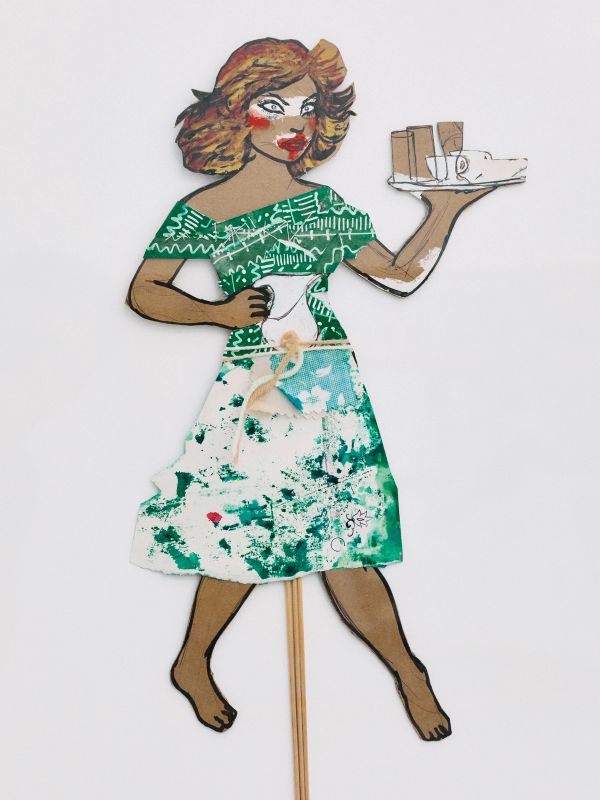
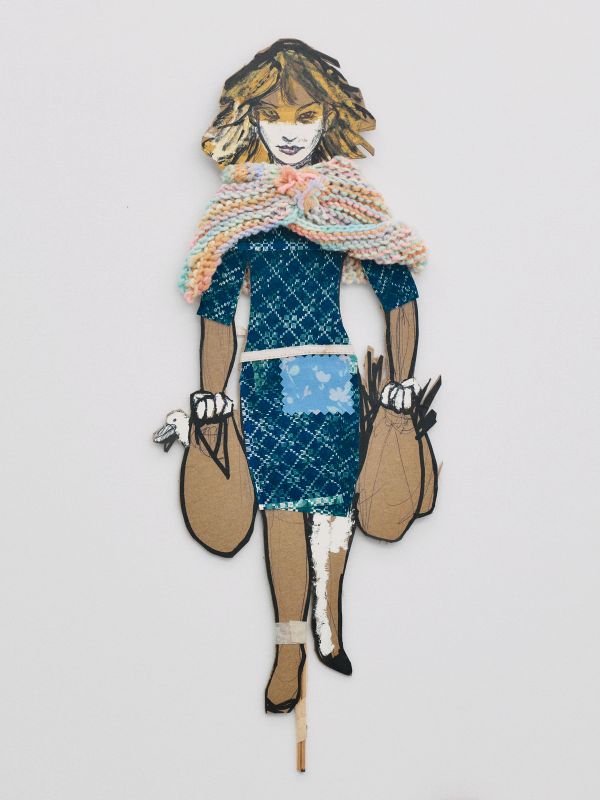
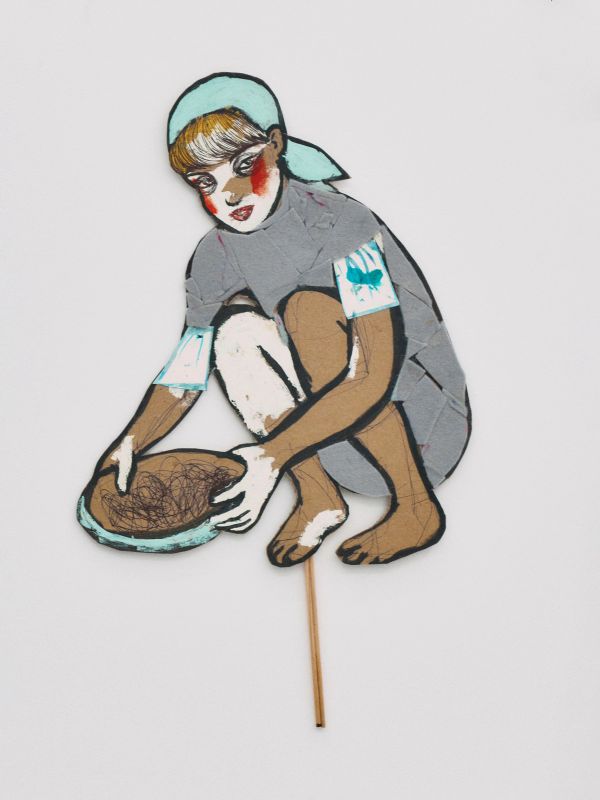
You took the title Vivre sa vie from Godard, but the woman in your puppet show has a story of her own. You describe her as someone who never learned to say no. What did you recognise in Godard's film, and where did this woman begin to take you somewhere else?
Godard's Nana has very little authority over her own life from the moment she decides to become independent. She is like a flickering light, a beautiful butterfly flying into the light to be seen for a second and disappear at once. Nana is more an observer of her own life than a participant in the action. Things happen to her, and she doesn't mind them until she has no control over her own life. The film starts with a quote from Montaigne: "Lend yourself to others, but give yourself to yourself." Nana fails to live by this principle. She is a sojourner in her own life. This is where my puppet girl character (she doesn't have a name) picks up the lost thread where Nana failed to find the purpose of her own existence.
The puppet girl has a strong drive to find purpose in life, to put herself in the service of others, even if it is to the extreme. She gives herself away, but she is always, and increasingly, more fully in control.
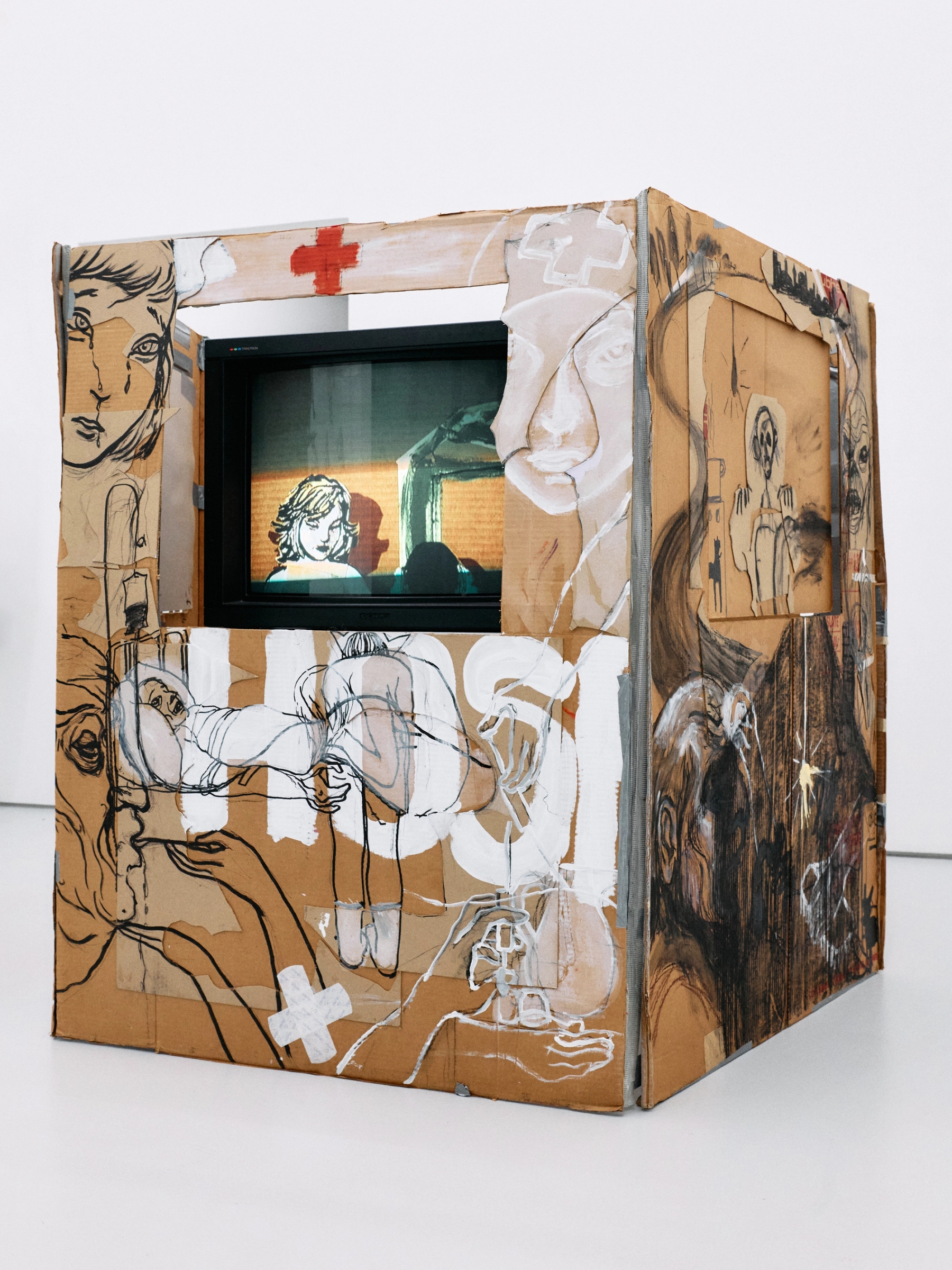
The first letters of the word hospital appear in large letters on the puppet stage. When we were installing the work in Paris, we got talking about Derrida's word hostipitality. He hears a trace of hostility in hospitality itself. The person who opens the door also has the power to turn someone away. Your character seems unable to do that. Was that question important to you when you made the piece, whether she was free to choose whom she cared for?
Yes, that was an interesting point you raised about Derrida's warning about the double-edged sword of hospitality through the invention of a new notion. It is indeed fascinating. Did he elaborate on this hostile hospitality, connecting it to the dilemma of when the servant becomes the master?
In a way, yes. He recalls that the Latin hostis first meant the guest, the stranger, before it came to mean the enemy. And he describes how the host, the one who welcomes, ends up becoming the hostage of the guest. Whoever opens the door is never entirely the master of the house.
That dilemma was definitely a driving force in the puppet girl's story. Her sense of freedom cannot be attained by anyone but herself; therefore, she overrides all her masters who attempt to possess her physically or spiritually.
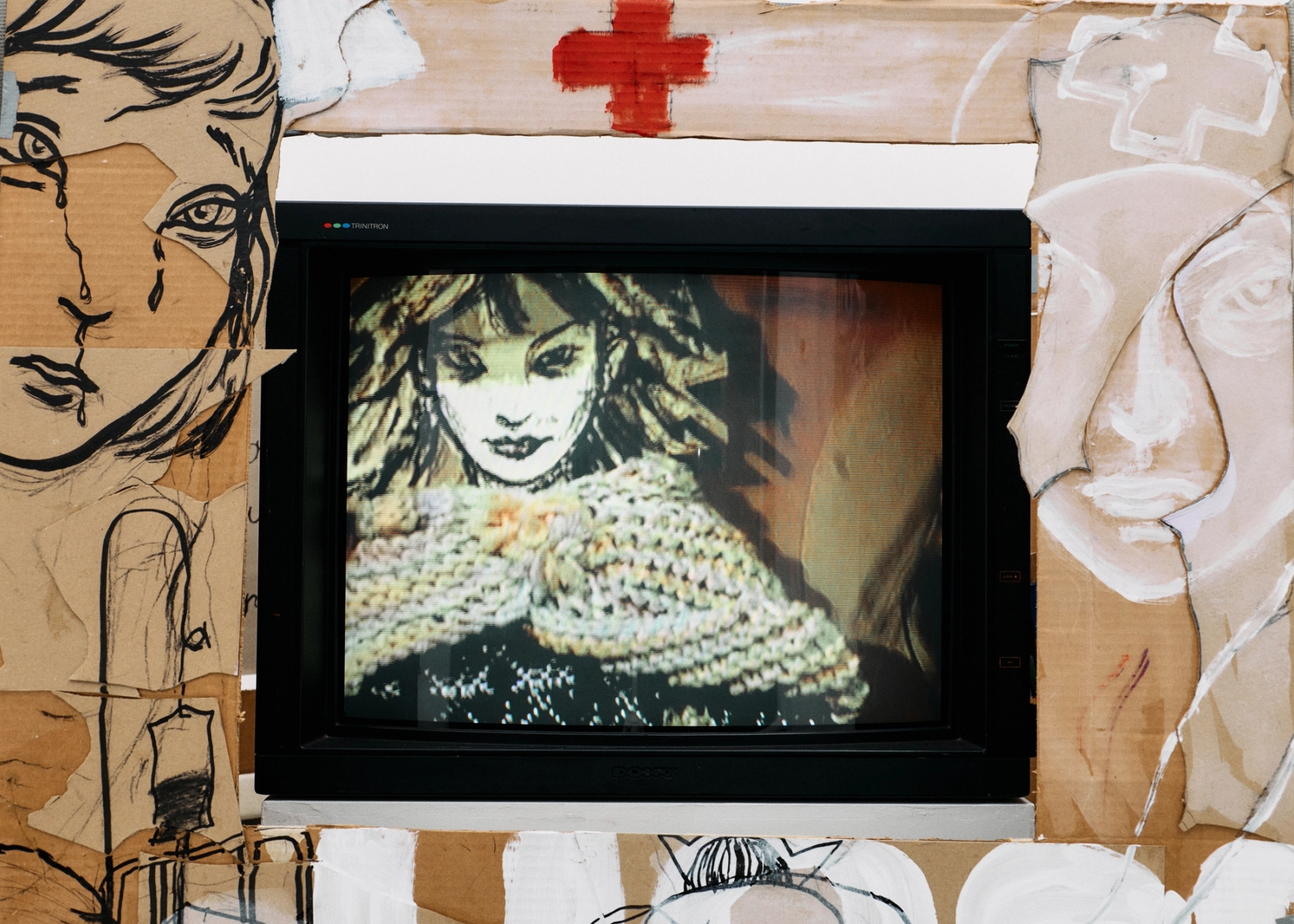
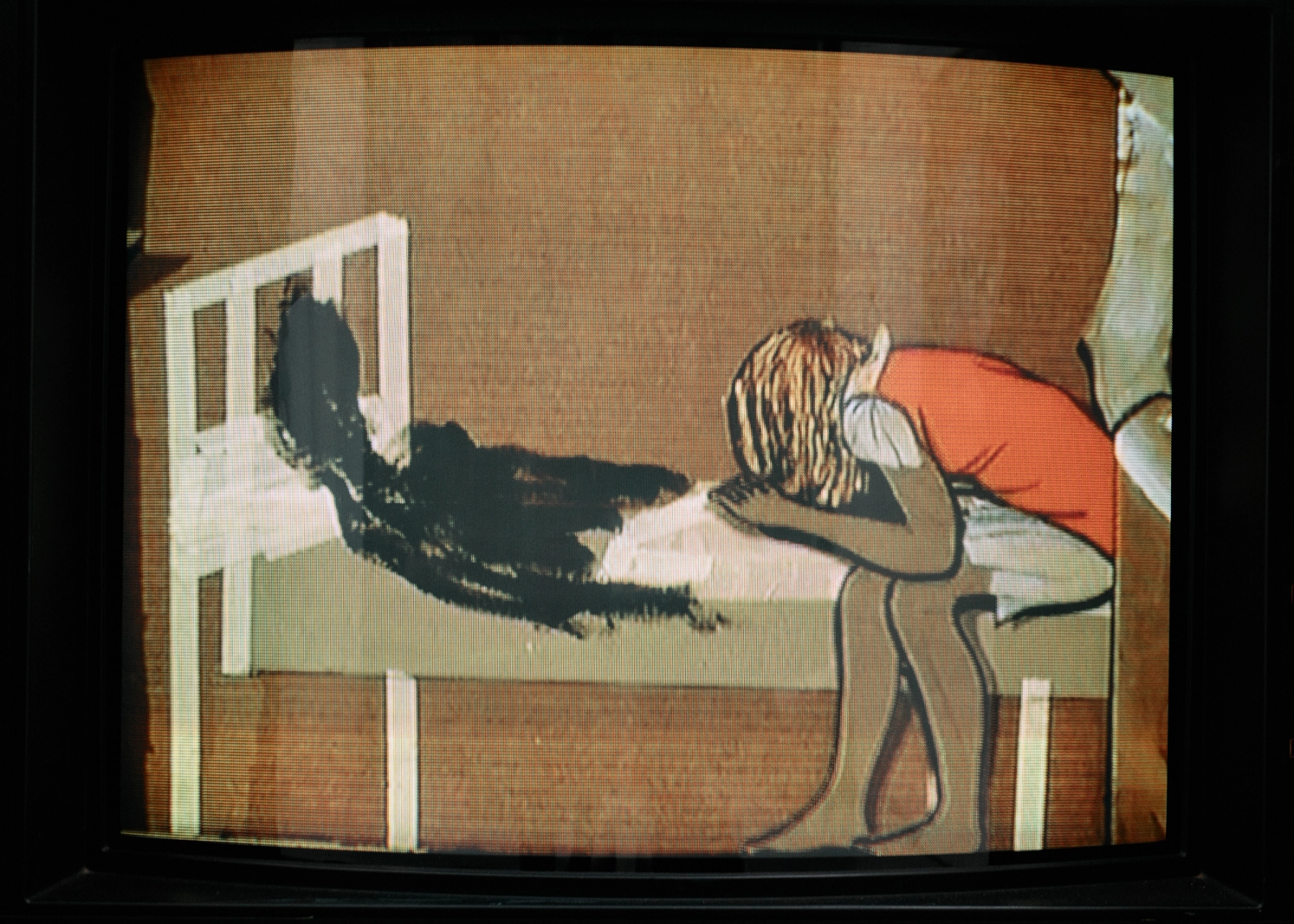
I know you'd gone back to the footage over the years. What kind of life did the puppets have in the meantime? I wonder if any of them kept turning up in your drawings or paintings, even while the puppets themselves were put away.
They didn't appear in my work for 27 years, until three years ago, when Joseph and I started playing with the idea of revisiting the production. Then I pulled the puppets, the scenes, and the stage out of storage and started photographing their fronts and backs. These photographs became the new materials that led to new mediums for a new way of approaching collage. In a way, the entire puppet show was a handmade production of colossal collage.
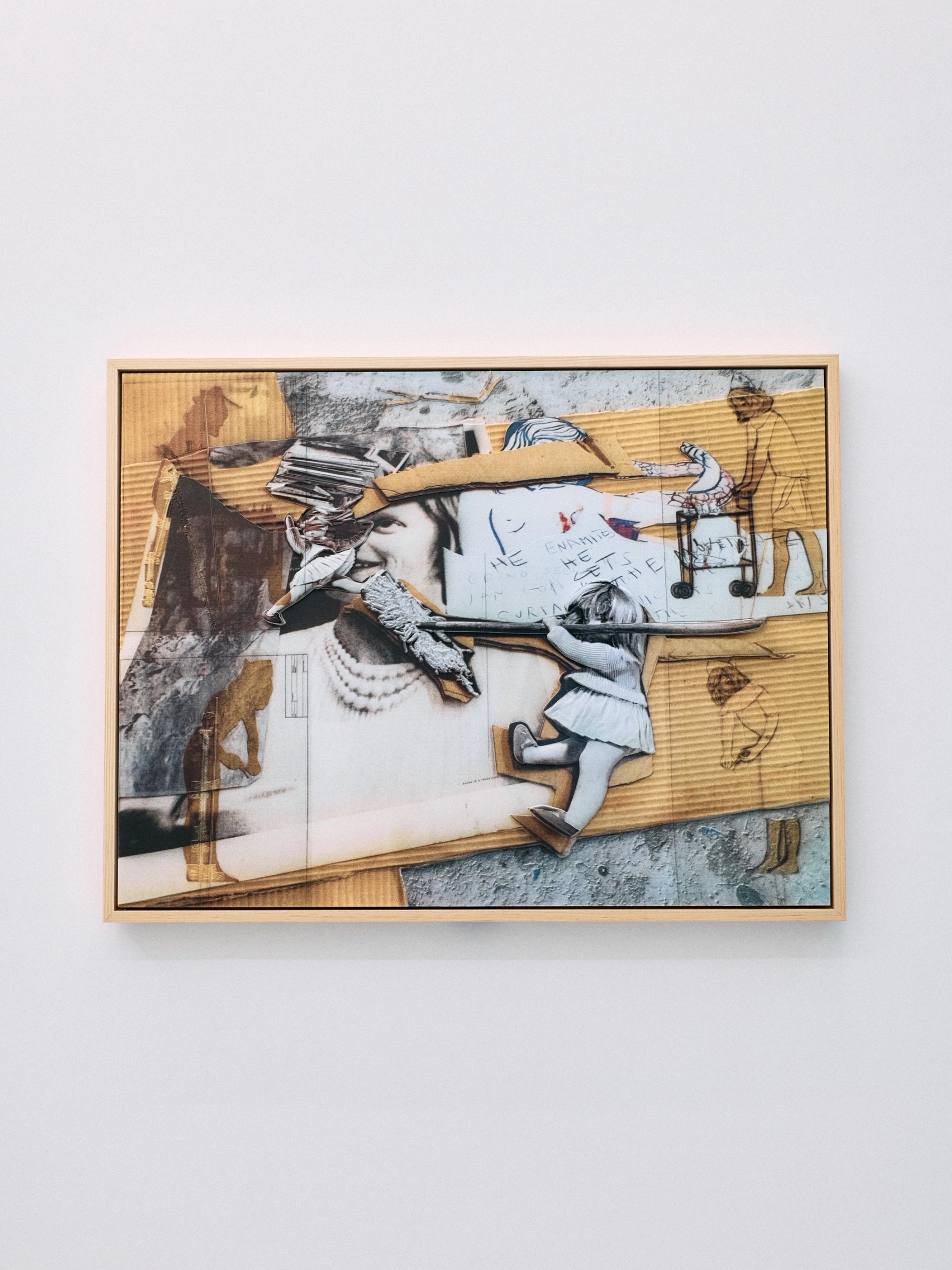
In Blind Touch, the puppets become part of a collage that visitors can run their hands over. As a painter, what changes when a work is meant to be touched?
Touching and "having the touch"—that is what interests me nowadays. To make the distinction between a great painting and a mediocre one, one must see that the great one has the "touch."
Can people see that "touch" in an artwork through actual touching?
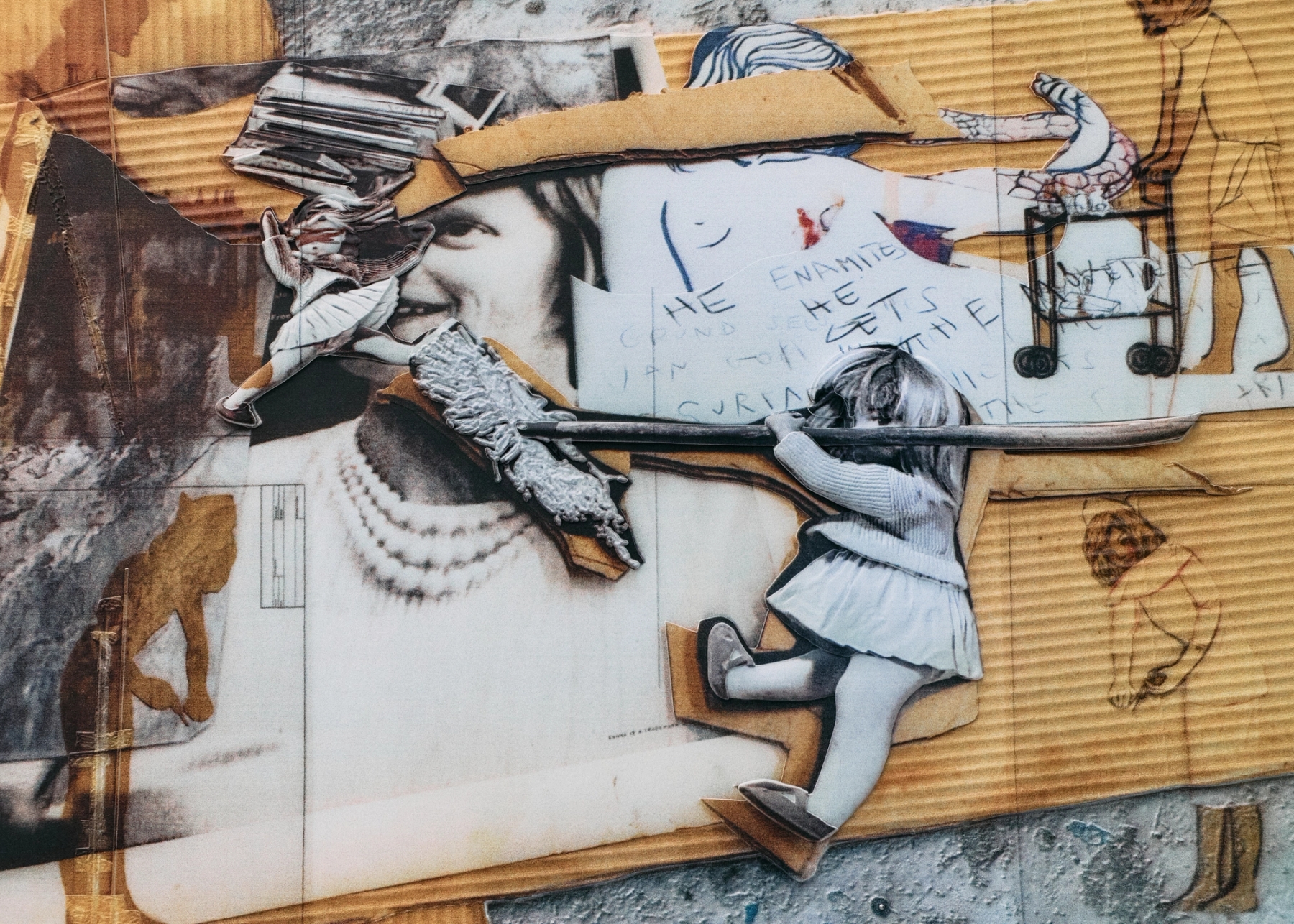
In the theatre, a puppeteer's hand makes a figure move. In Blind Touch, a visitor's hand sets a Hungarian song playing. Where did you first hear that song, and why did you want us to find it by touch? I keep thinking of the title of your film Listen to the Image. What do you hear in these figures?
Blind Touch was made to be an automatic collage that experiments with all kinds of printing possibilities—from an Epson 5660 photo printer to 3D printing on a bas-relief that was specifically developed for blind people to be able to touch photography and art. The relief that serves the blind to experience art must contain a sound effect in order to listen to the recording simultaneously while touching the topography. The Hungarian folk song that I sang for a solo LP titled Slave Songs in 1996 automatically became the choice to be the "musical score" for this very new collage experimentation. I say it was an automatic decision because when things are right, they come through like accidents or miracles and change everything around. They don't unfold immediately in their own time; rather, they provide new dimensions through which to observe reality. That is what Godard also says: "Sometimes you have to listen to the image in order to see." And that is what happened to the Jewish people at the foot of Mount Sinai when God gave them the Torah—they saw the sounds.