Charles Ray: The body as a manifold
Interview Timothée Chaillou
Charles Ray speaks about sculpture as others might speak about physics: with precision, deliberation, and a wary distance from narrative. In this conversation, conducted on the occasion of the presentation of Everyone Takes Off Their Pants at Least Once a Day (2024) at AMA Venezia, he dismantles, one by one, the narrative readings that our image-saturated, film-driven age projects onto his work. Content, he argues, is a formal material, “malleable like clay”; intention dissipates early, the author disappears soon after, and what ultimately remains is the sculpture itself, its formal coherence and its capacity to hold.
Ray sets out some of his key ideas: the body as a manifold, a surface upon which sculptural events take place; realism as distinct from the “realistic,” a matter of focus rather than detail; and space as sculpture’s primary medium — one does not place a sculpture in a room, but carves it out of the space that surrounds it. From Huck and Jim to The Fallen Horse, from the plinth that “comes into being with” the work to the equestrian statue embedded in the civic sky, a conception of sculpture emerges in which sculpture illustrates nothing: it enters the world. And it is this inscription — this embedment— that allows it to endure.
Conversation with the artist at the National Archaeological Museum in Athens, ahead of the opening of his first institutional solo exhibition in Germany at the Fridericianum in Kassel. On view through January 3, 2027.
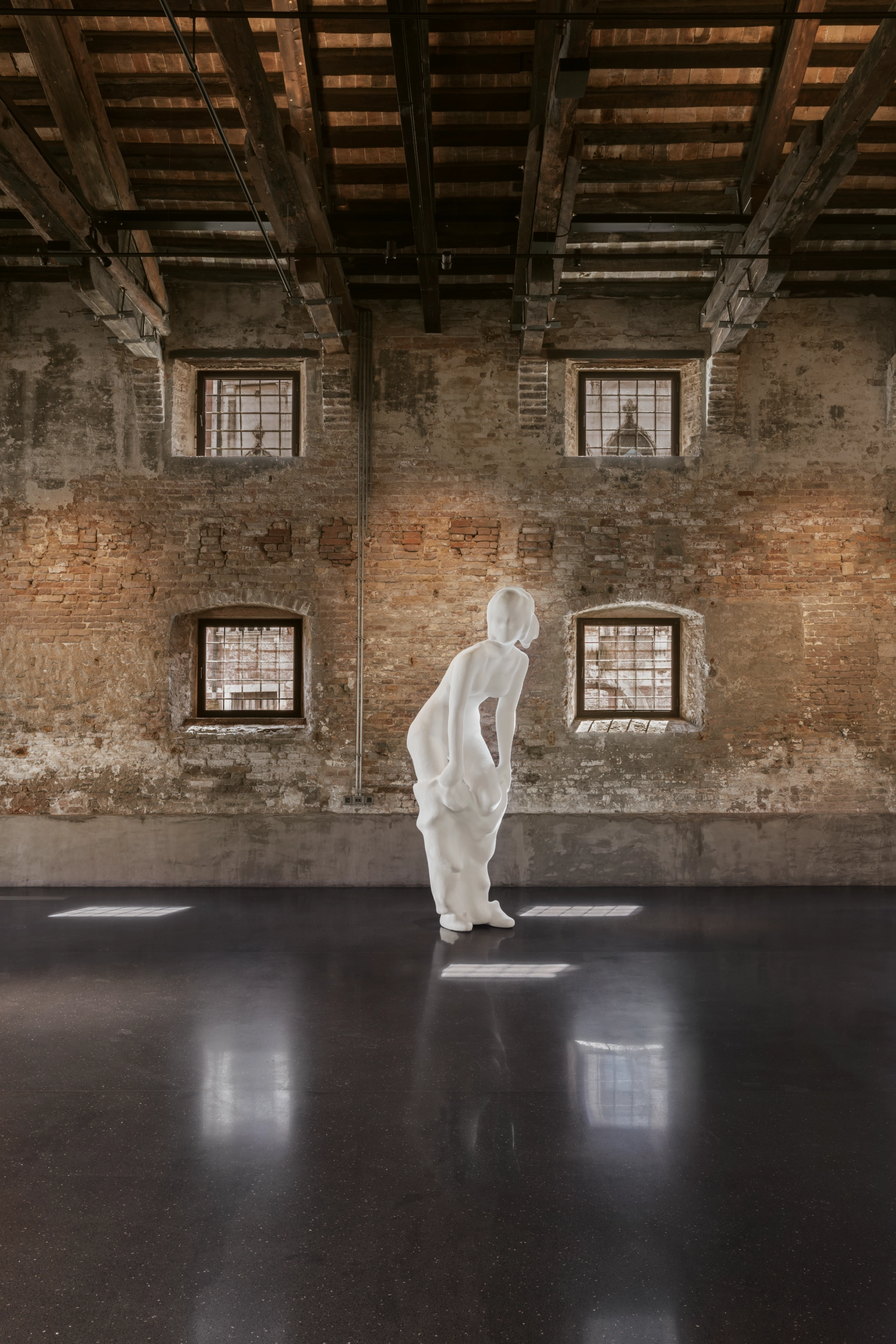
Timothée Chaillou: Since you are currently showing Everyone Takes Off Their Pants at Least Once a Day (2024) at AMA Venezia, I would like to begin our conversation with this handmade paper sculpture. As for the title, I cannot clearly tell whether she is taking something on or taking something off.
Charles Ray: It doesn't matter that you don't know whether the clothes are coming on or coming off. What is important is that the title is an element of the work. It is not literal. The piece is not "about" that. It is more about form, spatial presence, and how it exists in the world. The title is one element among others.
The sculpture has a narrative in it, but it is not driven by narrative. The narrative, the material, the form, and the positioning are all driving toward artfullness.
TC: It reminded me of Michelangelo's Rondanini Pieta, his final unfinished sculpture, and also of what Katharina Fritsch once said: that what matters to her is being realistic, but not too realistic. That is something I feel in your sculpture as well, because some parts have a great deal of detail, while others are more abstract or blurred. Your girl's face looked almost like arock, and it also seemed as if she had many faces at once.
CR: Realism is not the same thing as being realistic. To make something realistic is not simply to render every detail. A lot depends on focus. Right now, as you're talking to me, some things are in focus and others are not. It is not necessarily your face that is in focus; maybe your shoe is. Attention moves around.
If the sculpture’s face were fully realistic, you would stop there. You would stop and look at the realism itself. But as in life, while you are talking to me, you are not looking at only my face. You do not stop or get stuck on one aspect of a person.
TC: Anthony Caro, thought of the floor as the last element of a sculpture. When you think about your sculptures on the floor, are you concerned with the floor as a stage? How do you decide when to use a pedestal and when not to?
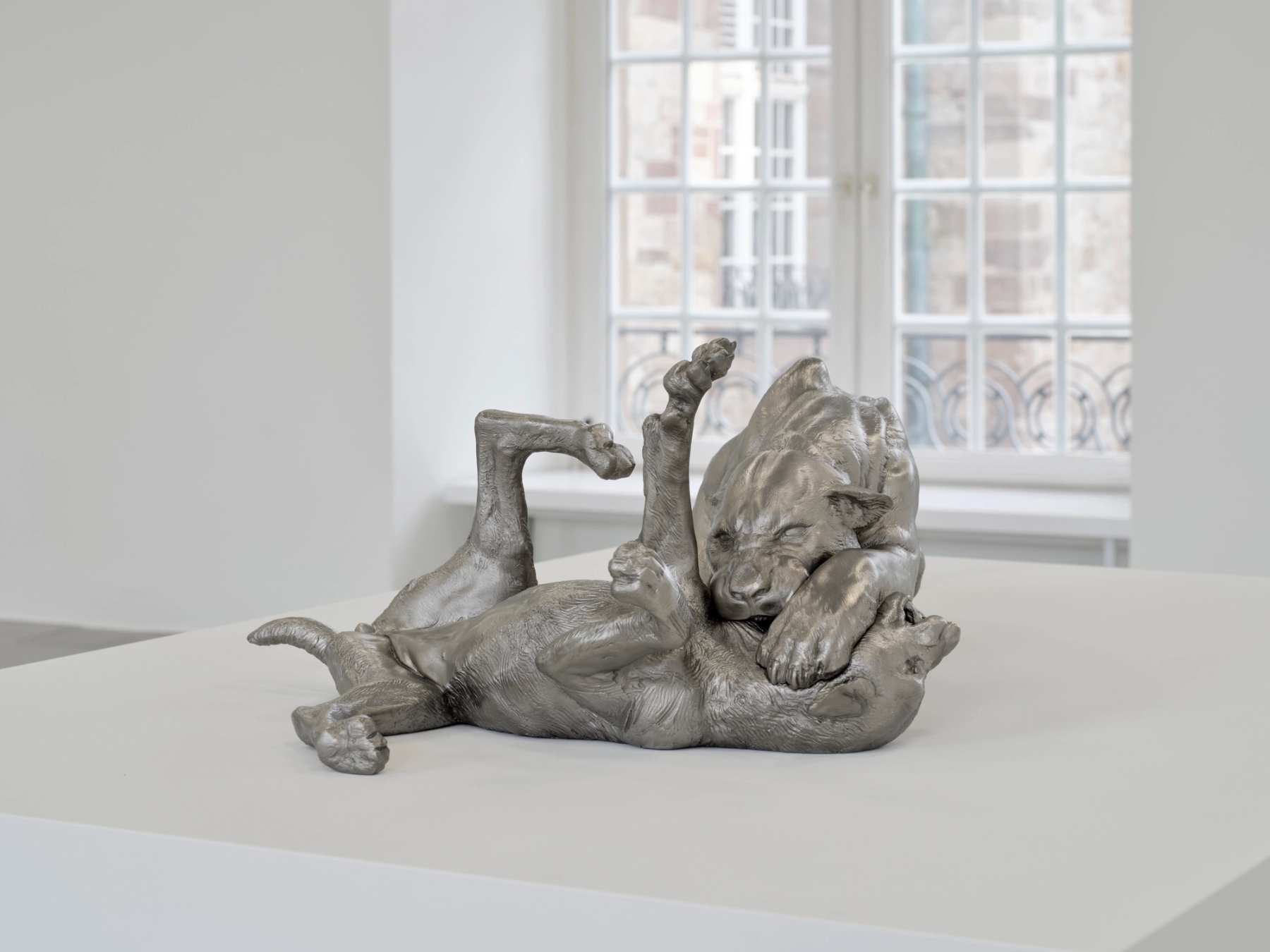
CR: An example might be Mountain Lion Attacking a Dog (2018). Originally, I had a real mountain lion in the studio to photograph for the sculpture. We put a steak on the floor and tried to get it to attack the meat. Those photographs became the source material. At first, the sculpture was on the floor and it was full scale. But I could never get beyond the descriptive aspect of "a mountain lion attacking a dog.” I started thinking about it in a purely narrative way. Looking at it on the floor, you begin to ask: What is it doing there? Who put it there? What does it mean? Who made it? And I could not get past those questions.
Then one day I thought that if I reduced the scale and put it on a table-like base, it would fit differently in the mind. You would not look at it as something literally present before you; it would be more like a thought in your head. Shrinking it and giving it a base made sense, rather than keeping it at floor scale.
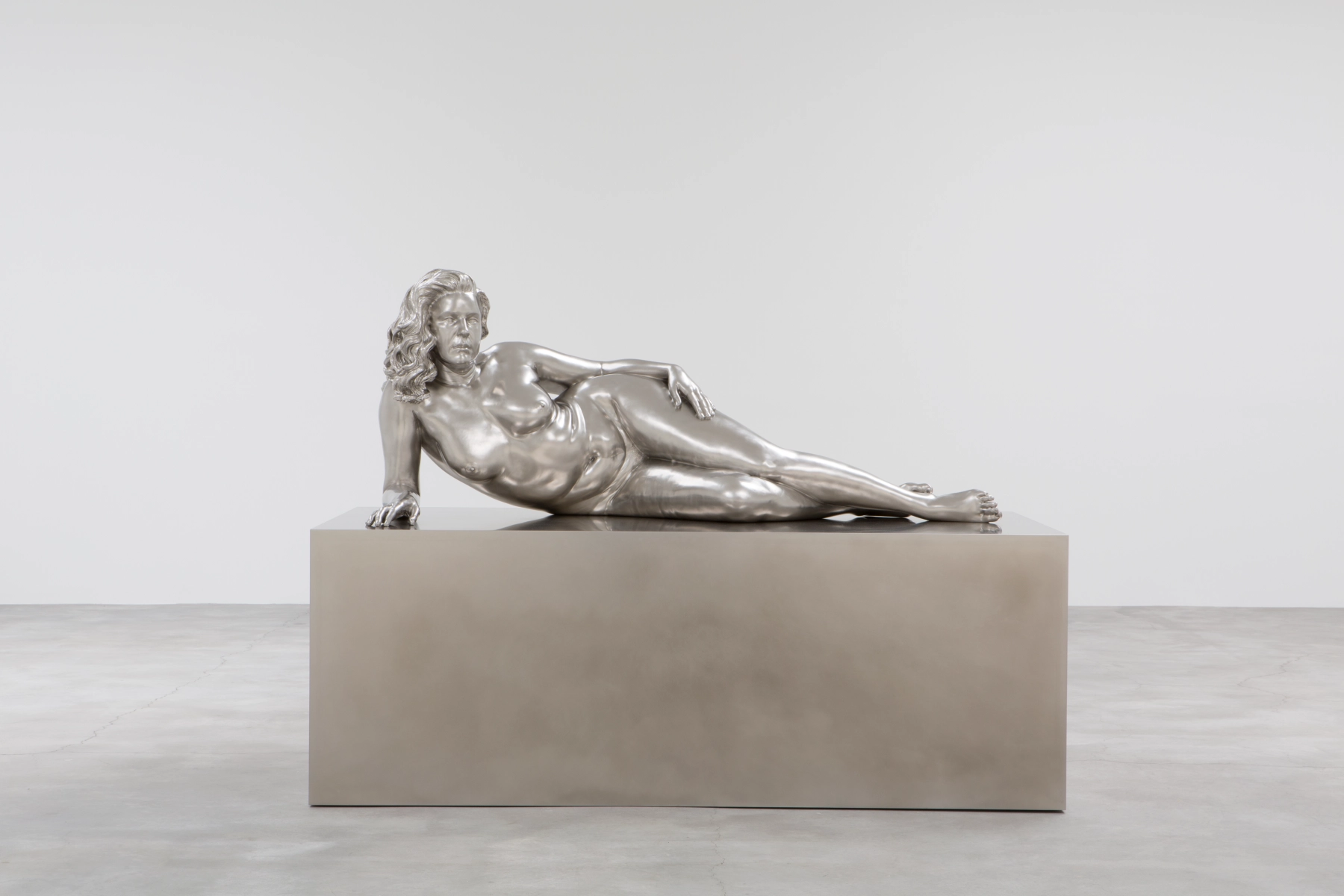
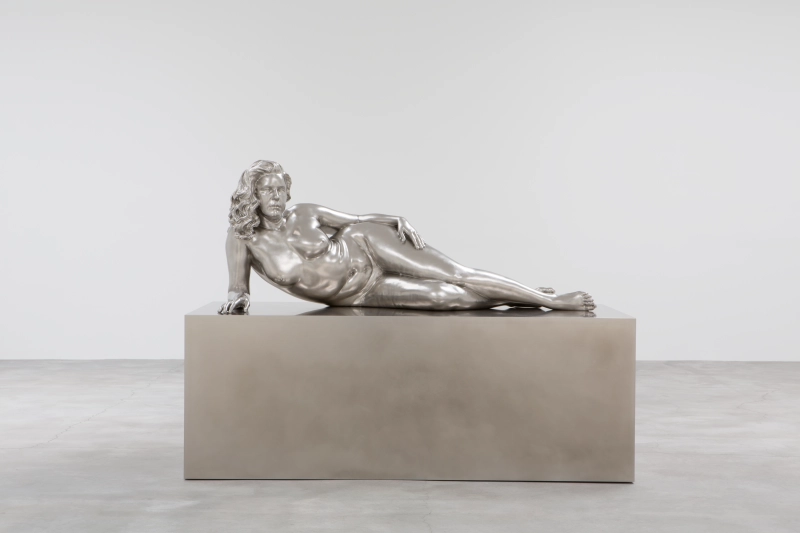
The Reclining Woman (2018) was originally conceived on the floor. It was like someone at the beach. On the base, it took on more of an abstract, art historical reference. The base is solid as well and in the same material. In every case, the thinking is very specific. It does not evolve as an abstract idea from the outside; it evolves from inside the sculpture itself. If it is on a base, the sculpture is not simply placed on it. The base is part of the work. I would not say the sculpture just sits on the base; they come into being together. I do not have an ideological attachment to Caro's use of the floor. If it is useful, it is a beautiful thing. Sculpture can live on the floor.
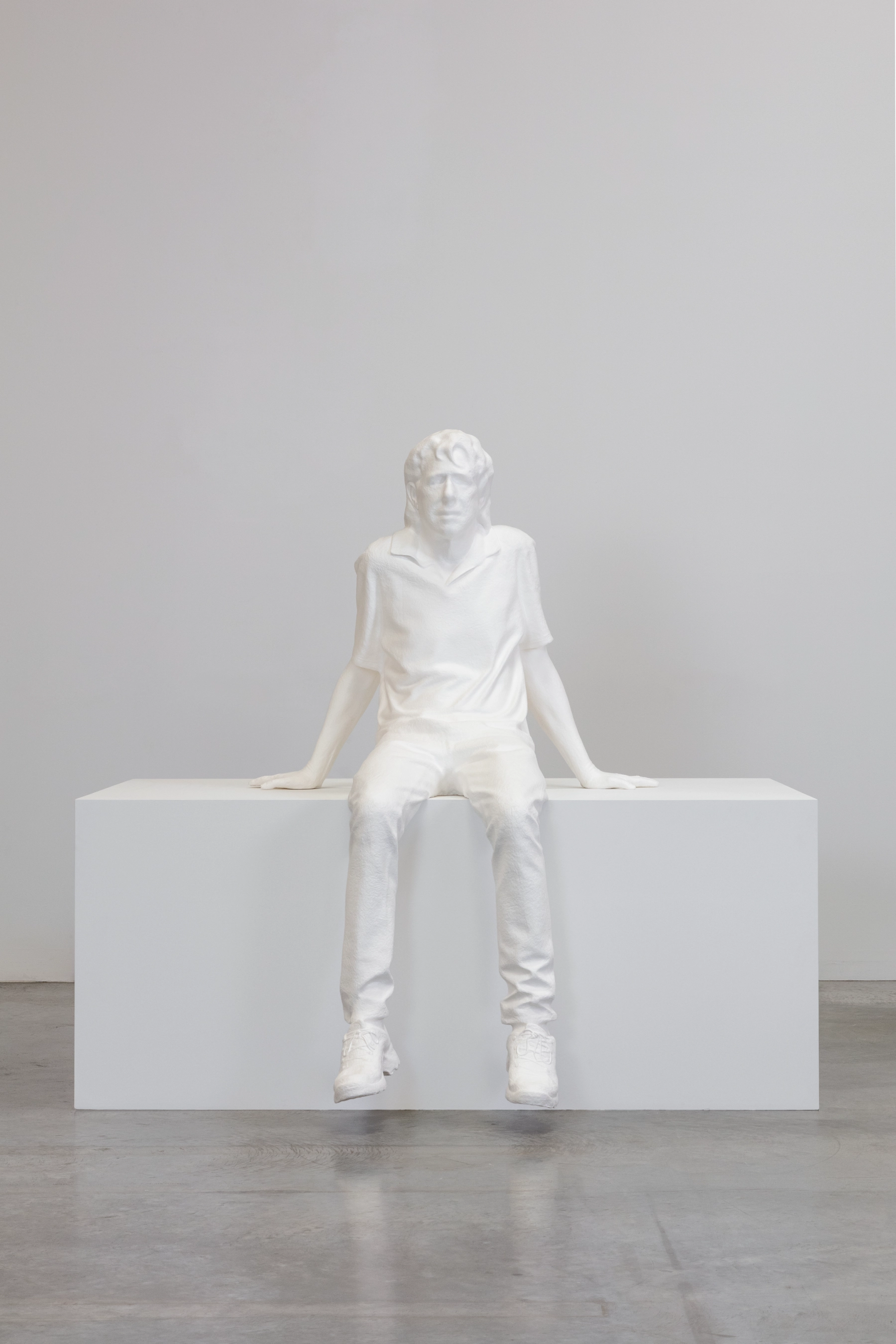
TC: And what about your self-portrait seated on a pedestal, Return To The One (2020) ? It is almost as if you are playing with it, both materially and symbolically.
CR: The pedestal is beautiful. I sat on it many times. That pedestal began as a plywood box in my studio while I was working on the sculpture and its earlier versions. One of the earlier versions was made in fibreglass. The pedestal evolved with it; it came up with it. It seemed appropriate for that paper sculpture to sit there - not in a merely illustrative way, but as part of the sculpture.
TC: For many years, you produced sculpture that was mostly white, grey, or silver. And in recent years, colored flowers have appeared more and more in your work.
CR: Color came gradually over many years. I originally made the flowers for my wife. It was something I did to pass the time during the day in the studio, while other things were being worked on and sometimes at home at night.So, it became something I do, and I enjoy working with color very much. The flowers have evolved in how they are drawn, but in essence they are armatures for color. That way I do not have to ask myself, "What am I going to draw today?" I can simply begin by working through color, by finding a relationship between colors. A lot of people do not like them because they are lovely or too light, and I understand that. They can look like a teenager drawing in a notebook, but I enjoy finding those color relationships. Theyare intuitive, and they are faster. Some of my sculptures take ten years to make. I can make a small flower drawing in a single night, and I am fully engaged in it.
TC: And when you made Portrait of the Artist's Mother (2021), were you already thinking about putting flowers on it, or did that come later in the process?
CR: I had an Indian sculpture of a woman prostitute posed in a sexual way,and I was intrigued by it. I was thinking about how I could interact with that sculpture. I had a version fabricated and painted green. It was just an intuitive thought: maybe I would make one and paint it green. Then one day I went to pick it up, and the fabricator said, "Here's Shrek'sgirlfriend for you." Since Shrek is a green character from cartoons, that ruined the idea for me. Once it could only be read that way, I lost interest. Then I came back to it and thought: if I made it in paper, I could put flowers on it.
TC: Some of your sculptures depict dressed figures, and some are naked, like Huck and Jim (2014).
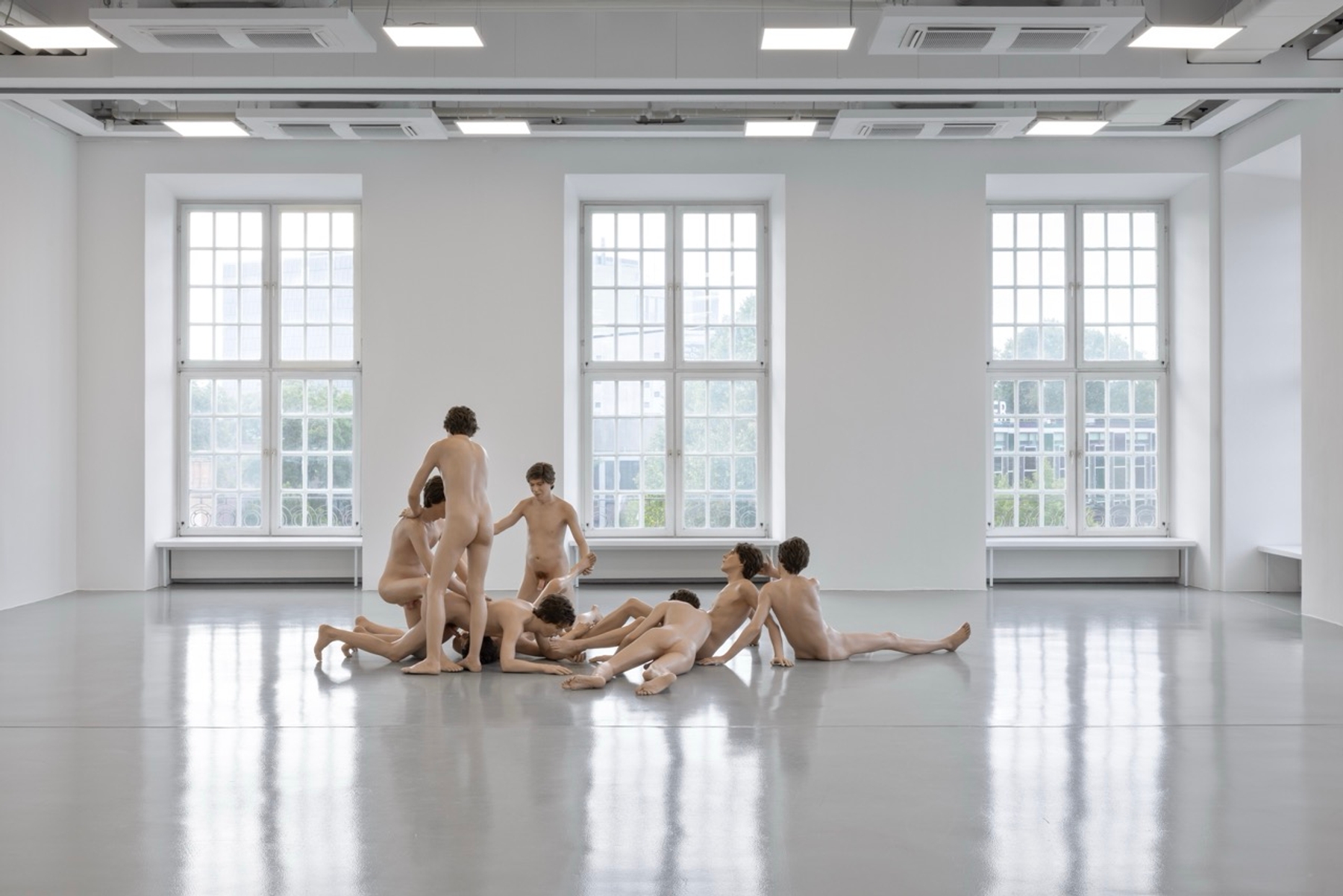
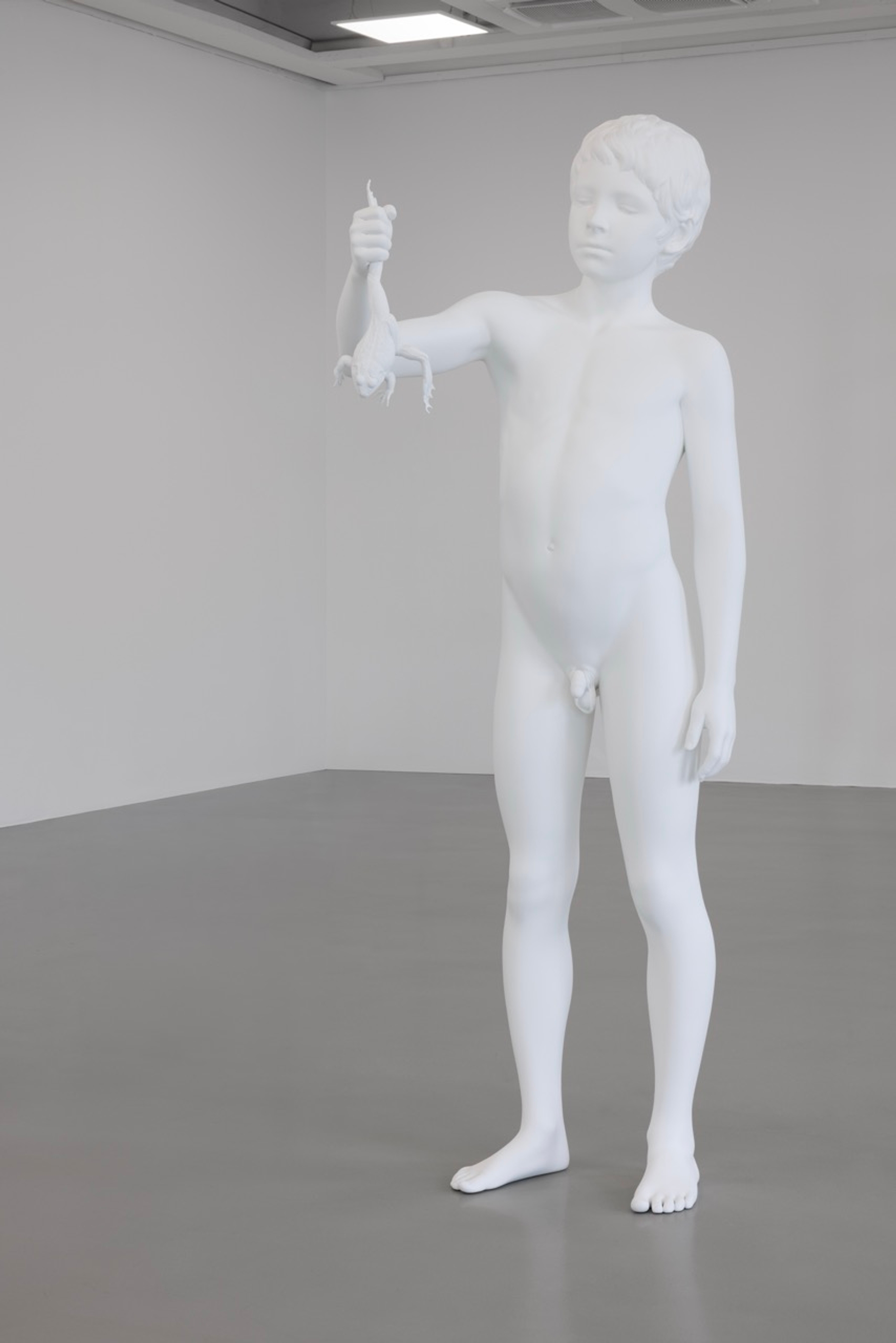
CR: How else could that piece exist? If there were clothes on it would become kitsch, novelistic. Those states of being had no need for clothes. Putting clothes on them would be like putting a fishing pole in their hands. Then you would be in the realm of anecdote. In fact, for me, they are not naked. One could say they took off their clothes, or that their clothes somehow left them. If clothes had worked visually, if they had been strong enough sculpturally, I would have used them. But they did not work. For instance, Sarah Williams (2021), which belongs to the same world, obviously has to be clothed.
TC: It is very important that you do not think of your "naked" sculptures as naked, which in a way recalls the story of The Emperor's New Clothes. In Huck and Jim, how did you find a way to make the hand ambiguous, so that it might seem either to push or to help?
CR: The hand is just a placeholder between the two forms.
One of the interests I have always had––maybe going back to my youth and to my involvement with high modernist ideas––is the way abstract sculpture can contain two separate elements that are inseparable from one another.
With Caro, for instance, two distinct parts can belong so fully together that they are simply one sculpture. They are not two pieces merely stuck together, even if there is space between them.
TC: Do you think the same of the pointing finger in Doubting Thomas (2021)?
CR: It is a little different there, but it is still the same principle: the two elements lock together. It is not a sculpture in two parts. It is one sculpture with different parts. And of course, the hand matters in that sense. There is a beautiful tabletop sculpture by Anthony Caro. When he first began making tabletop works, he had a real problem: how do you make a small sculpture for a table without it looking like a maquette for a larger one? The art critic Michael Fried and Caro were talking about that problem. Fried said: put something table-like into the sculpture itself. Then suddenly the sculpture is fully there, at that scale, because the sense of the table is already inside it.
He made a beautiful work with two pipes above the table; it almost looks like a handle connecting two elements. That handle also brings tactility and scale into the work, because it is the size of the hand. Not that you would literally pick it up, but you can imagine that possibility. But for Fried, that handle is simply a placeholder between two abstract elements. And I think he may have been right. But even if he was not, it is still a very interesting idea. That is also how I think about the hand.
I mean, obviously Huck and Jim is also made of two gestures. Huck has the exuberance of a young boy - scooping up frog eggs from the river - and there is joy in that gesture. Jim, by contrast, is glancing outward, anxious, hesitant, not really touching the back.
But that was not the connection in my mind. It was a placeholder, an abstraction that unified the two elements and made the figures separate and magnetically related. It is one of the few sculptures I have made that came out of a narrative source.
Do you know what an oxbow lake is? When a river meanders, eventually the bend becomes too narrow and the river cuts through, leaving a separate body of water behind. That is how I think of Huck and Jim in relation to the novel: like an oxbow lake separated from the river of Mark Twain's book.
TC: Do you think of them as ghosts?
CR: Nothing has such a fixed, singular intentionality. None of them are only "about" one thing. Intention dissipates very early in the making of the work.Authorship disappears next. What remains is whether the sculpture itself holds. Meaning fades. Intention fades. You simply try to make the sculpture really work, because that is what lasts.
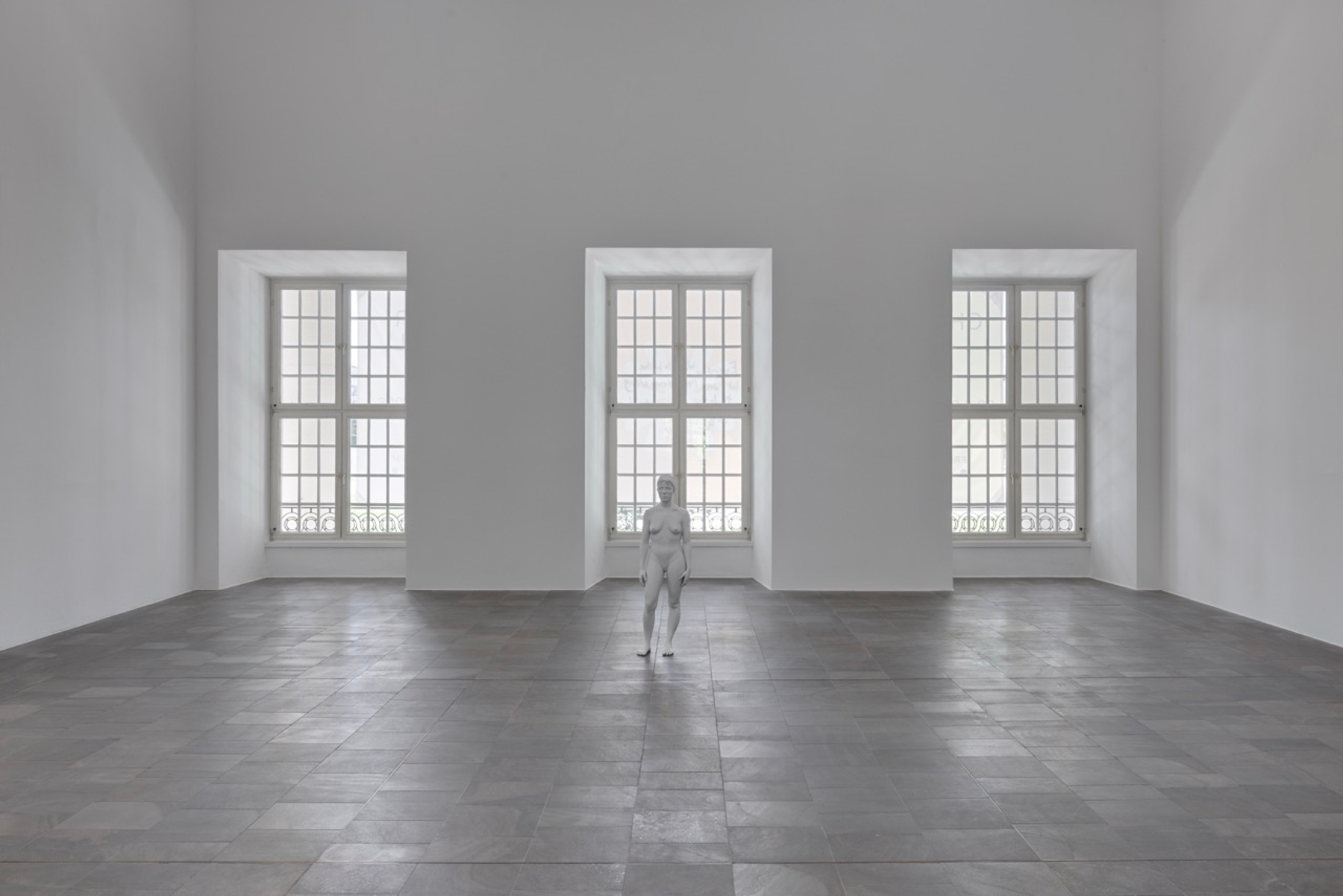
TC: And you do not think of Aluminum Girl (2003) as naked either?
CR: No, I do not think about it as naked. I think about it as sculpture. I think about the body as a manifold on which sculptural events can occur. Like in a kouros figure: some things are stylized, some things are natural, and the beauty comes from the relation between the two.
Certain aspects of Aluminum Girl are highly stylized; others are naturalistic. It is a manifold for sculptural events to relate to one another. This sculpture was my first figurative work. The mannequin pieces I did in the 1990s were not really figurative. They were sculptures of mannequins, not of people. Big Lady (Fall '91, 1992) and Male Mannequin (1990) are sculptures of mannequins. They are closer to folk art.
In those works, I was trying to make a figure, but I did not really have the means yet, so I drew on what I knew about mannequin construction - joints, painted surfaces, weights. That is why I say they are a little like folk art: my ability was limited, but something still came through. When you look at a sculptor like H.C. Westermann or Edgar Tolson, the means may be limited, but something powerful emerges nonetheless. Gesture and choreography can still become very sophisticated.
Aluminum Girl was the moment when I moved toward figuration, in the way Donald Judd moved toward the box.
TC: Do you think, as Robert Gober once suggested about his own work, that you make "portraits of objects"?
CR: My figures are not really one-hundred-percent portraits. The question for me is: how do you sculpt a figure from the inside out and the outside in at the same time?
We were speaking earlier about the paper sculptures.They are hollow, because they are made of handmade paper, almost like a watercolor skin. It is not thick papier-mache. It is more like a drum: a thin manifold. You could almost think of it as drawing, only made not with ink or pencil but with paper itself. Space and time are inscribed on the manifold of the sheet. The paper sculptures are interesting because they are hollow, but not empty. Aluminum Girl I really saw almost as an abstract mannequin. It is beautiful that it is a figure.
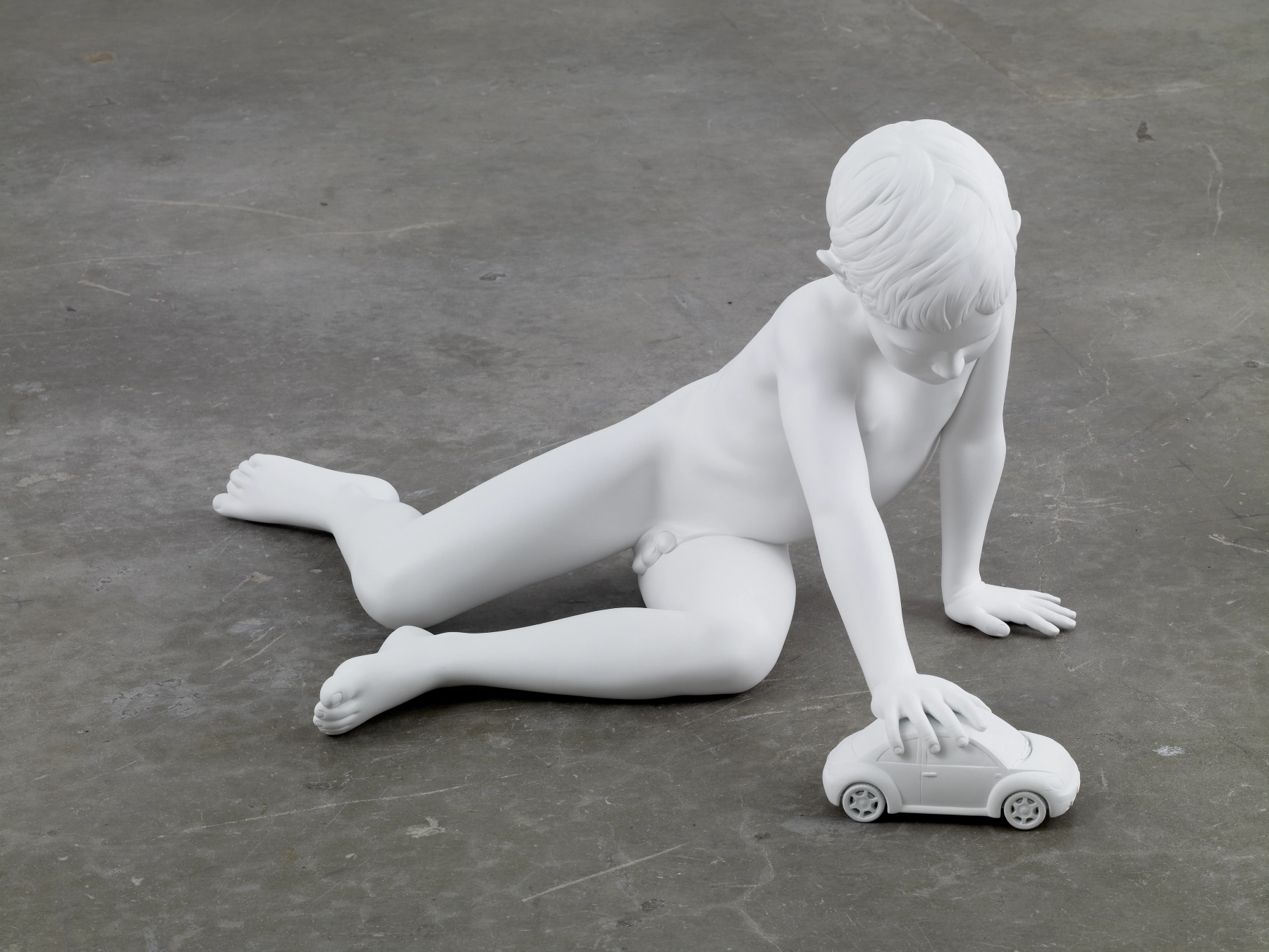
TC: How did you come up with the idea of the boy playing with a New Beetle toy (The New Beetle, 2006)?
CR: I knew I wanted a child on the floor, and my first thought was: what should he be playing with? There is an art-historical reference there - not to a child in general, but to the Dying Gaul. But it was not about the Dying Gaul as such; it was about the number of gestures present. There is a familiarity, but the gesture is different. It is like a spiral zipping across the floor. Originally, I did not know what object he would play with, and at first the sculpture was going to be polychrome. The boy would be white and the car would be painted like a real toy. Then I thought: instead of painting it, I can change the density of description. I can sculpt the boy in one figurative vernacular, and the car in another, with more detail and a different kind of attention.
It was actually a toy truck, initially. I thought that would be beautiful, because it would trail out into the world in a certain way. I do not remember exactly how the idea narrowed down, but at that moment the New Beetle had been around for a couple of years and people liked it. I did not think about it very much. Its title,
The New Beetle, sends the sculpture in several different directions. If the child's toy is the New Beetle, then "newness"becomes part of consumer culture, and there is something beautiful about a child playing with that.
When I started sculpting the car, because it belonged to this other vernacular, I gave it a fully described interior, just as the toy Beetle had one: a plastic steering wheel, dashboard, all of that like one of those elaborate toy-store toys.
Then I noticed the way the child was sprawled across the floor, the force of his intention, and the rigidity of the arm concentrated on the toy. There were beautiful negative spaces in that area. I also believe that if a sculpture can move you physically, it will move you sculpturally and mentally. In order to see the boy's face, you have to get down on the floor yourself. But once the whole interior of the car was sculpted and visible through the windows, you no longer had to lower yourself physically. You went straight into the car instead, and ignored the negative space of the figure, which I thought was very beautiful. Your attention got trapped inside the interior. So, I closed the windows over. They became flat forms. The whole car became one form, though it still retained more detail than the figure in certain areas.
I think that allowed the viewer to drift through the sculpture instead of getting stuck in one descriptive zone. You could move through the whole thing without locking onto the interior and saying, "Ah, they even did the inside."
That goes back to your first question about the face––why some of my faces are less focused. It is so you do not get trapped by detail, and you can involve yourself in the manifold relation of the surface to the world and to the surrounding space.
In that sculpture, the plane of the floor becomes very apparent. The child is down on the floor partly because he is infinitely vulnerable. The plane becomes a support. And if he is small, you could literally kick into the sculpture and damage it.
It is below eye level, almost like a modernist floor sculpture in an Anthony Caro sense, but not monumental. I began to think of that gesture and of play itself. For me, play became very important there.
A life can unfold on that plane of the floor–through childhood, through adulthood, through whatever happens before the game is over.
The figure is anonymous in every direction. The legs kick back, one arm is very rigid, and he is totally intent on playing. That is why, if you want to look at him, you have to lower yourself too. Children do that. You see it now with video games: even if you say, "Dinner is ready," they do not stop.
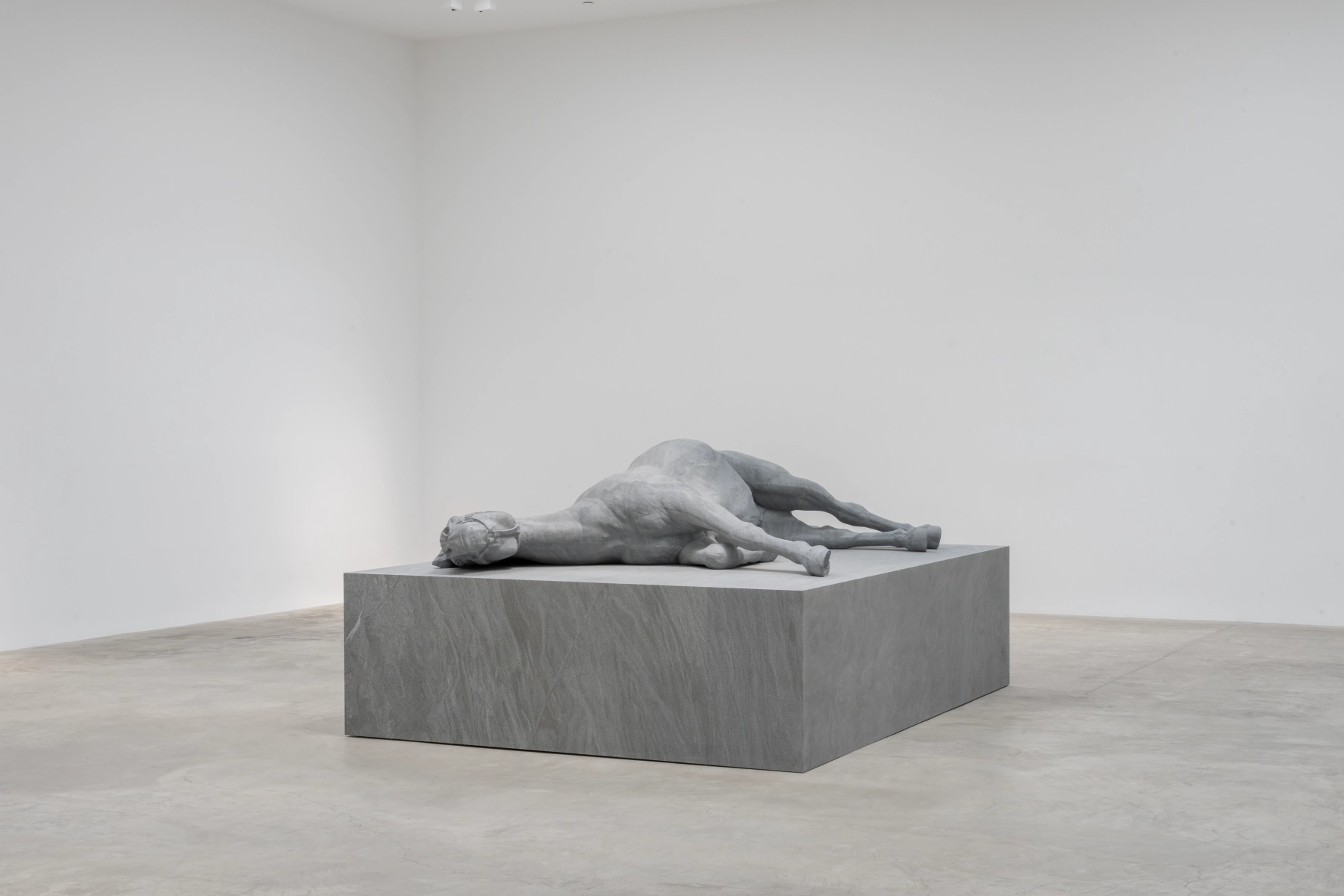
TC: When children play, they do it for real. They play seriously, and they are very concentrated. I read somewhere that your new piece, The Fallen Horse (2025), had to do with the idea of a fallen empire––perhaps the fall of America.
CR: I had nothing of that in mind. The horse is not dying. I started it so long ago that I have partly forgotten what first drove me toward it. But I became very interested in monuments. When I began Horse and Rider (2014), I thought of it as a kind of reminder. I was thinking of a fallen horse, not of empire and not of any relation outside your relation to the horse itself. It could become a monument to the horse as such.
The year in which horses were of greatest service to humankind was 1953. People assume it was the nineteenth century, but that is not true. When I was a child, horses were still bringing goods through the city. There were more horses working for humans in 1953 than at almost any other moment in history.
I was thinking a little about death on battlefields, and about people being thrown from dead horses, but not in a direct or allegorical way. Originally the piece was on the floor. The pedestal came later. I worked on the box first in the studio, and then I had the idea of building it in stone. At a certain point it became clear that the base was becoming interesting in itself: the way you approach it, the way you look at the form of the horse. I carved it from the same block–not literally in one piece, but in two pieces aligned by the grain.
I am very interested in embedment. How do you put a sculpture into the world? If a sculpture is only about the fall of something, then as soon as that interest disappears, the sculpture will be swept away with it.
If I made a sculpture about the fall of America, then once America had either fallen or revived, the sculpture would become pointless. That kind of meaning dissipates.
TC: So, you have to make a really good sculpture if you want it to stand the test of time.
CR: For me, space is sculpture's primary medium. It is very important. You do not simply put a sculpture into a room; you carve a sculpture out of the space around it.
That is one reason I became interested in equestrian sculpture. Fifteen years ago, almost nobody was making or even thinking seriously about it. It felt like an open field.
It also seemed ripe because equestrian monuments are not only embedded in a square; they are embedded in the sky. They claim space above you. They are elevated, civic, removed from the everyday space of the body. I wanted to think about what happens if that monumental condition comes down into your space - into the viewer's neighboring space - instead of remaining up on a pedestal like Joan of Arc in Paris. I love that sculpture, but it belongs to a civic altitude, a space set apart.
I was interested in exploring the possibilities of civic space through all the conditions that are already built into the equestrian statue. And yet, in a sense, the whole weight of the sculpture becomes the pedestal.
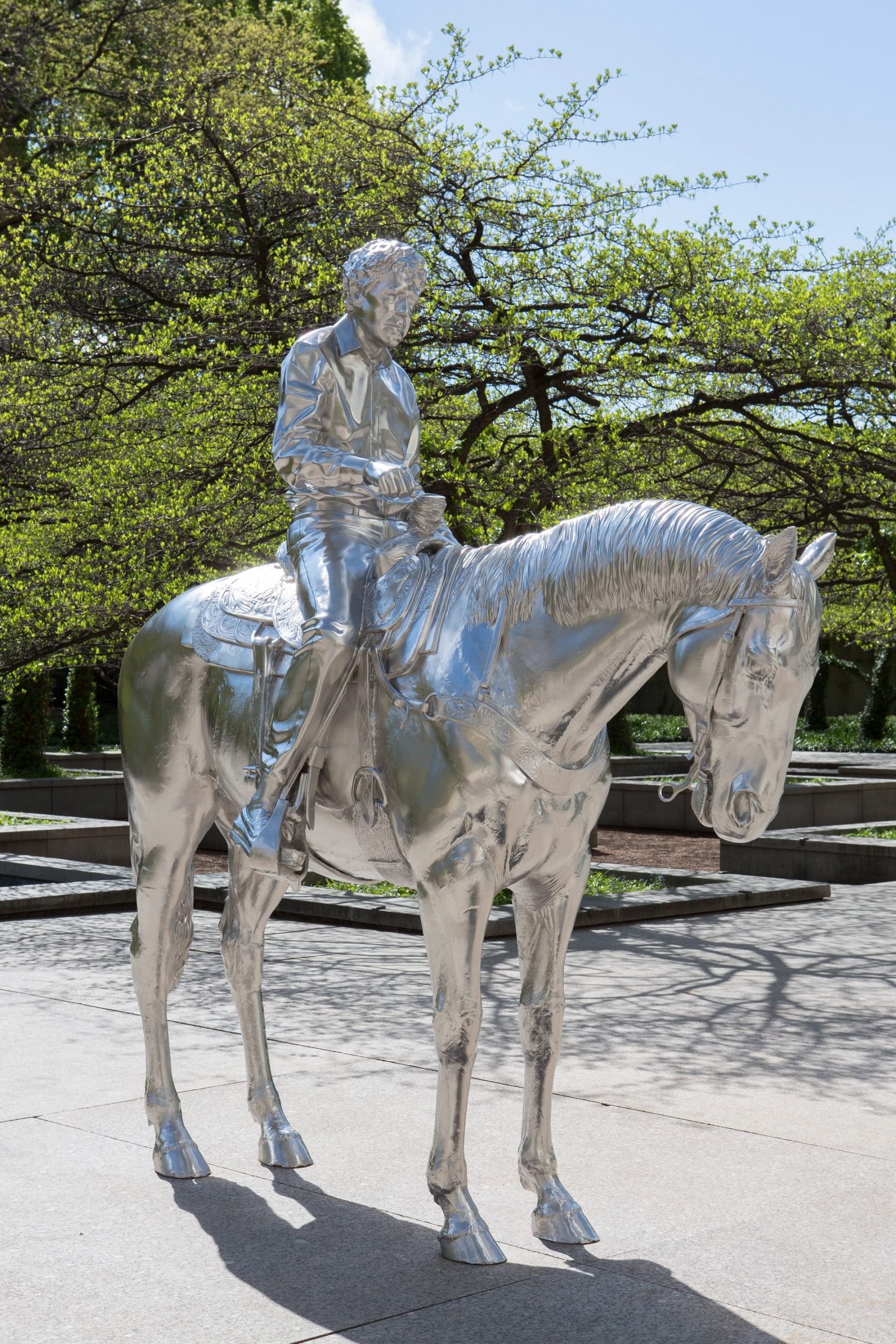
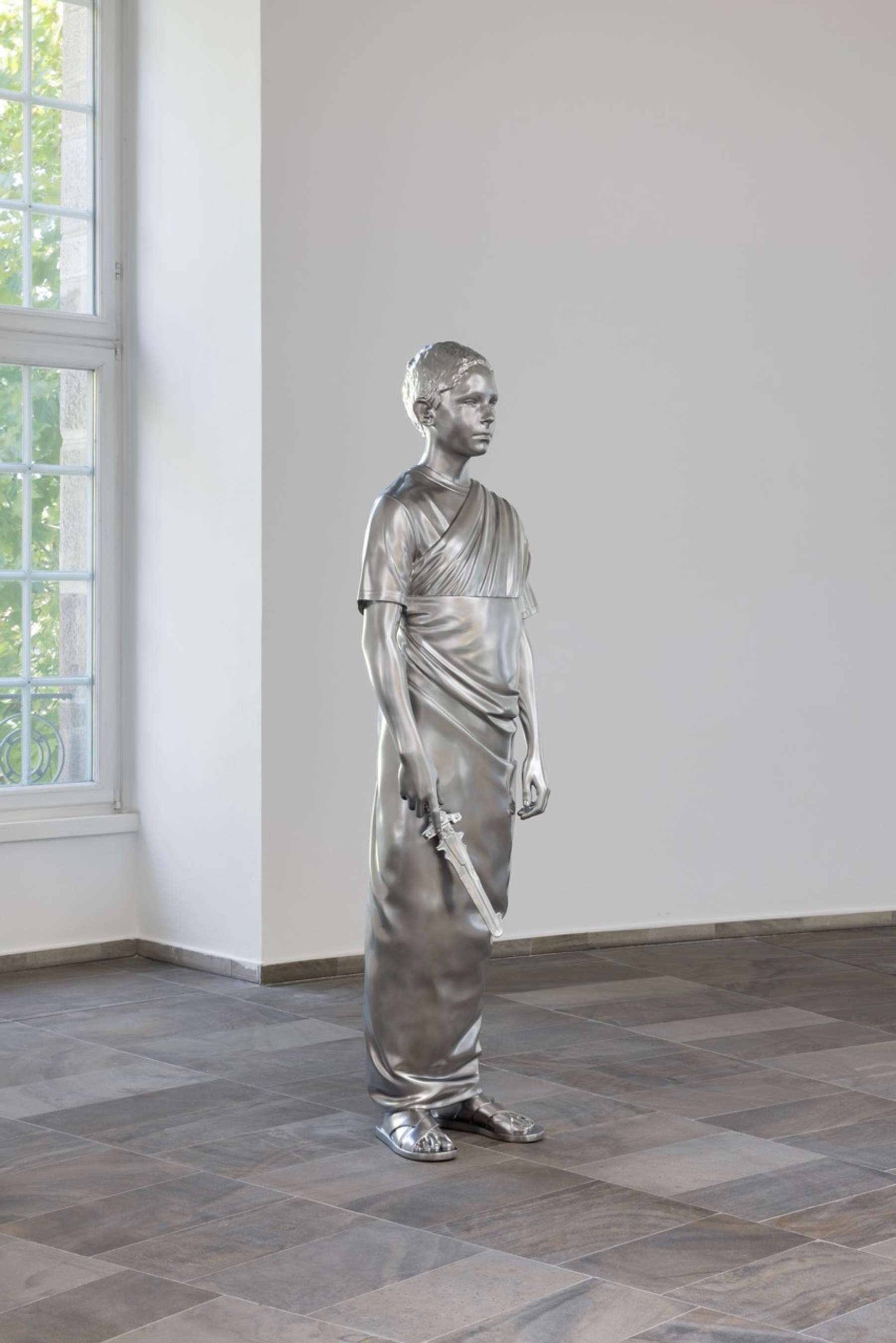
TC: In Horse and Rider, you are the rider, and it is made in stainless steel.
CR: I chose myself as the rider because I am over the hill, not a general. My horse was over the hill too. I was thinking: how do you make such a thing monumental without making it ironic? If it were made of fiberglass, it would become ironic immediately. I am simply looking for ways to investigate every aspect of its sculpturalness, including content.
Content is itself a formal element. It is moldable, like clay. You can structure it, throw it, pound it out, make it light, make it heavy, leave your fingerprints in it, smooth it out, carve it, leave chisel marks in it.
Content is like any other material in the work, and stainless steel is simply one aspect of the formal matrix.
As I said earlier, the figure is a manifold on which events occur. In Horse and Rider, years of labor remain visible in the machinery of the sculpture and in the surface itself. There are traces of grinding from the fiberglass stage, robotic traces, and then the hand-worked shaping of the final surface. The whole thing records its own making.
As I see it, many people will first see an image and immediately try to assign a narrative meaning to it––empire, decline, this or that––because we live in a world dominated by visual narrative. Film is the dominant art form of the twentieth and twenty-first centuries, so people narrativize everything. They look at sculpture and try to read it as if it were a movie.
Of course, my sculptures mean something. Content exists in them. But content is a movable element. I do not use topical meaning to drive the sculpture. I use it as one element among others in order to build the sculpture.
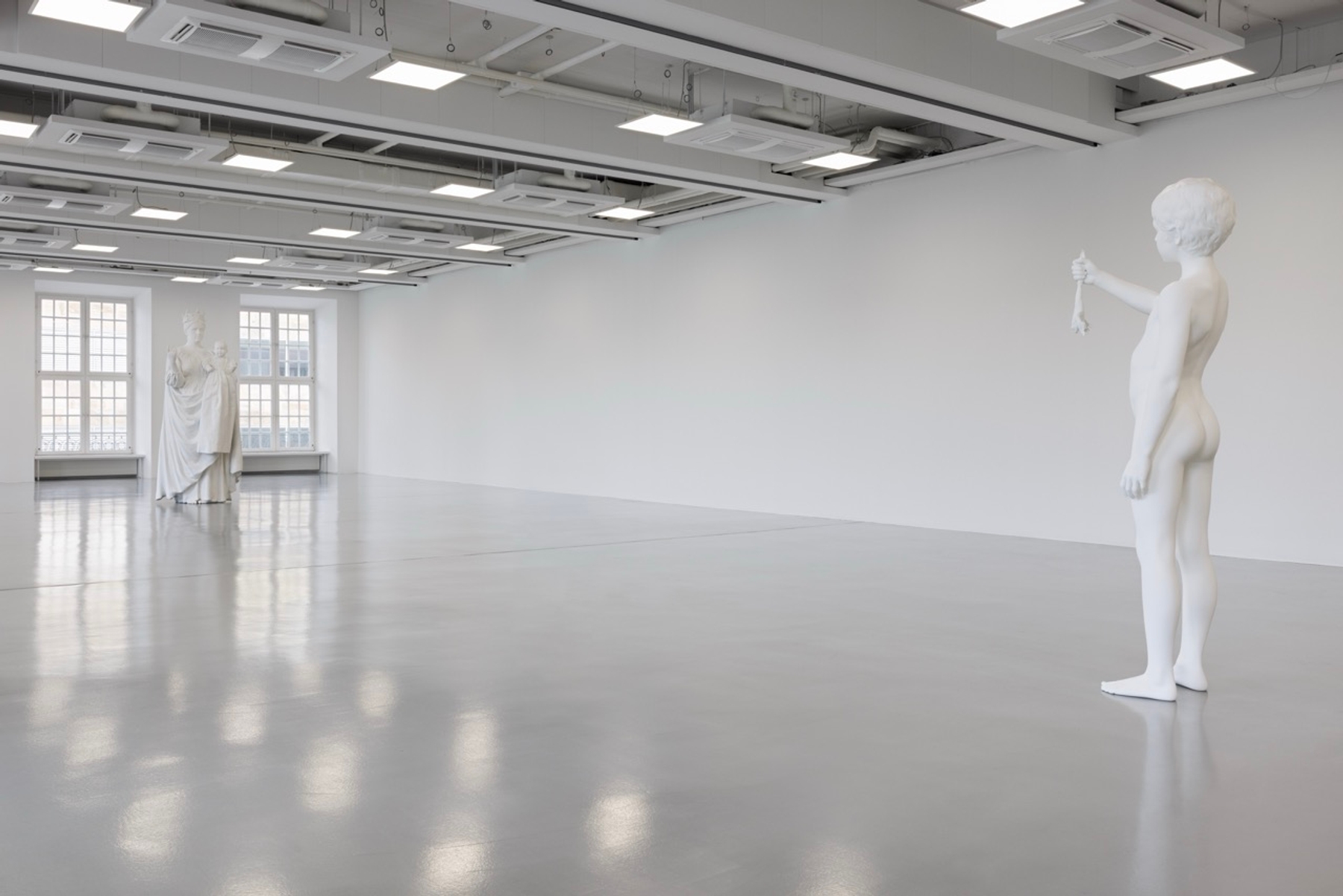
The sculpture can be looked at in many ways. I do not care if people see all sorts of things in it. I simply try to make it so that it does not stop - so that you can keep seeing, keep moving closer, keep moving into the surface. Content should not block that movement. It should not close the work down.