Photography Constanze Han
Producer Karla Batte
My interest in Cuban circus began after coming across an old history book titled El Círculo Mágico, which traces the development of circus on the island from the 16th century through the pre-revolutionary period. The book describes circus as a traveling, family-run tradition moving through rural towns and provincial cities, long before it became a formalized institution.
After the 1959 Revolution, circus underwent a major shift. As part of a broader effort to democratize access to the arts, the Cuban state formalized circus training and elevated it alongside ballet, music, and film. In 1968, the Cuban National Circus School was founded in Havana, marking a transition from informal, family-based transmission to a structured system of professional education.
The school’s curriculum focuses on aerial arts, contortion, acrobatics, and balancing, shaped in part by Russian and Soviet training systems introduced in the late 1960s and 1970s. These models brought technical rigor and discipline, which Cuban instructors adapted to local culture by incorporating Afro-Cuban rhythms, rumba, folklore, and theatrical expression. The result is a distinctive circus style that combines precision and strength with musicality and expressive movement.
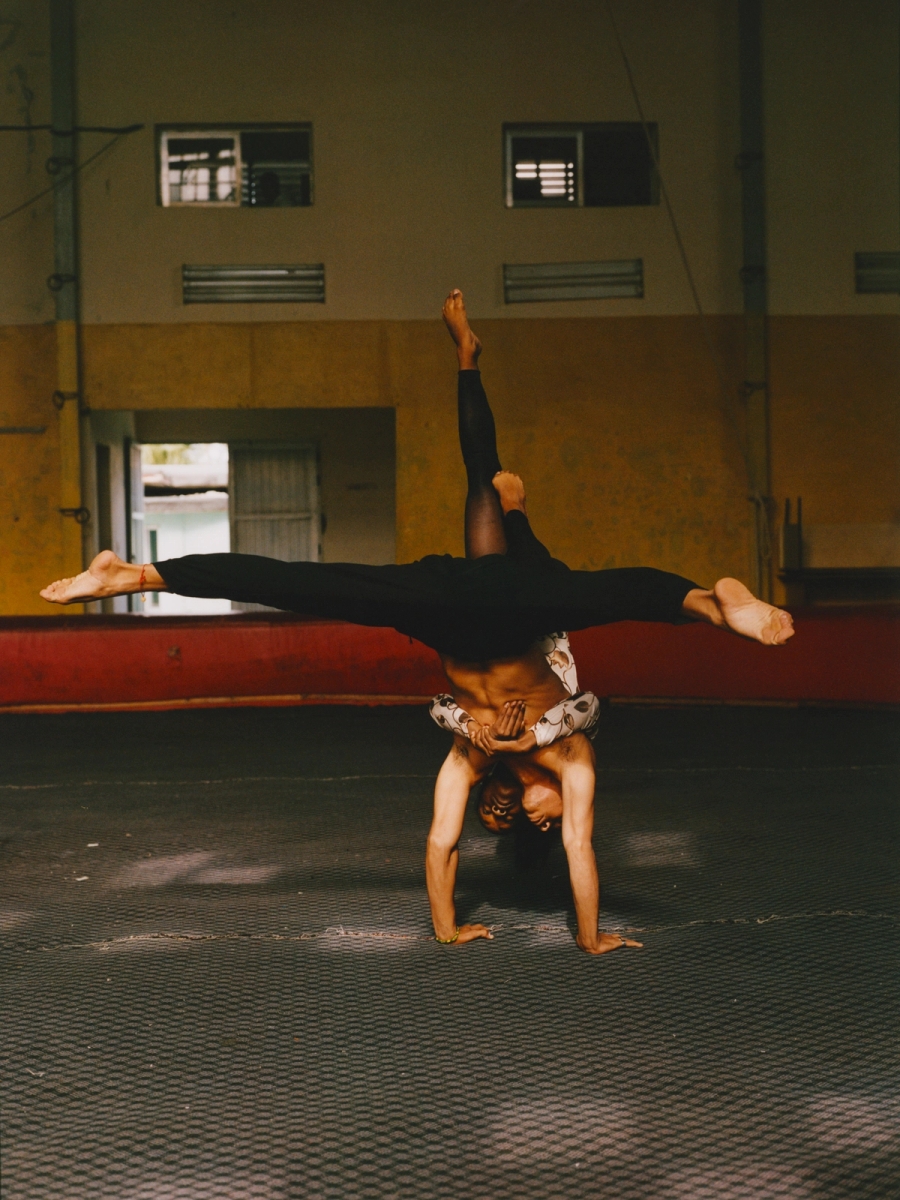
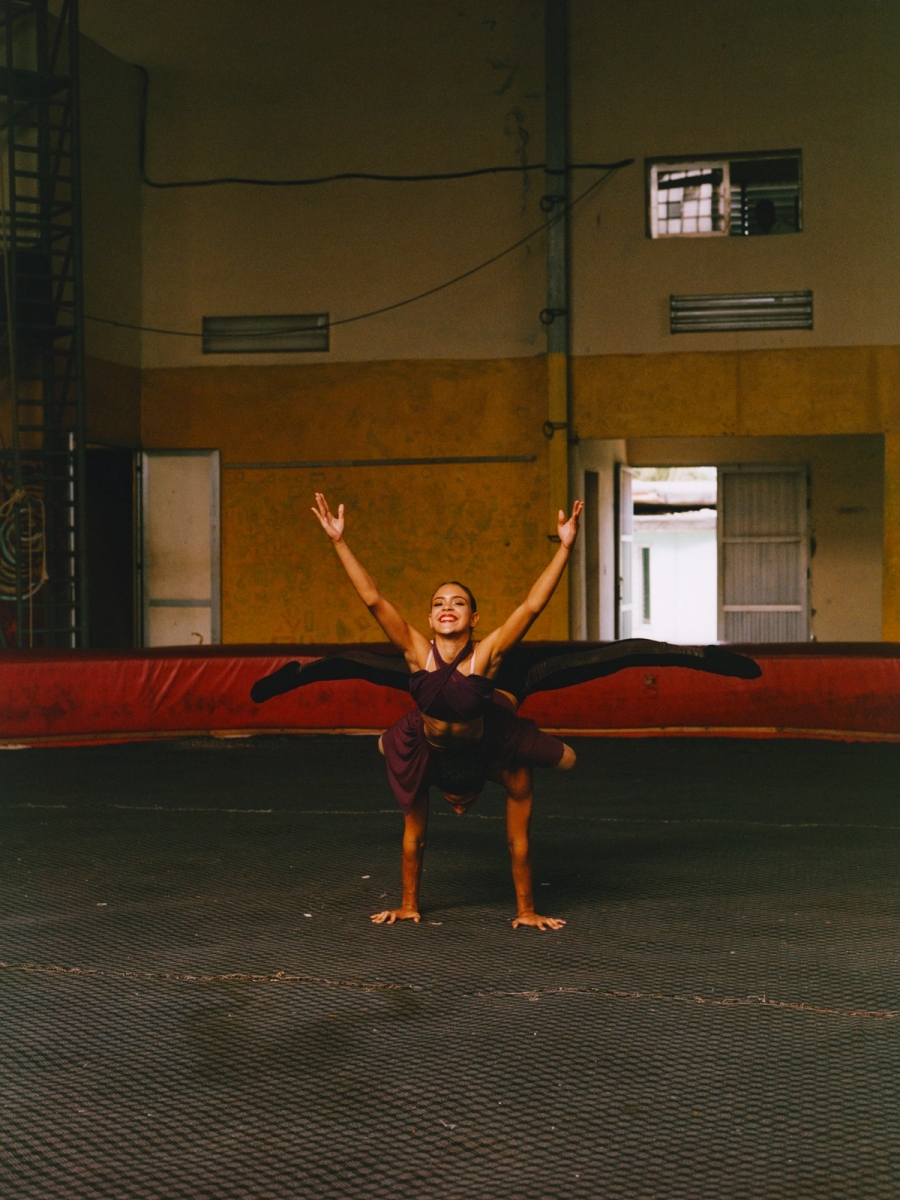
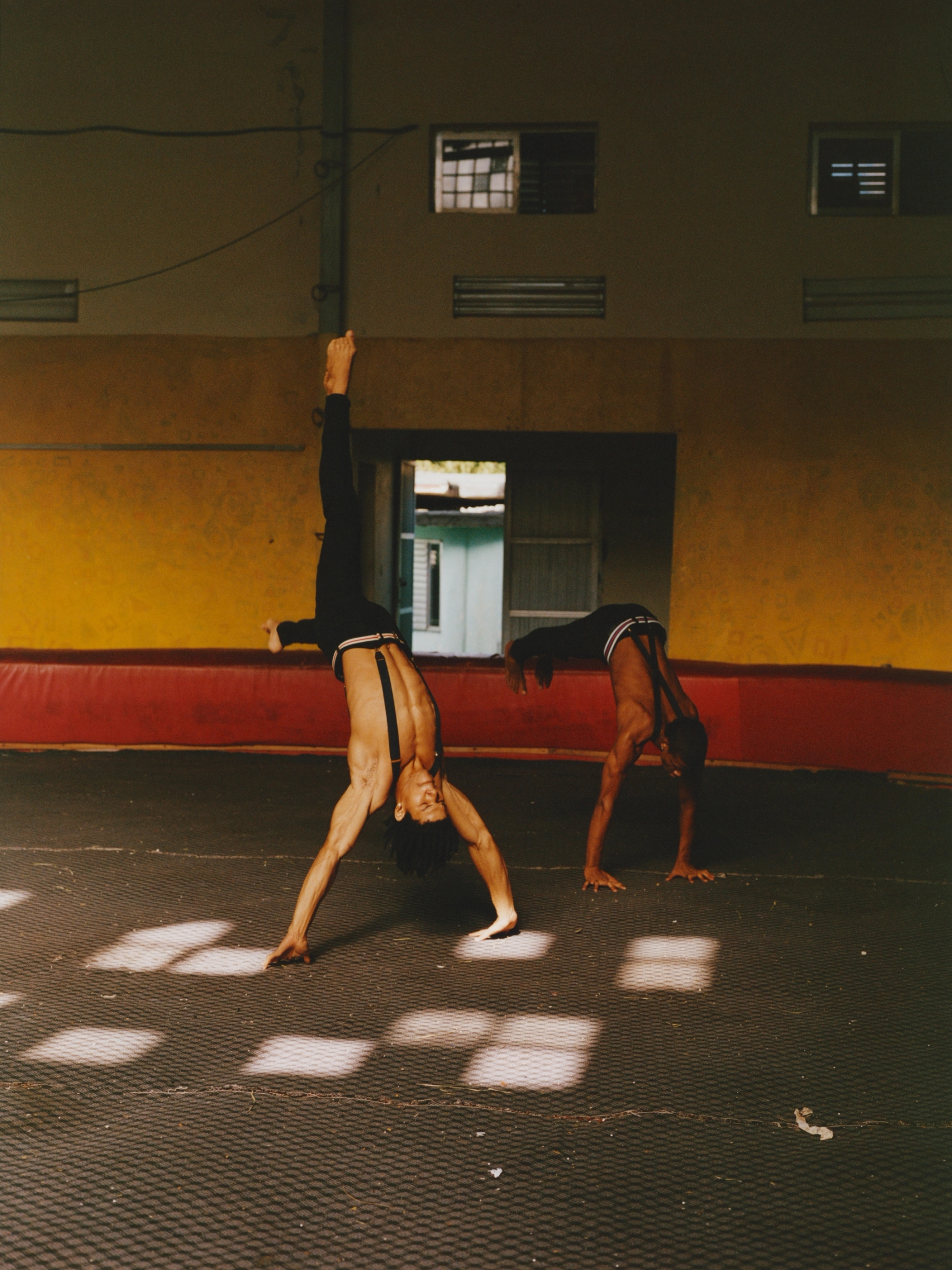
Enrique Moyé Martinez and Lexi Moyé Martinez perform backflips and during a floor acrobatics performance. In a country where resources can be limited, duo acts offer a practical alternative to large ensemble performances, requiring less equipment and space while maintaining high levels of artistry and visual impact.
Collective effort remains central to training. Much of the equipment is aging and manually operated, and aerial work depends on shared physical labor. Aerialists cannot train alone—other students must lift, secure, and control the ropes by hand. Trust and cooperation are built into the daily rhythm of the school.
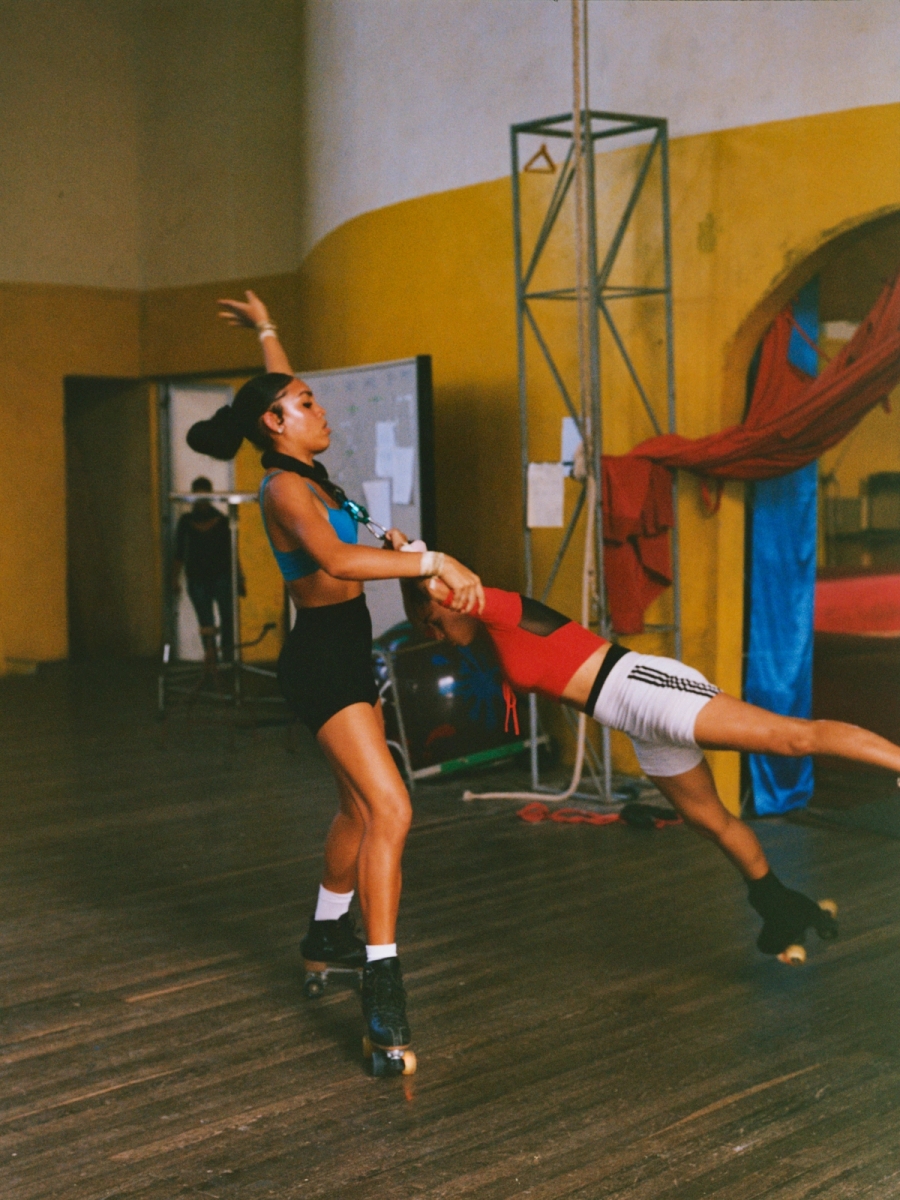
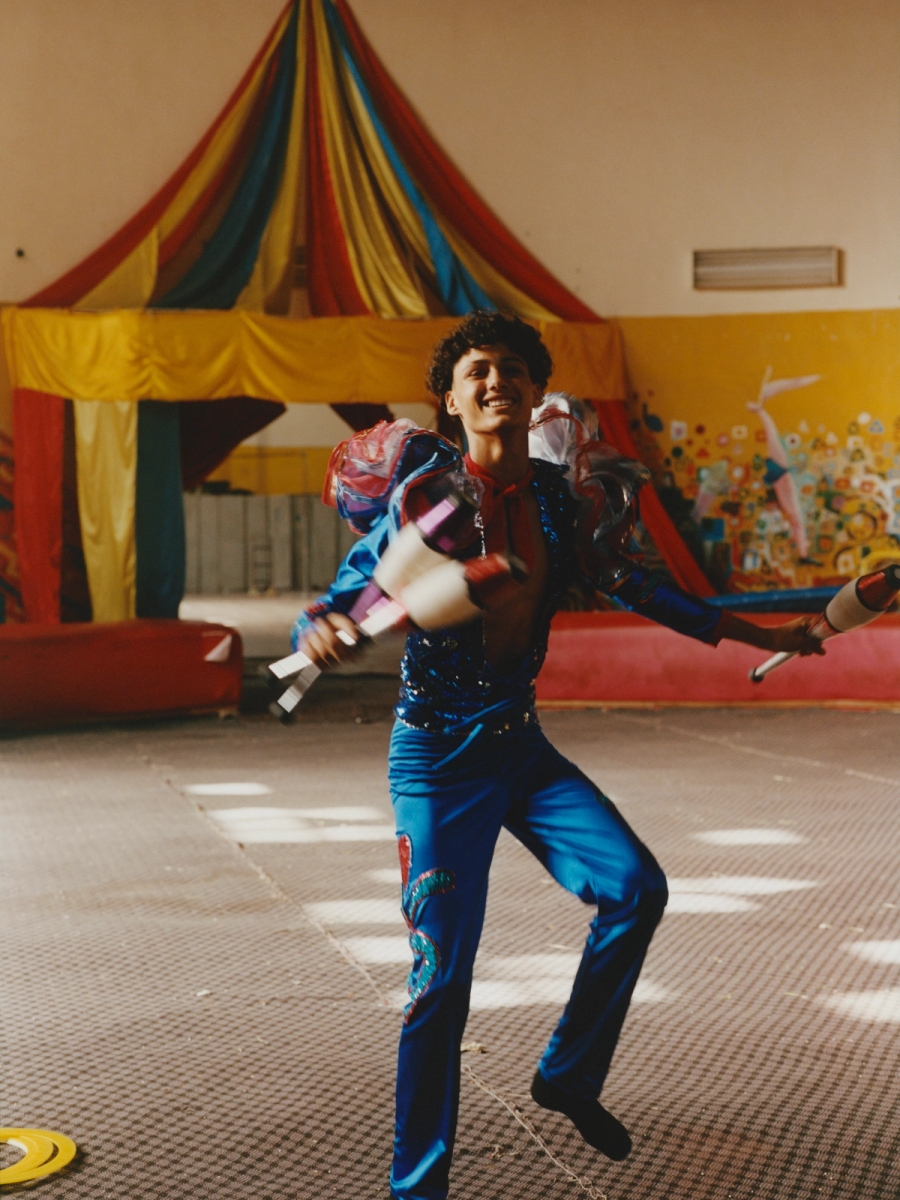
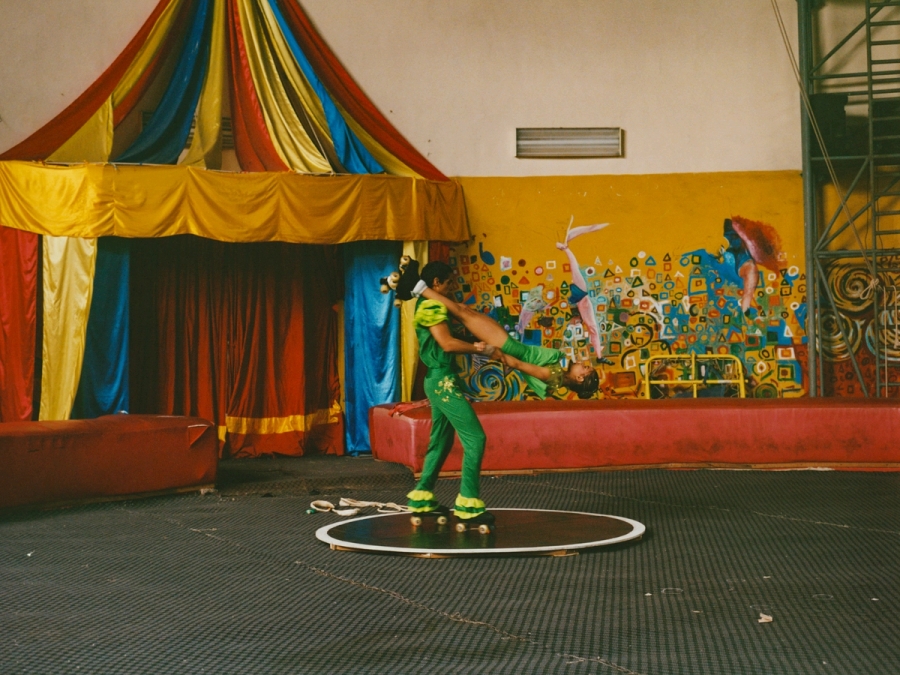
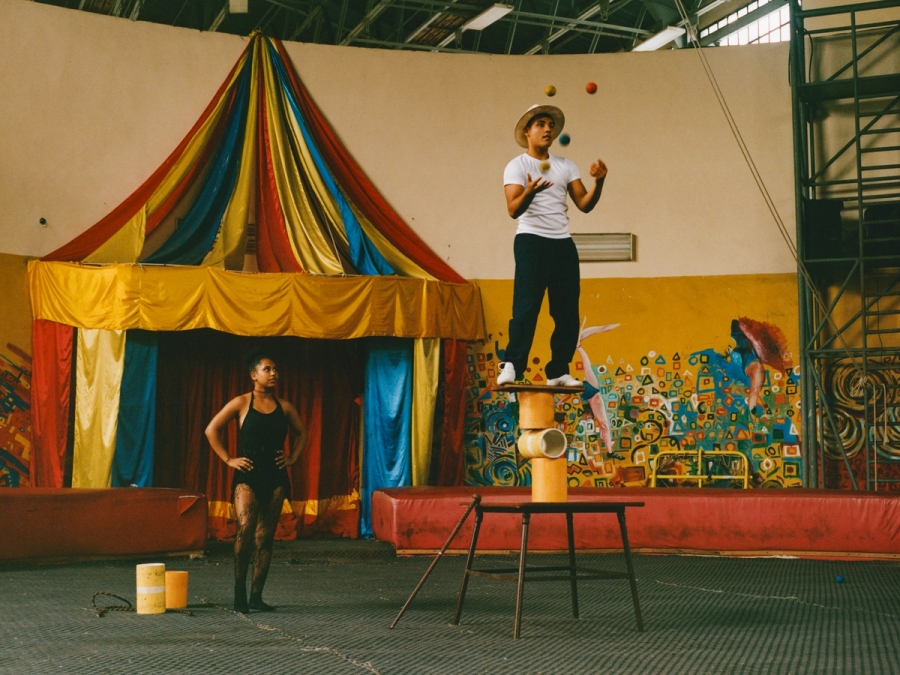
Left to right: Rosselyn Quintana Ros and Yaimaris Alfonso López rehearse a high-flying roller-skate act, a daring routine that blends speed, balance, and midair choreography. | Jonathan Lázaro Morales Díaz juggles clubs during a performance.
Despite decades of economic hardship and limited resources, the Cuban National Circus School continues to train new generations of performers. Its graduates perform internationally, carrying with them both technical skill and a deeply ingrained communal ethos shaped in Havana.
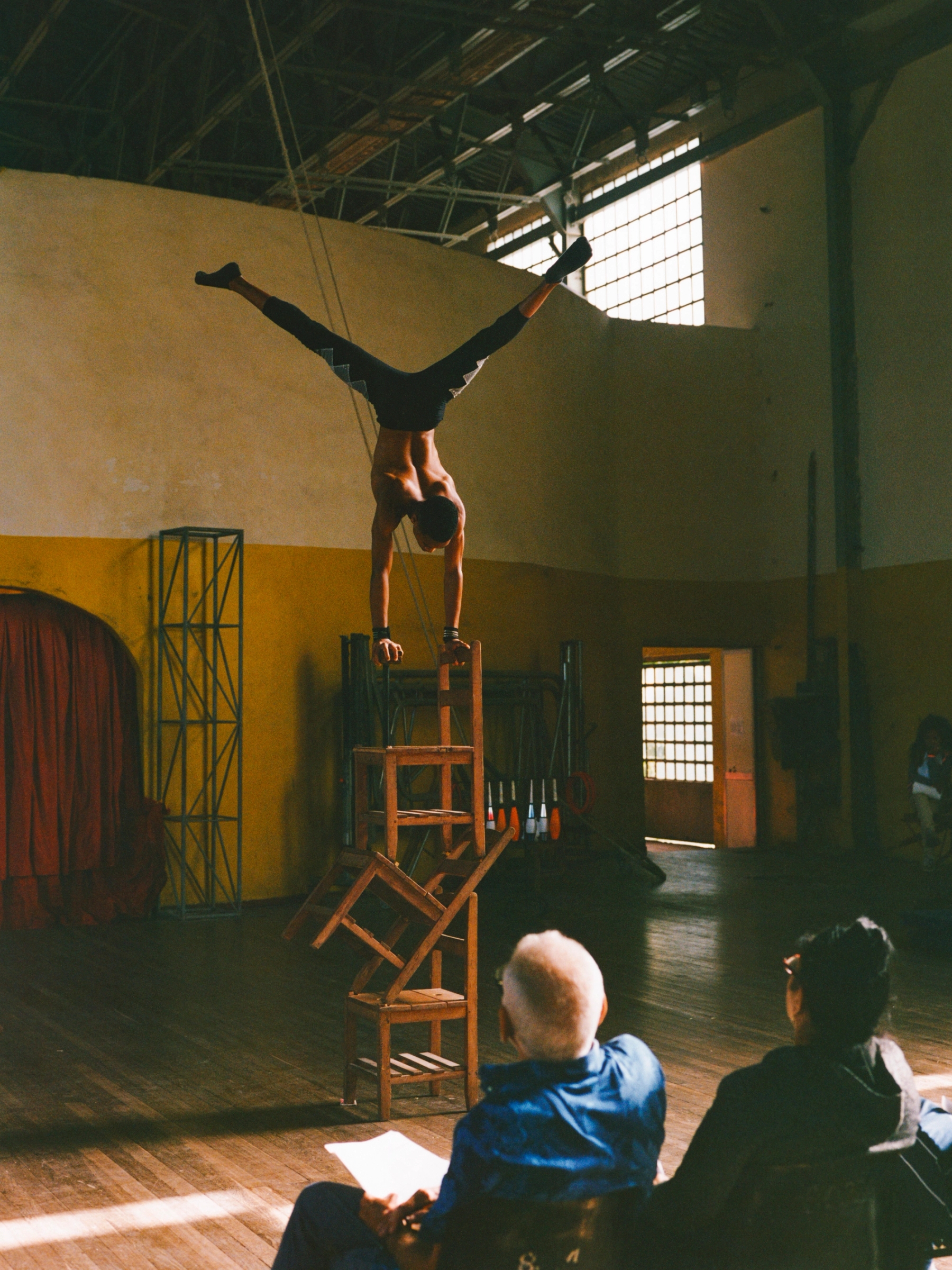
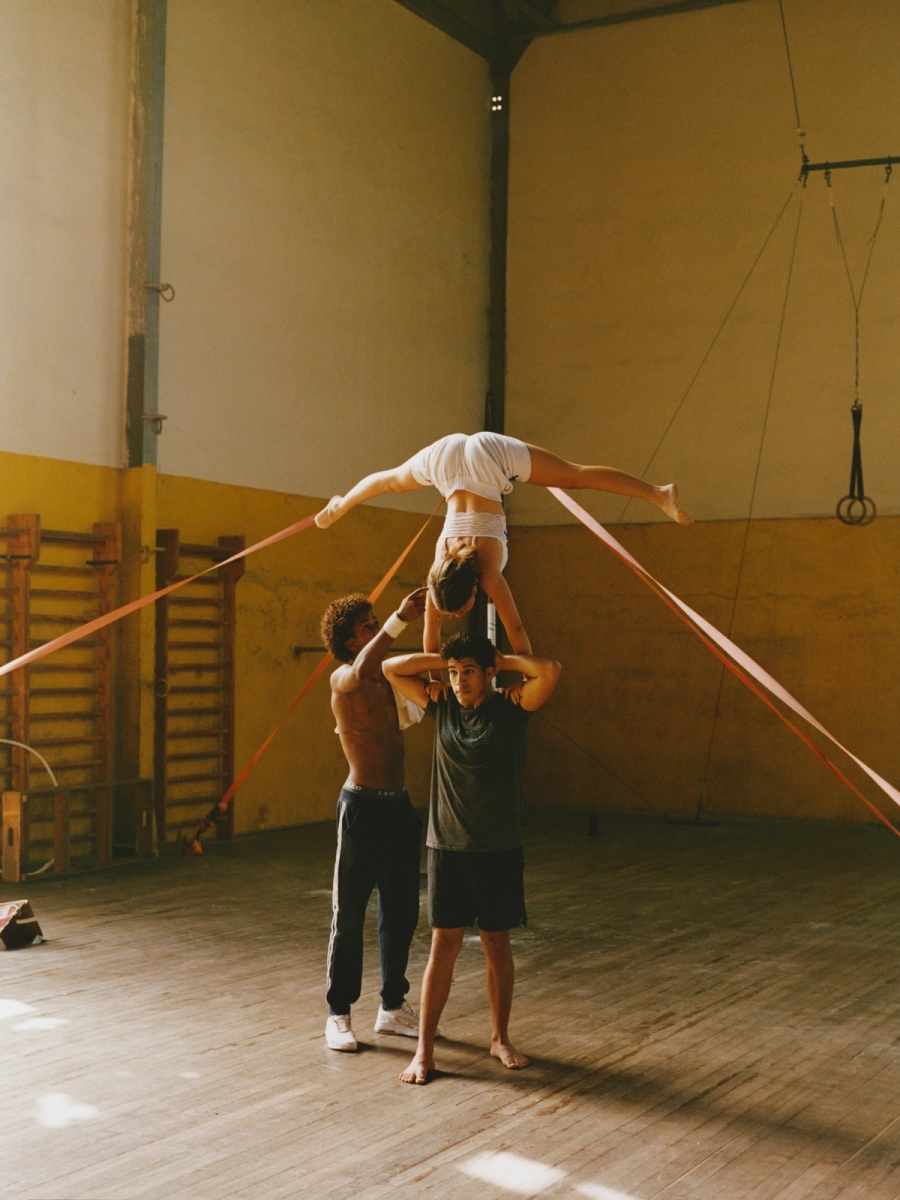
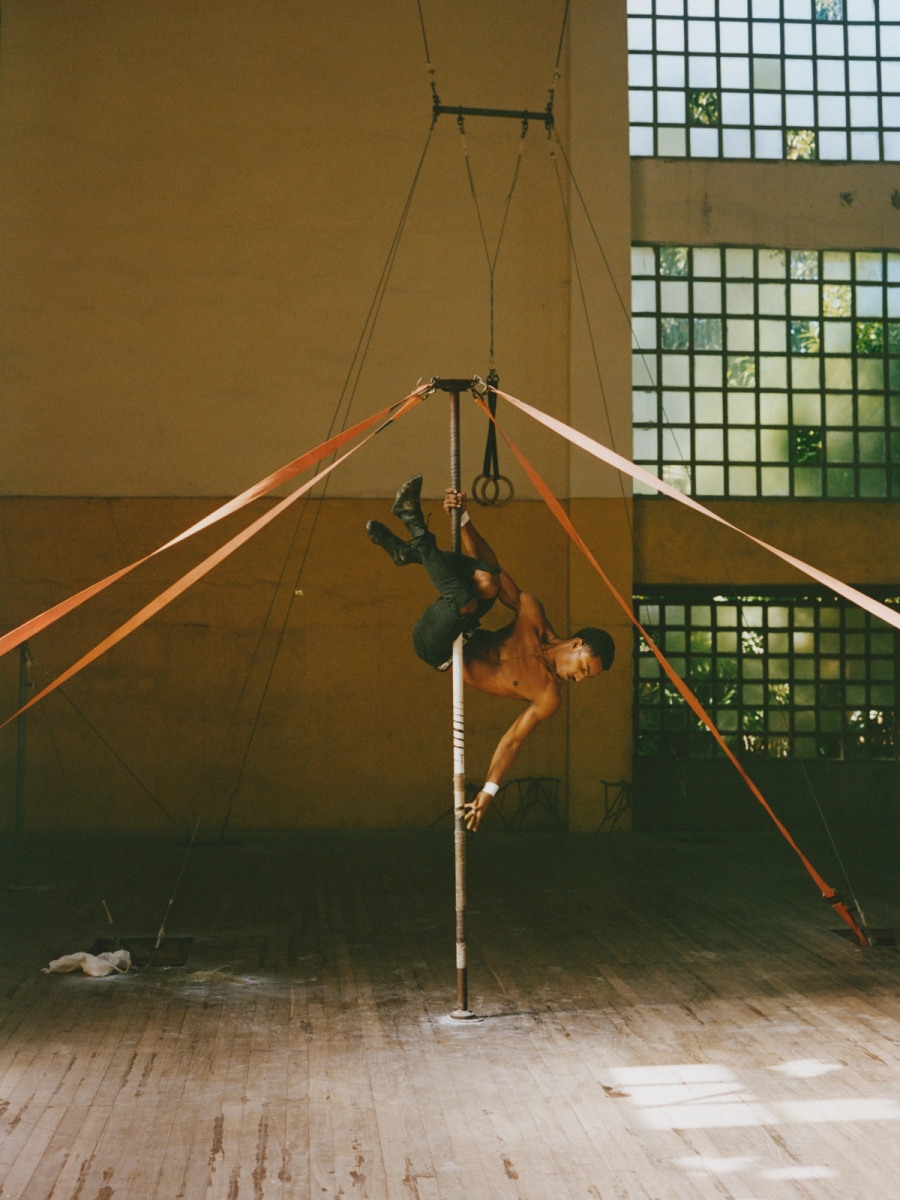
Left to right: Israel Ignacio Olivares Méndez and Yosdanis Font Crespo assist in lifting Amanda Boggiano Pardo during a balancing routine rehearsal. | Damian Dinza González performs an acrobatic routine on a suspended pole
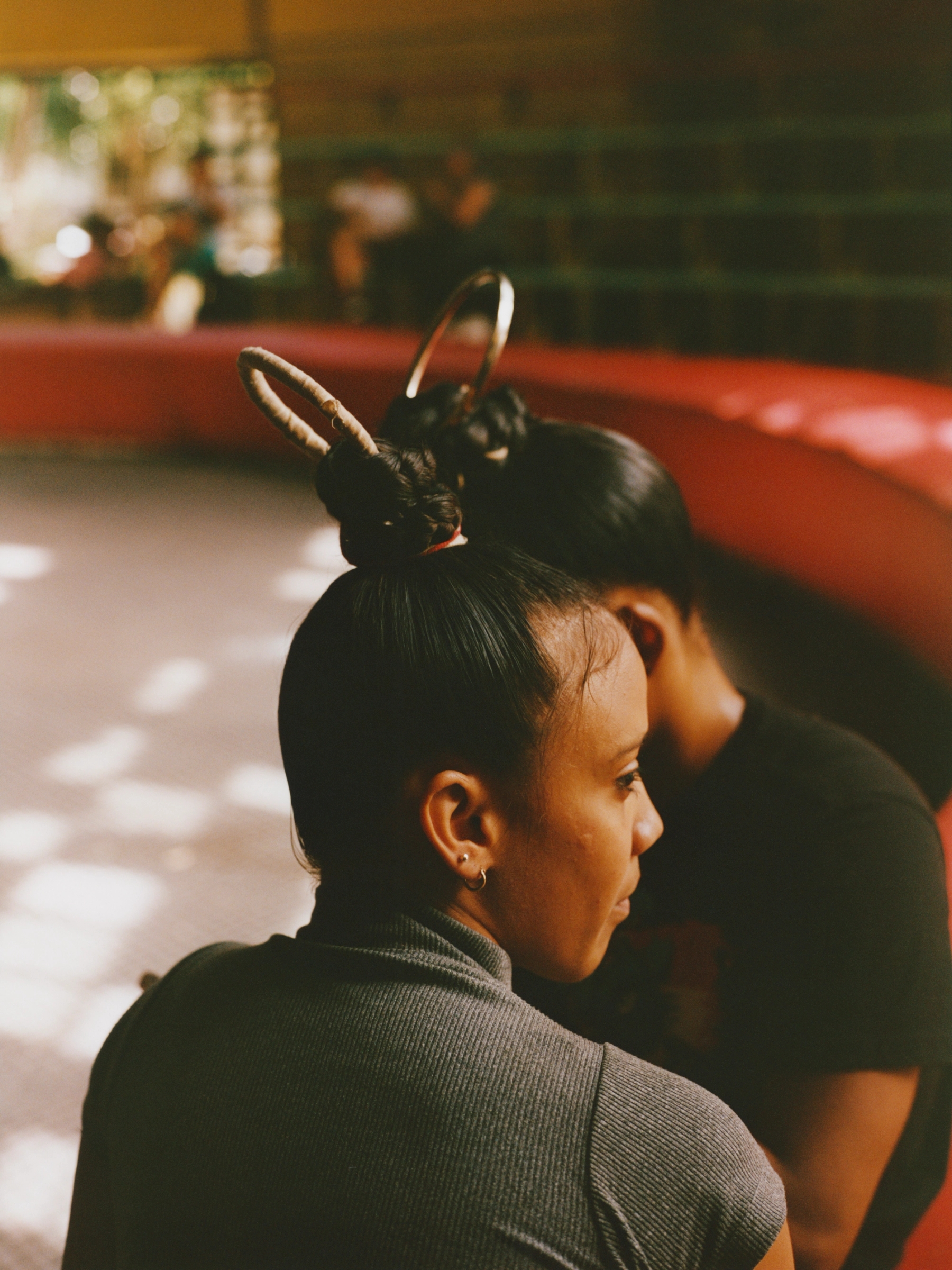
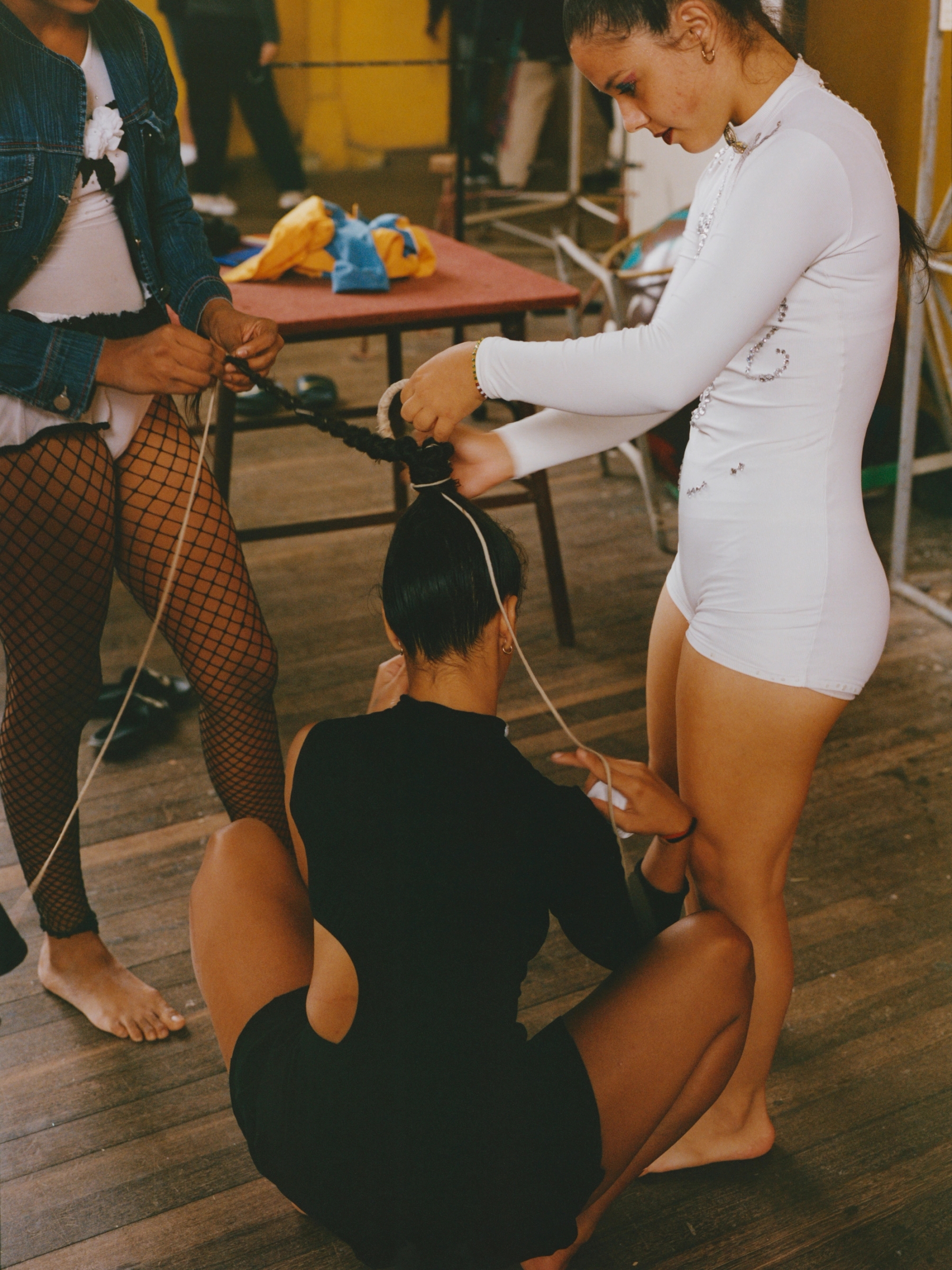
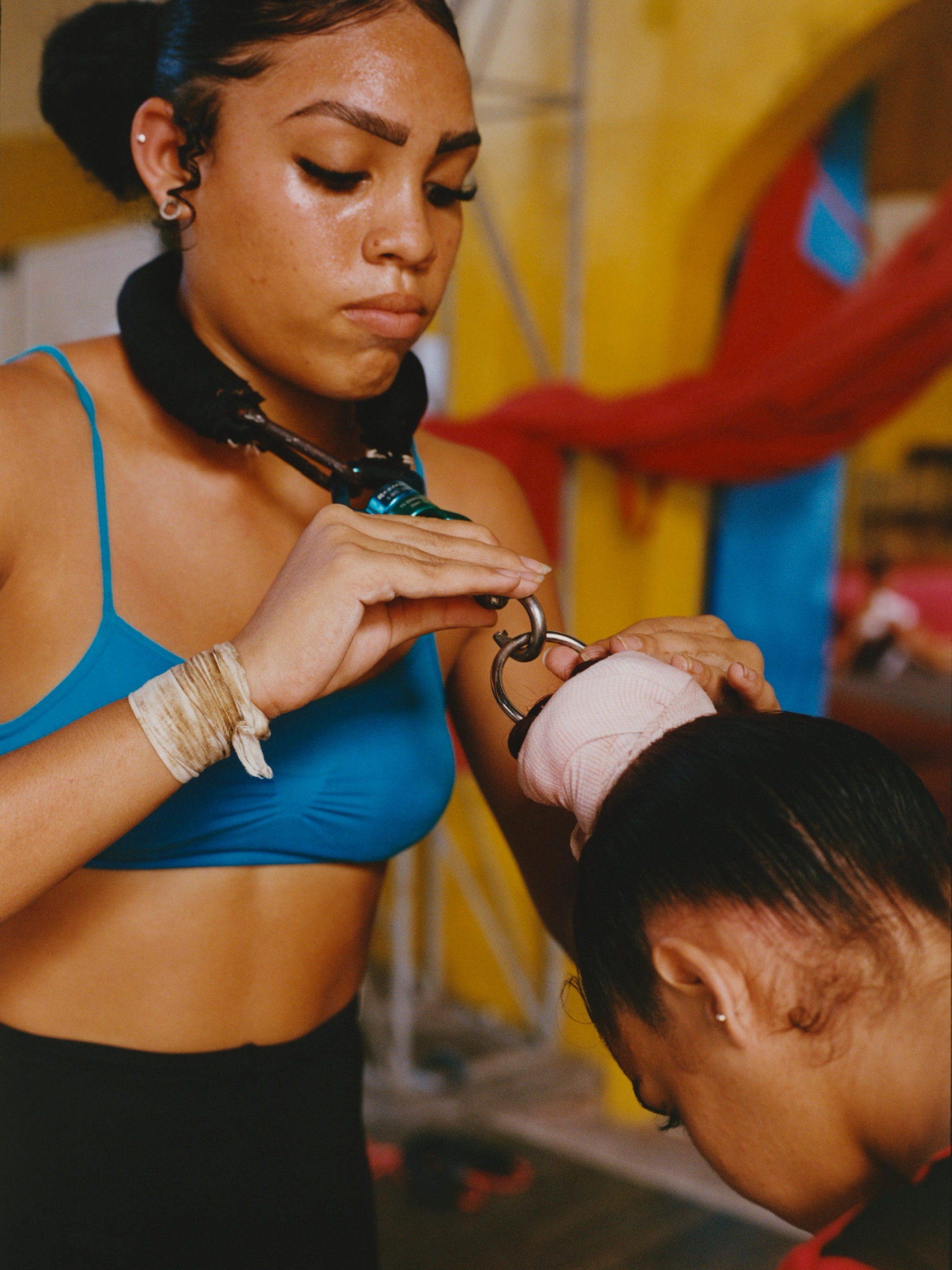
Aerialists assist each other with the specialized hairstyle required to securely anchor the ring that supports their full bodyweight during the performance.
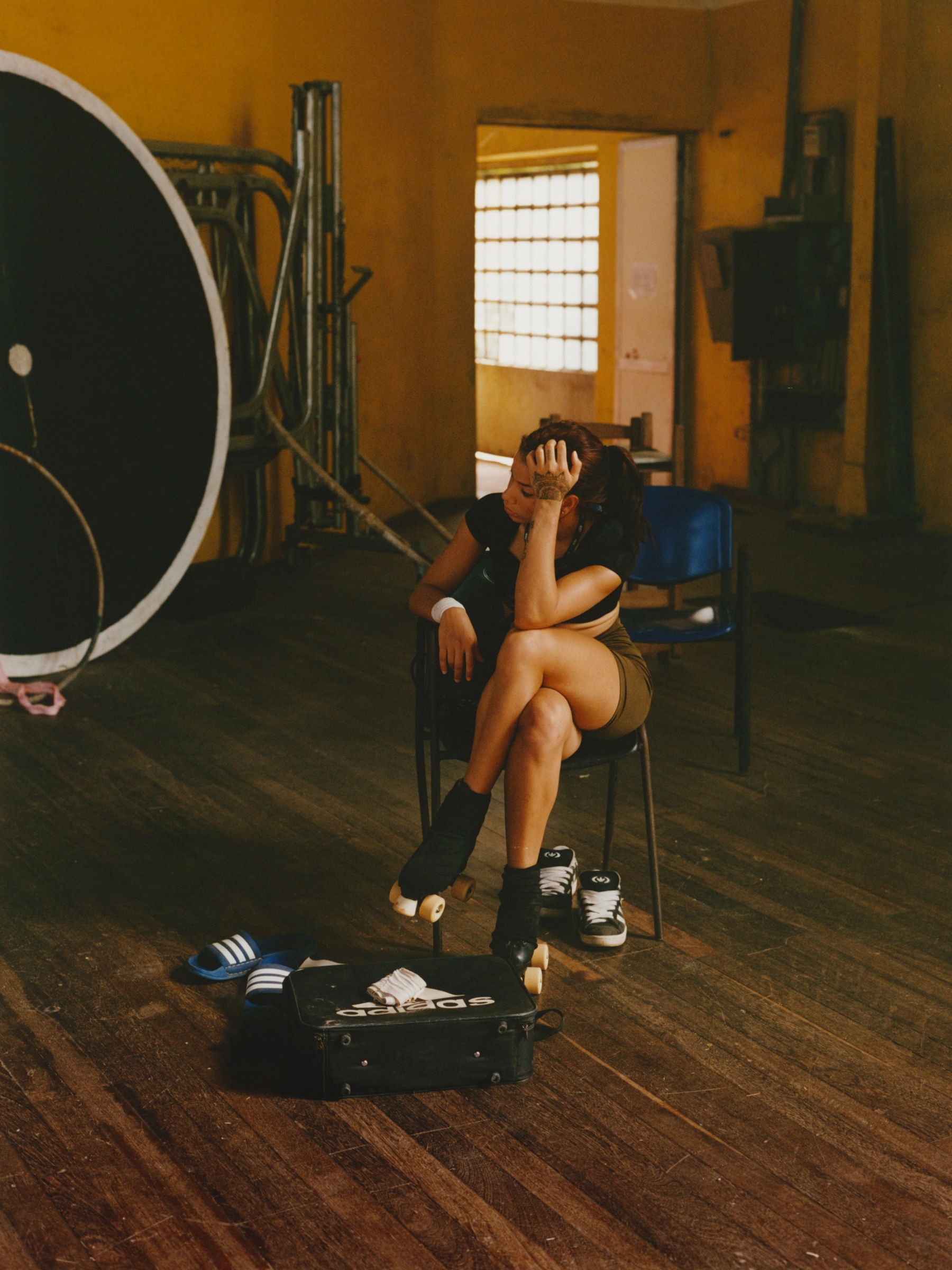
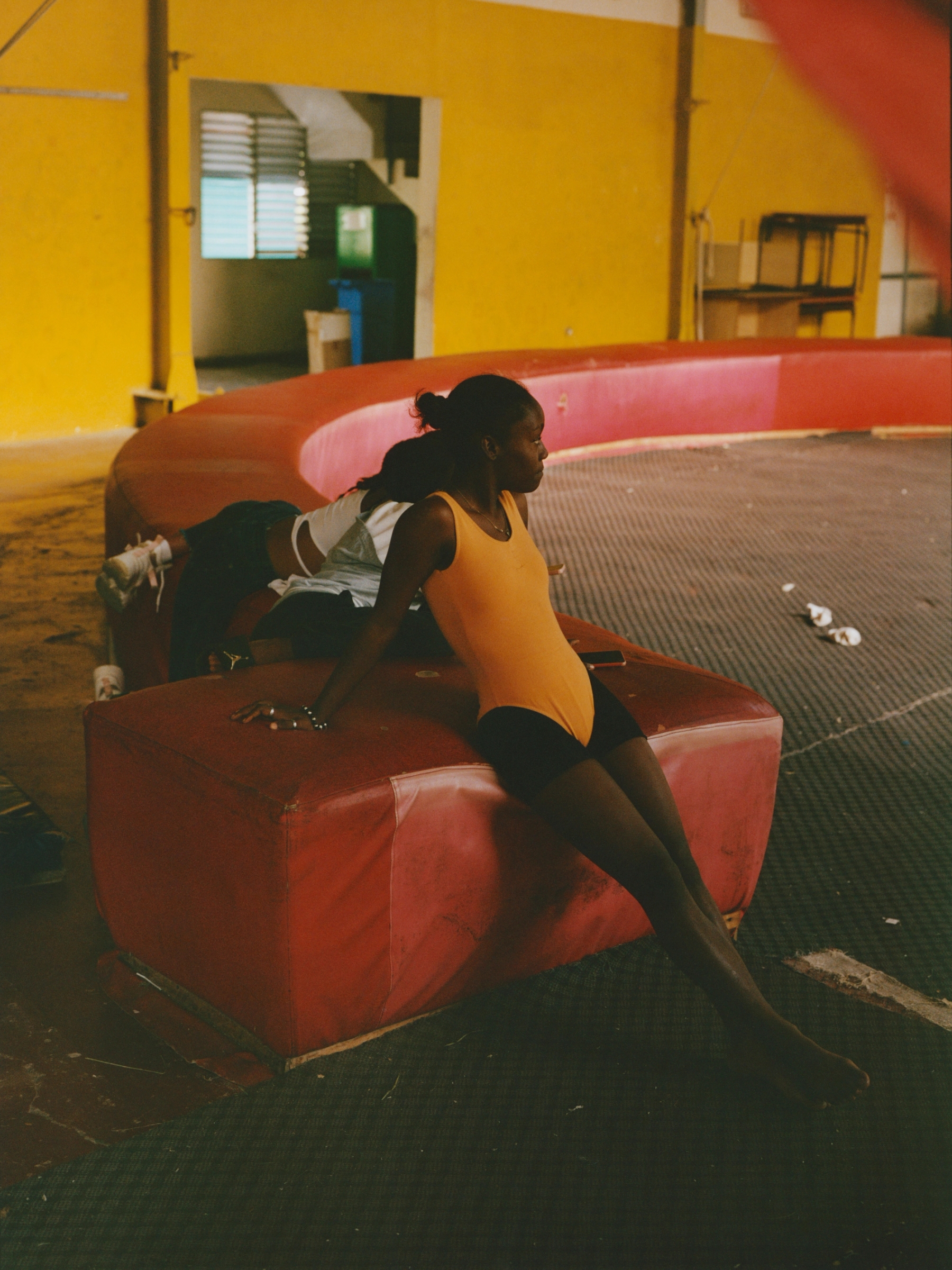
Daina Saibel Saldivar Estevez takes a break between rehearsals, finding a quiet moment amid the intensity of circus training.
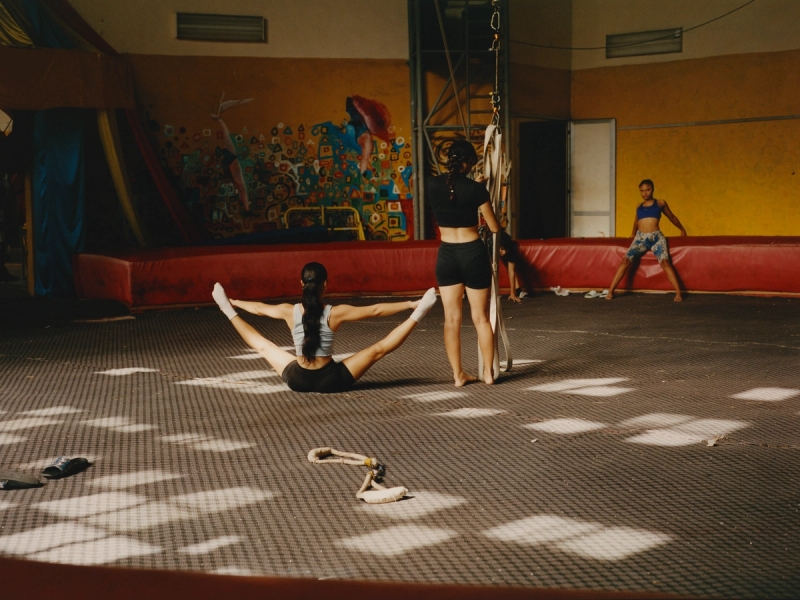
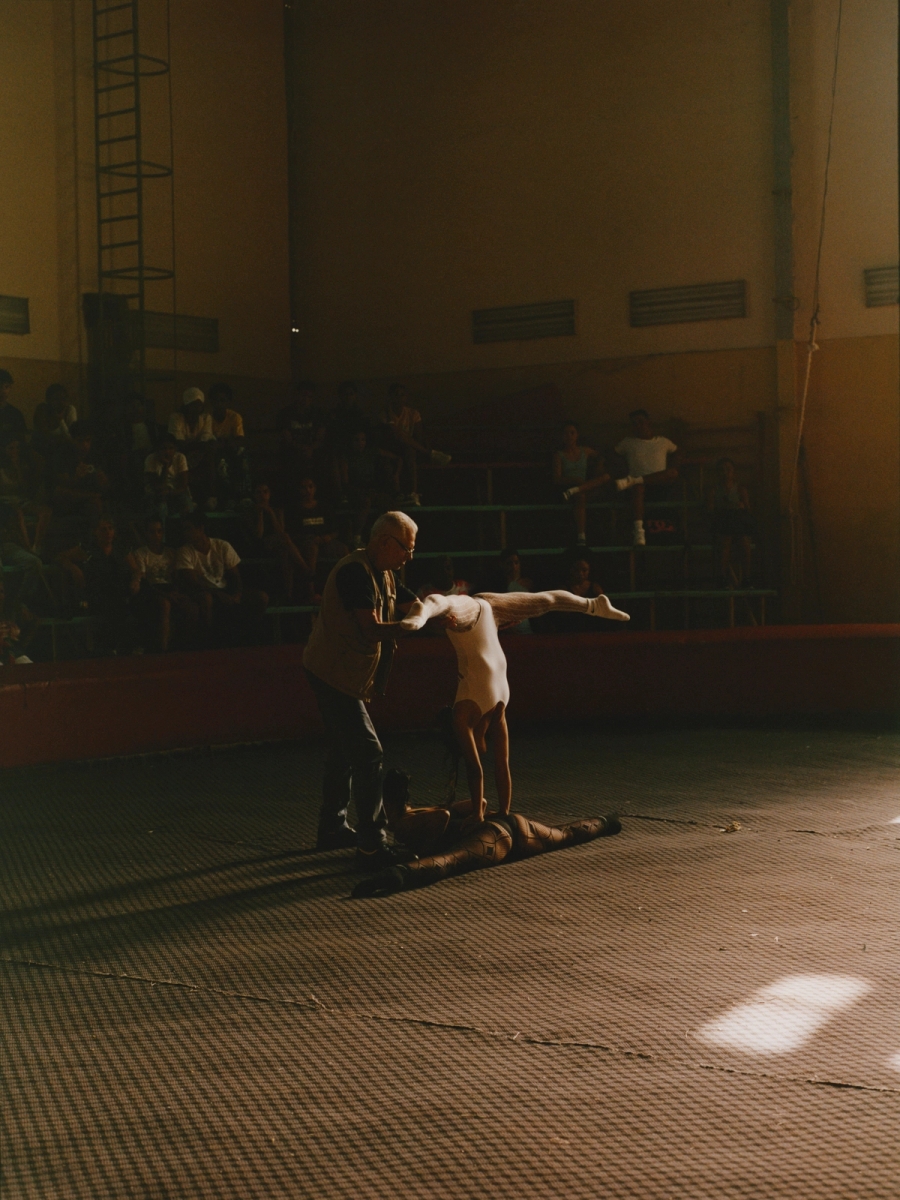
Naily De La Caridad Ortíz López is stretched by Professor Jorge Serguei Serguera before her aerial routine, highlighting the importance of flexibility and preparation in the circus arts.
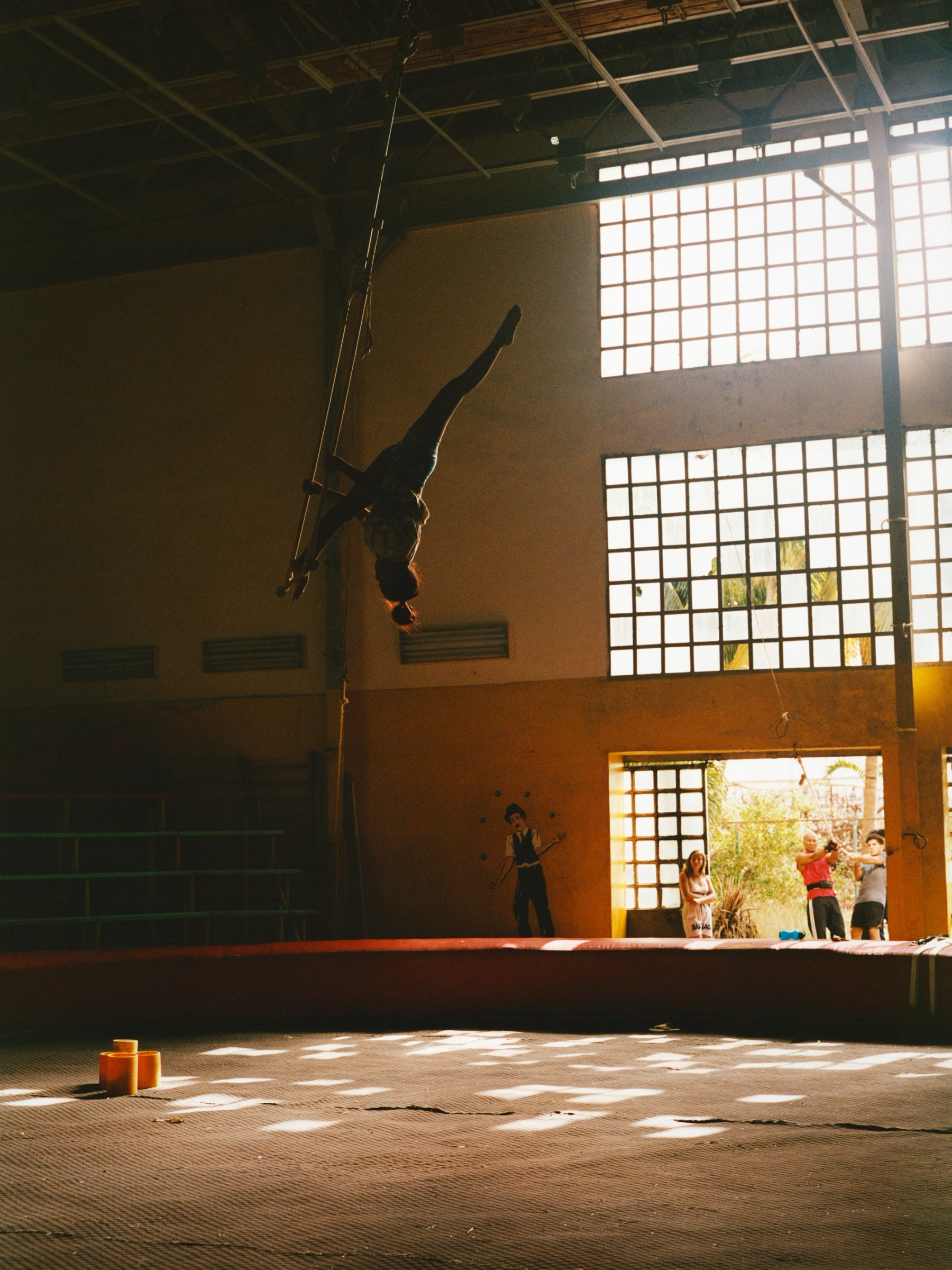
Rosselyn Quintana Ros clips in Yaimaris Alfonso López as they prepare to rehearse a high-flying roller-skate act.
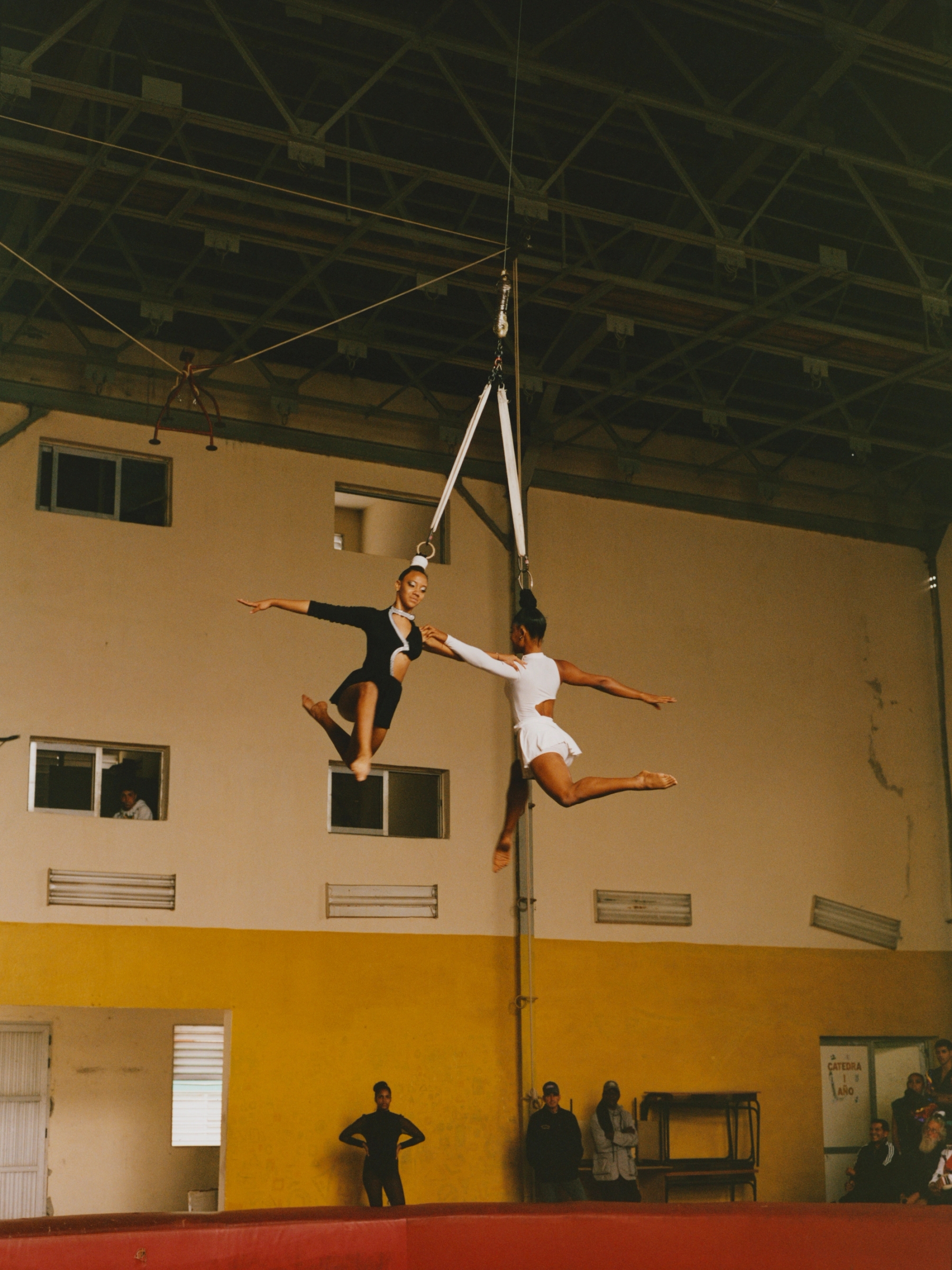
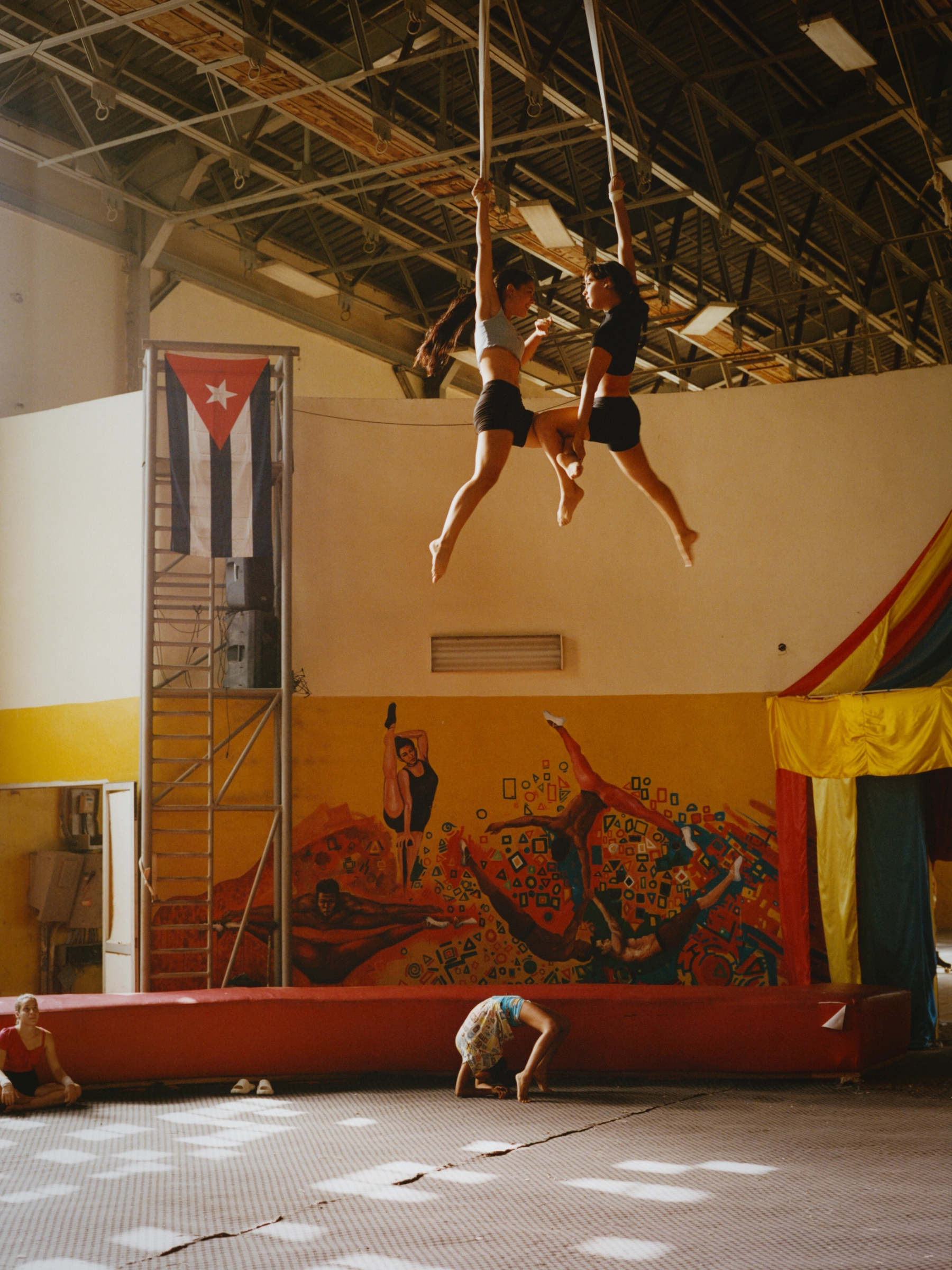
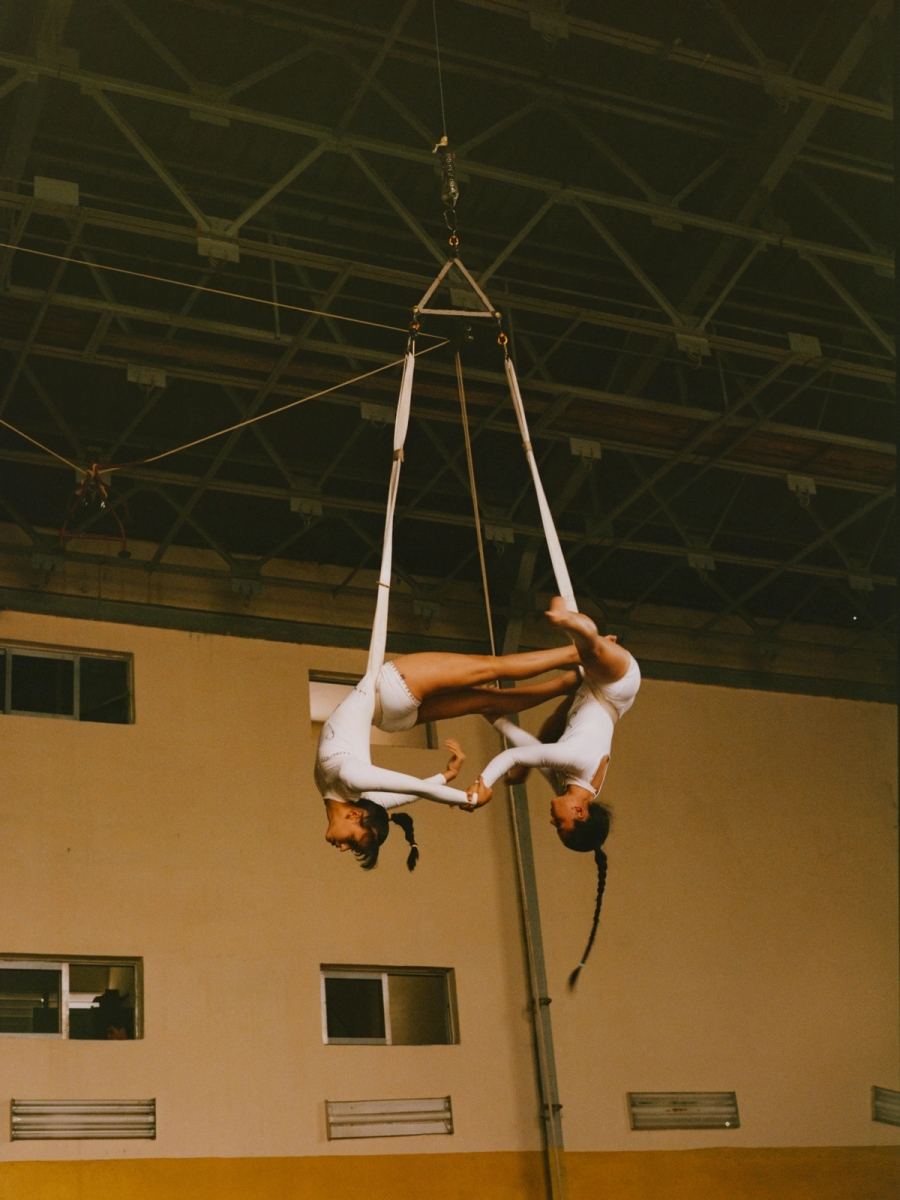
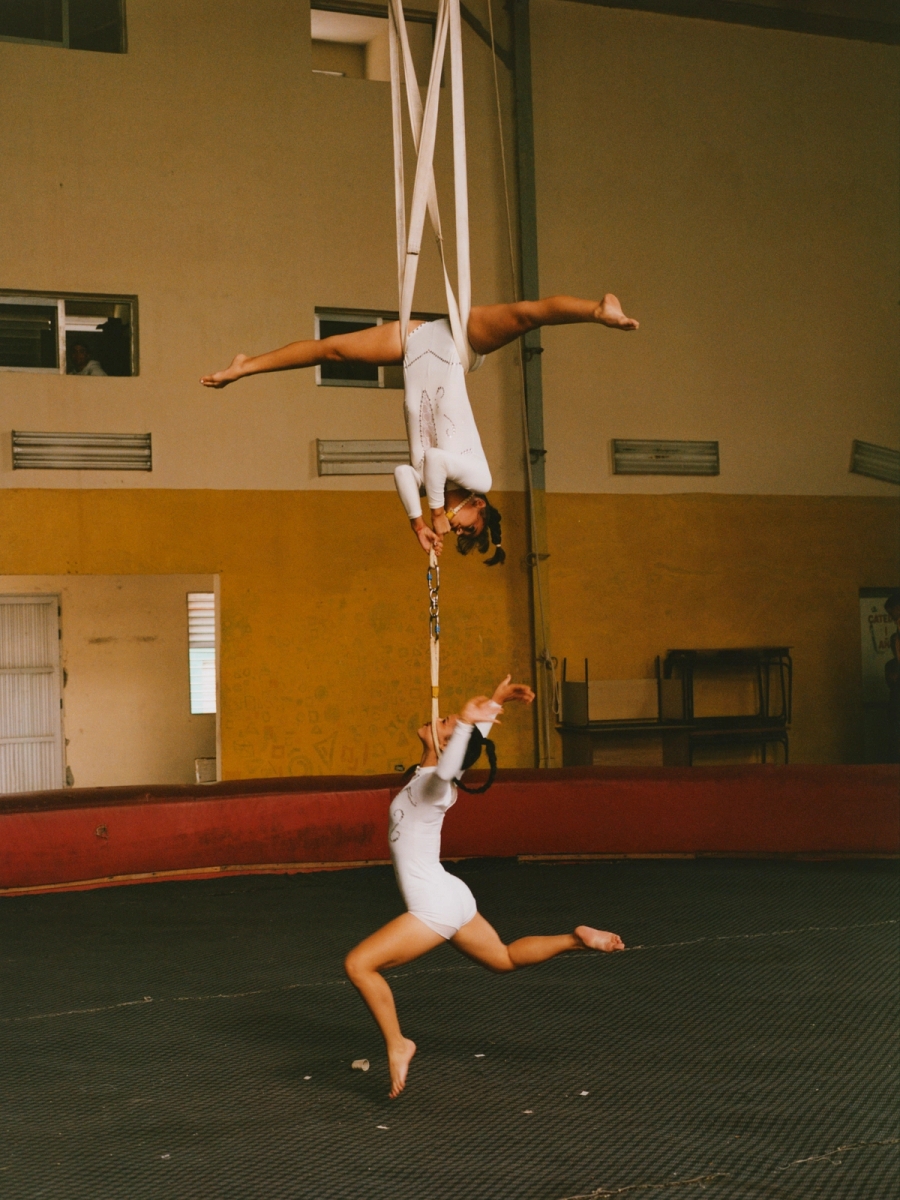
Lauren Llaguno Gutiérrez and Leira Novi Castaño Risco perform an aerial.
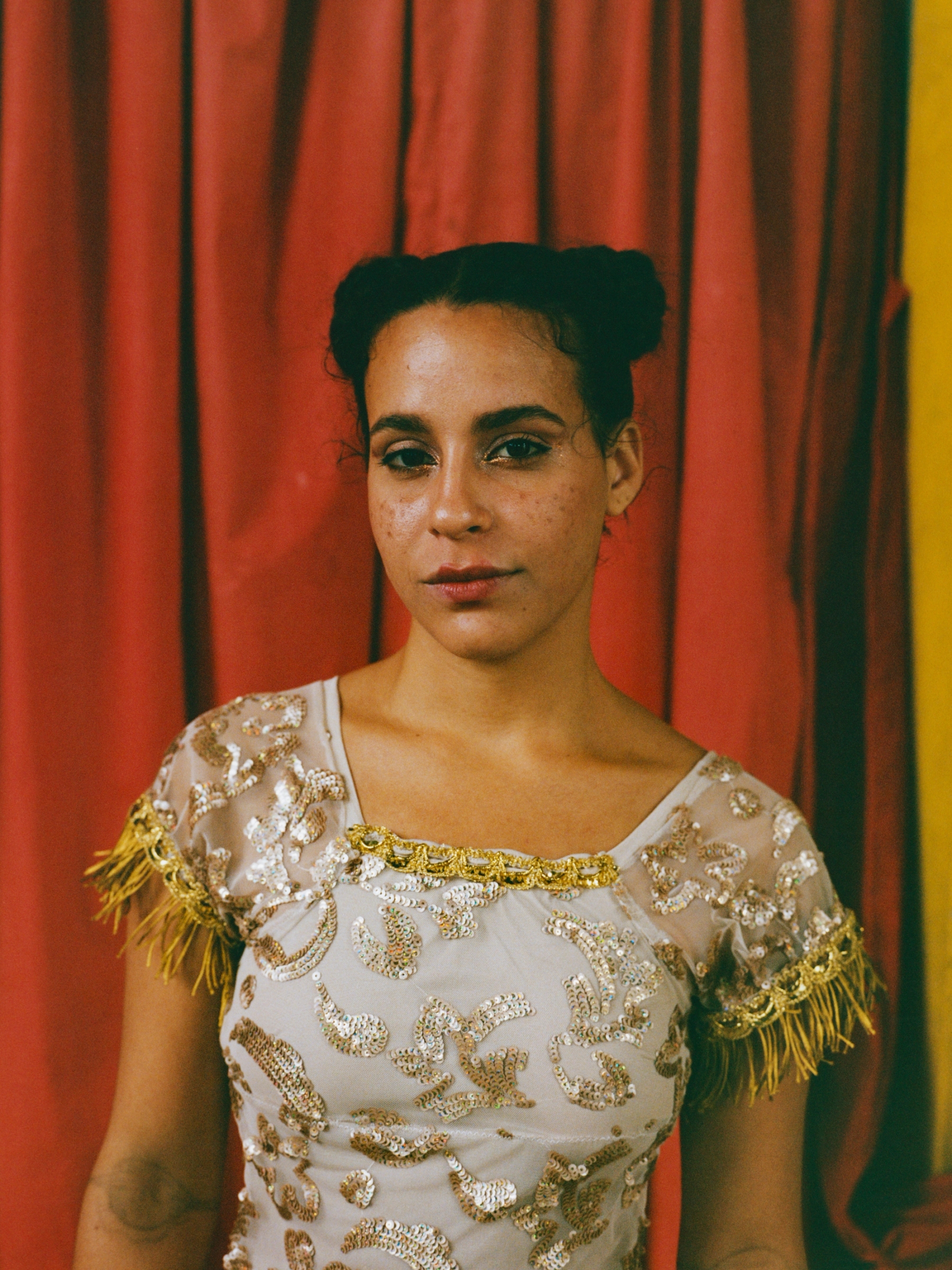
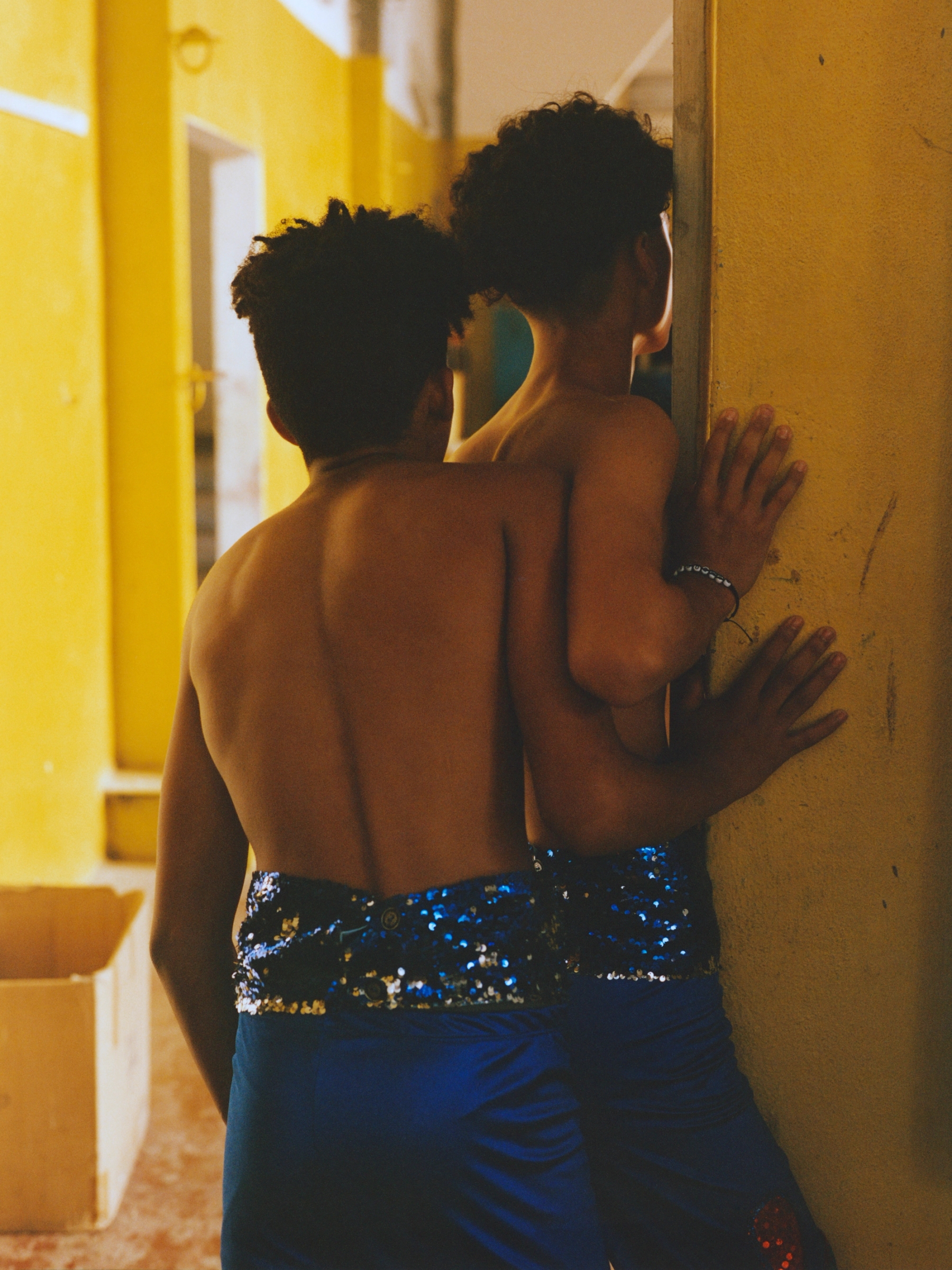
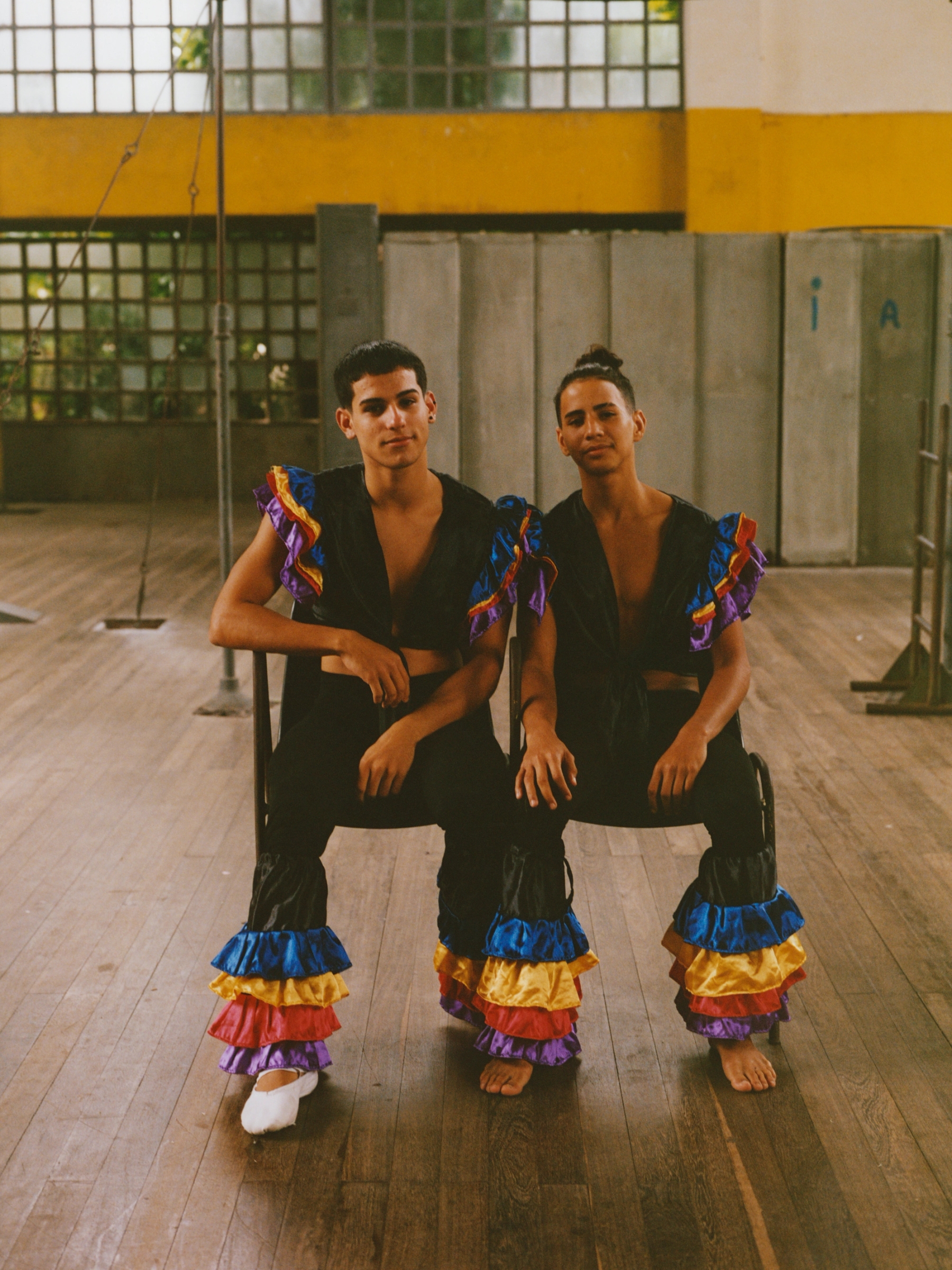
Alejandro Aguilar Izquierdo and Daikel Rafael Rizo Suárez sit for a portrait during a quiet moment after their performance.
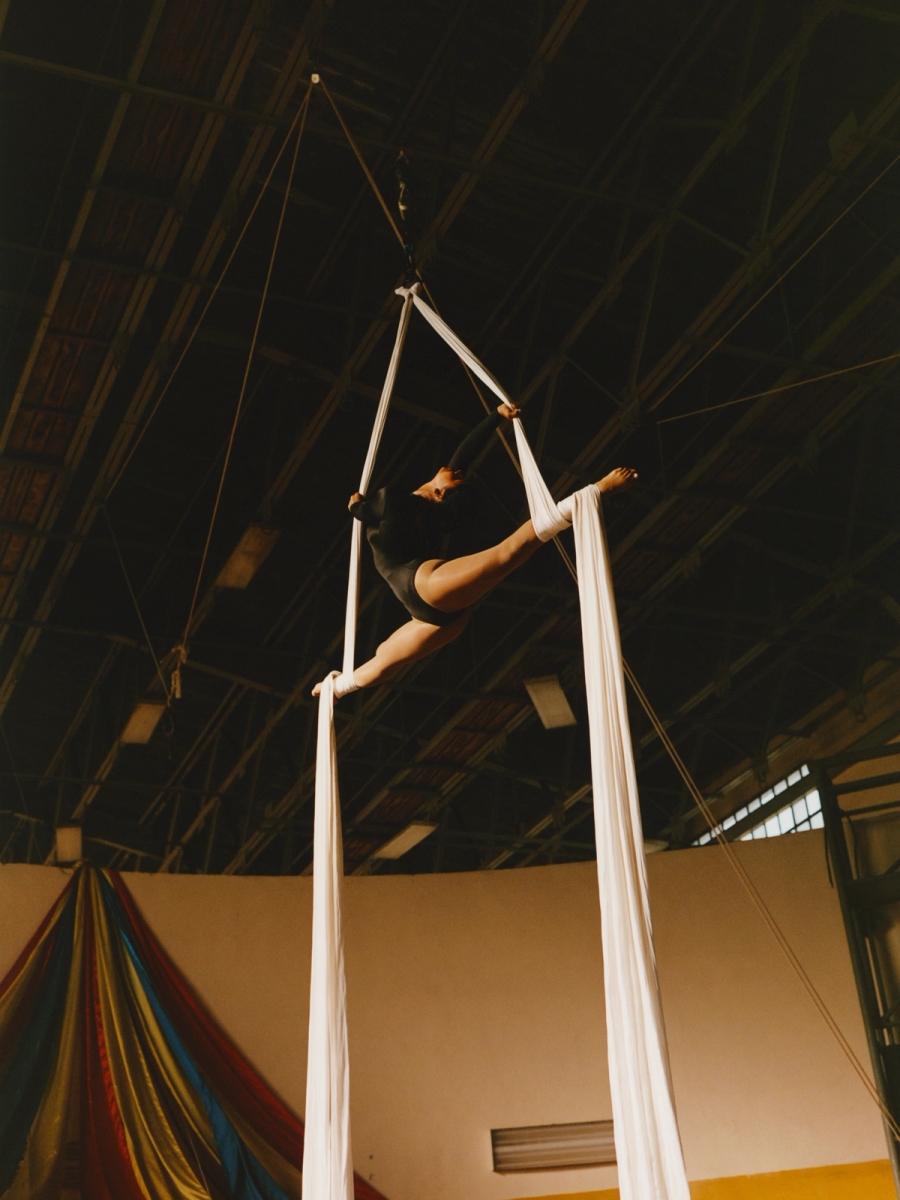
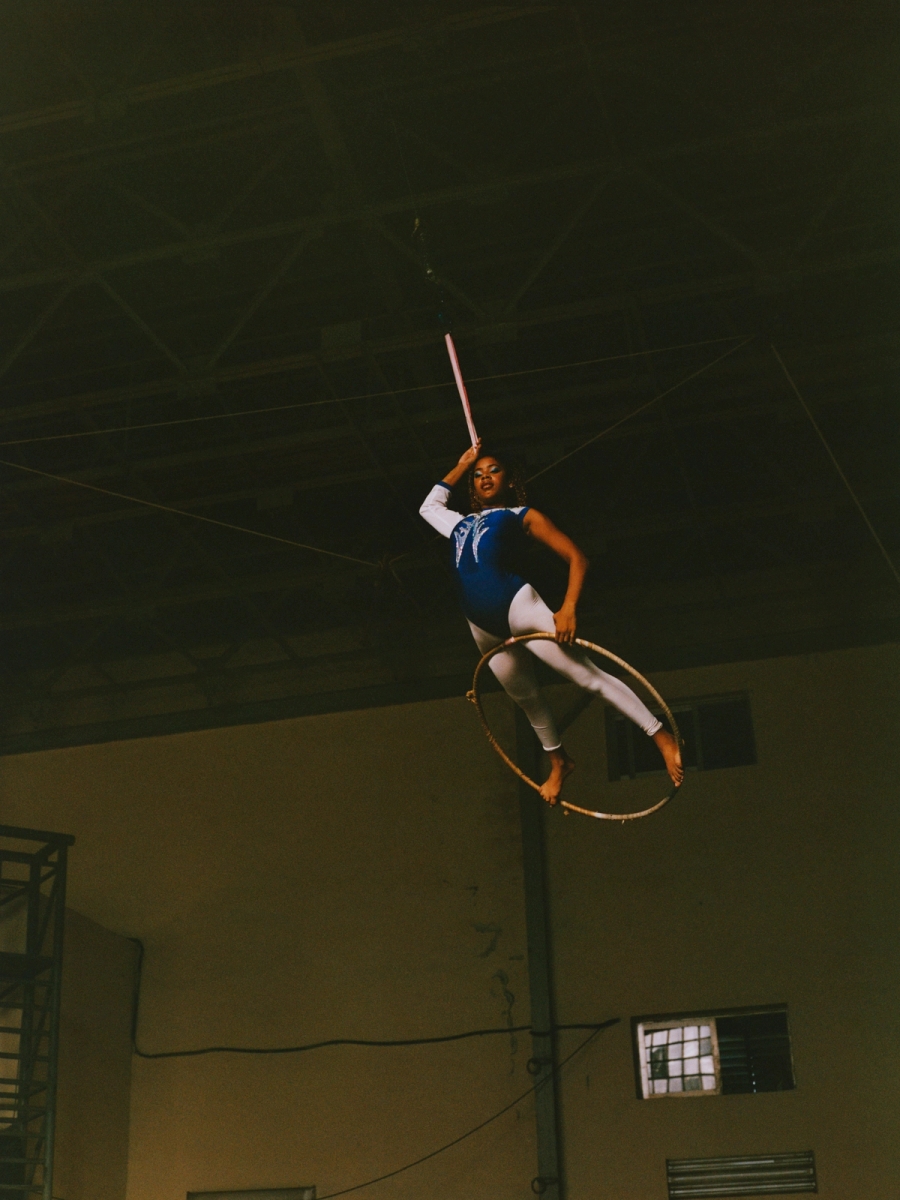
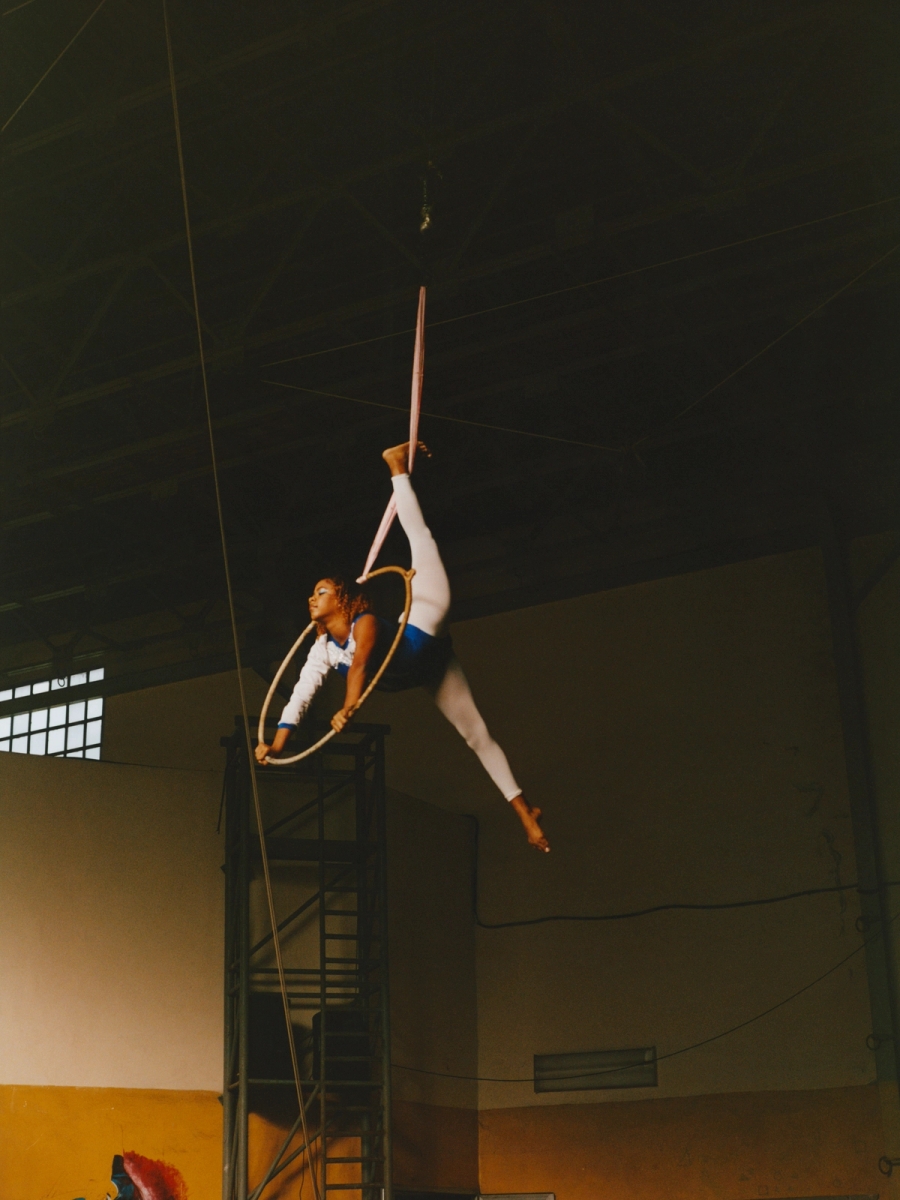
Alejandra Maya De La Honra Rivero perfoms an aerial ring act.
Rocío Margaret Barroso Veslasco and Leandro Jorro Peñate run through a few moves before their performance.
A rehearsal before final exams takes place in the Escuela Nacional de Circo’s main space, where a single classroom and open practice area serves as the heart of student life—hosting rehearsals, stretching, acrobatics training, and also housing the stretching table, makeup and hair prep area, and lockers. Despite the aged facilities, minimal modern equipment, and reliance on natural daylight, students continue to train and perform at an impressively high level.
At the end of 2024–2025, I was granted permission to photograph the students during their final rehearsals and performance training exams. What struck me most was not only the beauty and precision of their technique, or the visual impact of their movements, but the way this art embodies collaboration, cultural memory, and national identity.
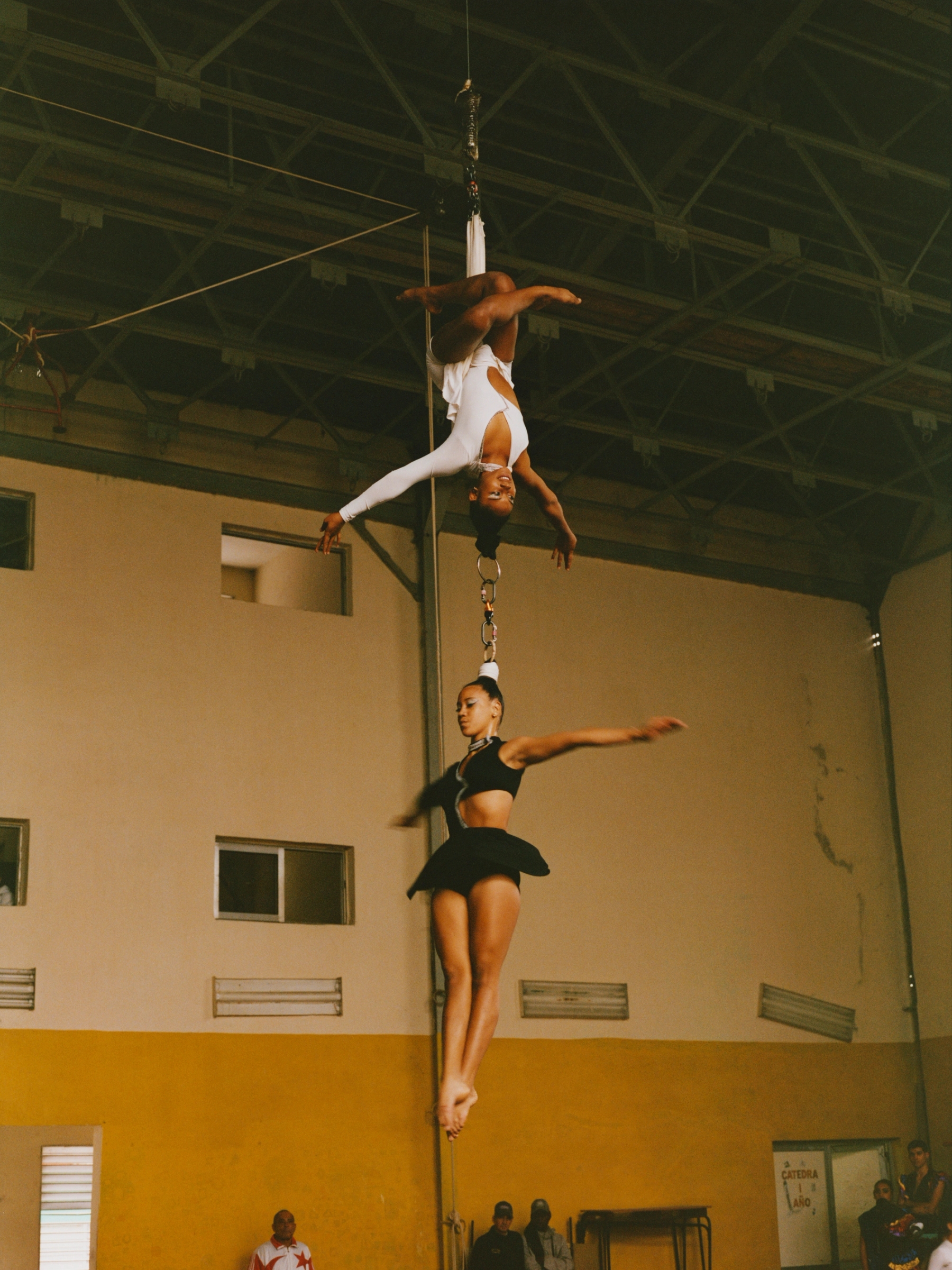
Rachel Ivón Labrada Pantoja and Merlin Talia Tamayo Rondón perform an aerial duet at Cuba’s Escuela Nacional de Circo, showcasing artistry that reflects the island’s multicultural heritage. Their costumes and choreography blend classical circus techniques with Spanish, African, and mixed cultural influences, incorporating the rhythm and flair of Cuban music and dance traditions like rumba and salsa.
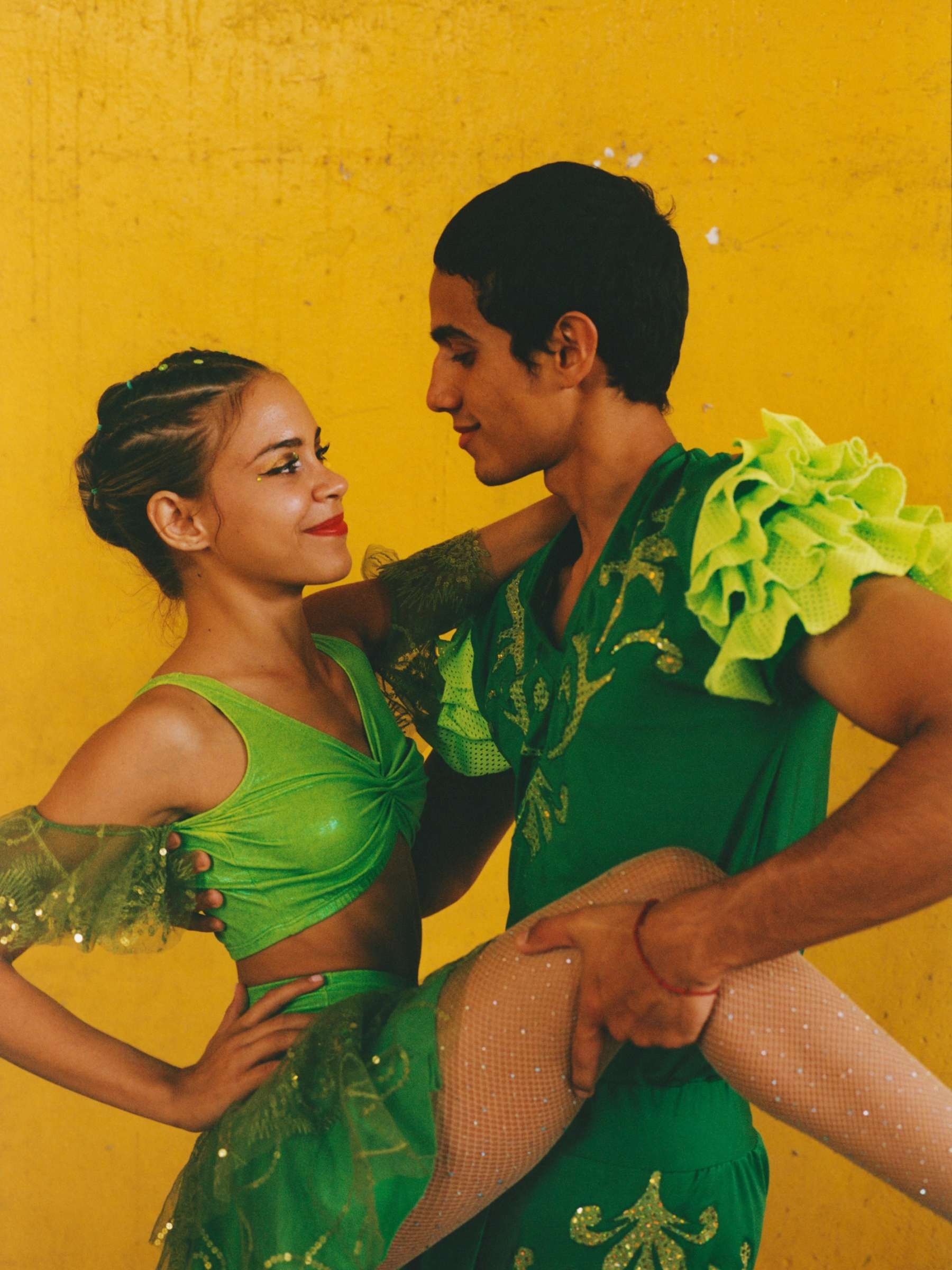
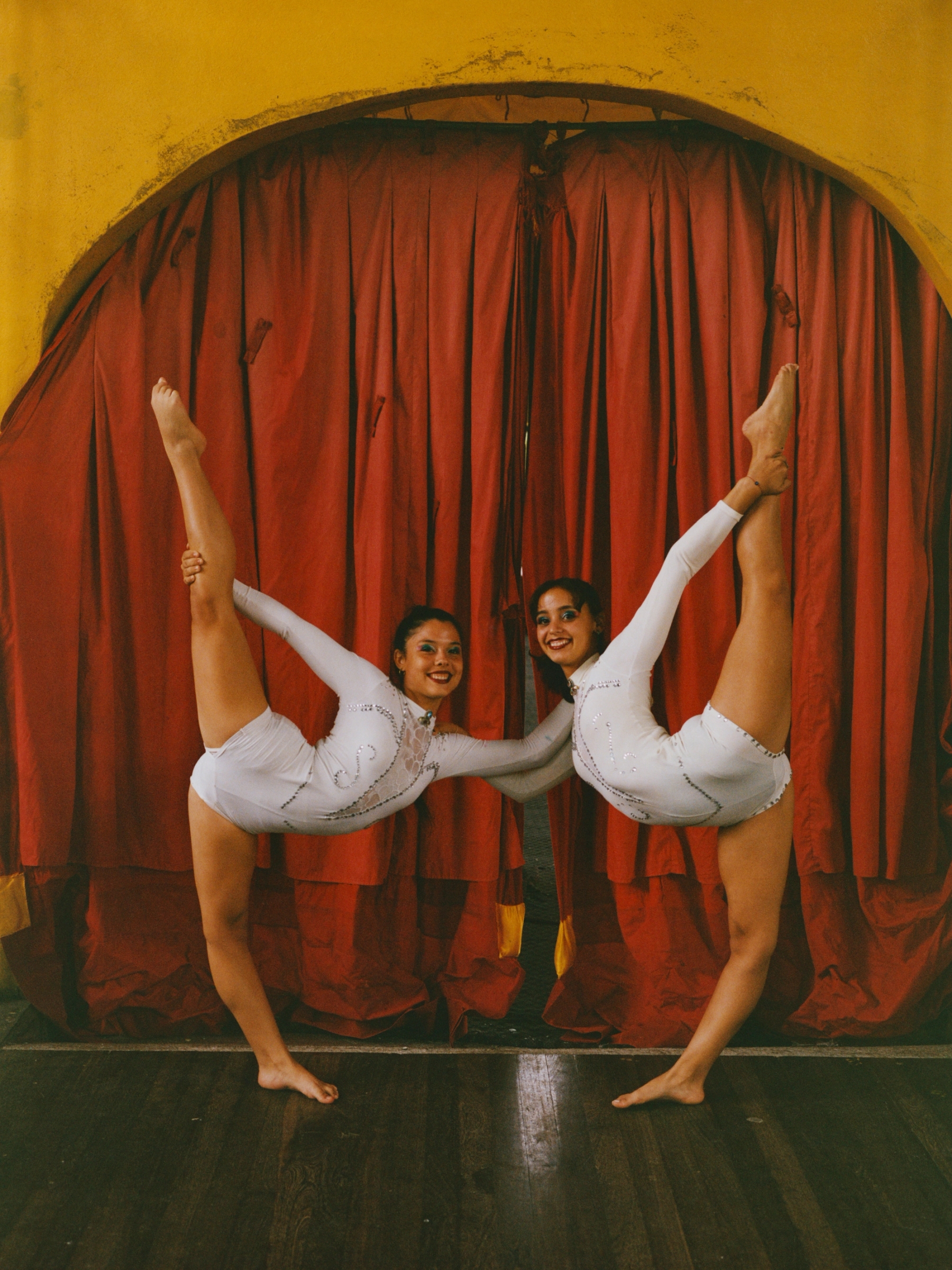
Lauren Llaguno Gutiérrez and Leira Novi Castaño Risco pose before a performance. Duo acts are central to Cuban circus arts, emphasizing trust, synchronization and collective expression, with influences from partner dances such as salsa and rumba.
Left to right: Rocío Margaret Barroso Veslasco and Leandro Jorro Peñate perform a paired roller-skating duet routine. | Samanta Collado Valdés and Daniel Enrique Vale Naya perform a juggling and balancing routine. In Cuba, juggling and balance are among the first circus skills taught, forming the basis for more complex acts.