Things Seen and Heard at HEAD Genève 2026 Seen by Inès Riber, Heloise Tourrenc & Annalise June Kamegawa
Photography Inès Riber & Heloise Tourrenc
Words Annalise June Kamegawa
Show HEAD
I.
The night before the show, Nina Gander, who helps lead the Fashion department, showed journalists around the facilities. She switched on the lights in narrow stairwells and led us through rooms filled with industrial sewing machines, leather trimmers, and knitting beds. Each student gets a corner for their studio. They are filled with cream-coloured mannequins, marked and divided by black draping tape, images of memes and icons, and suitcases bursting at the zippers with what can only be described as stuff and things. There’s an IKEA RÅSKOG cart with snacks and tailors’ pins.
At a certain point, somewhere between the leather lab and the master’s studios, members of the jury – who would award six prizes the next day, after the final show wrapped – joined the informal tour. They’re all very tall men, dressed well but unassumingly, whispering loudly in Italian (but also French and English).
II.
It’s the morning of the show, and we return to campus. Outside, there’s a bronze horse statue standing like a human. I take a picture but ask no questions.
Press rep Romain Casella buys the journalists a (second? third?) round of coffee. Before the show, adorned in giant acetate frames that contrast with his extremely soft-spoken manner, Hippolyte Laporte tells a group of highly caffeinated writers with tiny mics that his collection was inspired by guests at a bourgeois dinner party turning into bugs. I crane my neck to look inside the cage of a corset top he’s created, and I’m stunned by the pleating and boning. I look back, and someone on staff mouths, I know!
III.
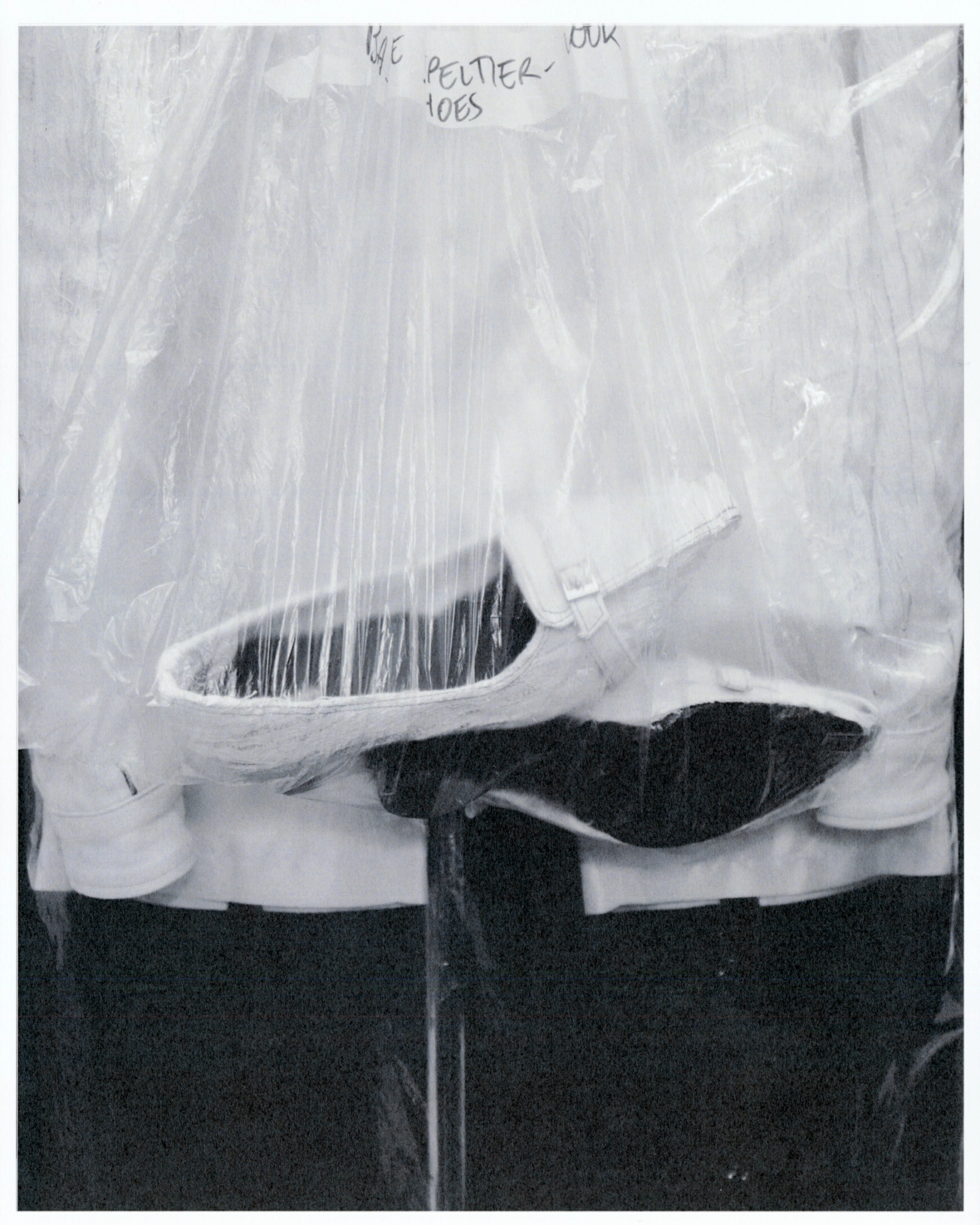
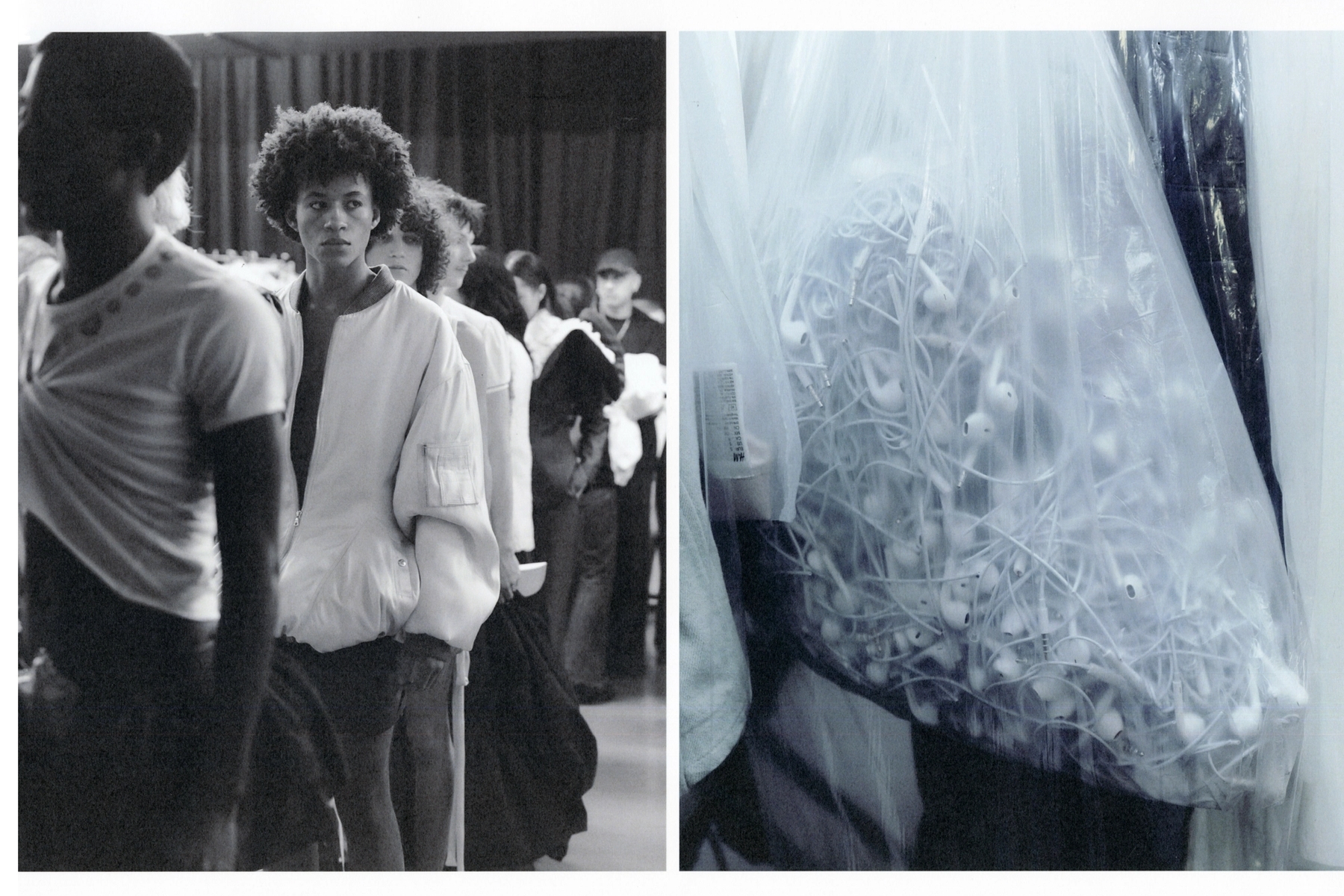
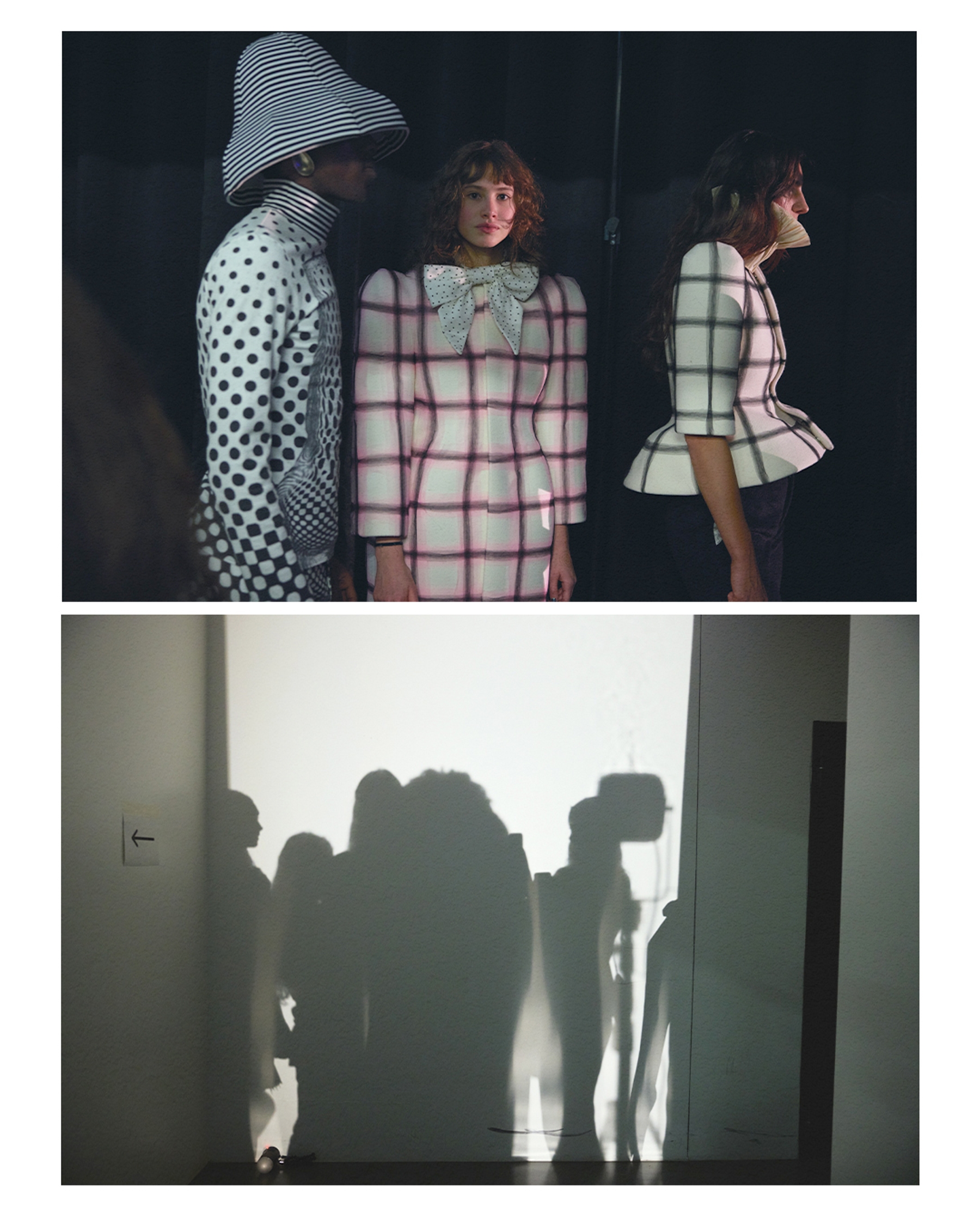
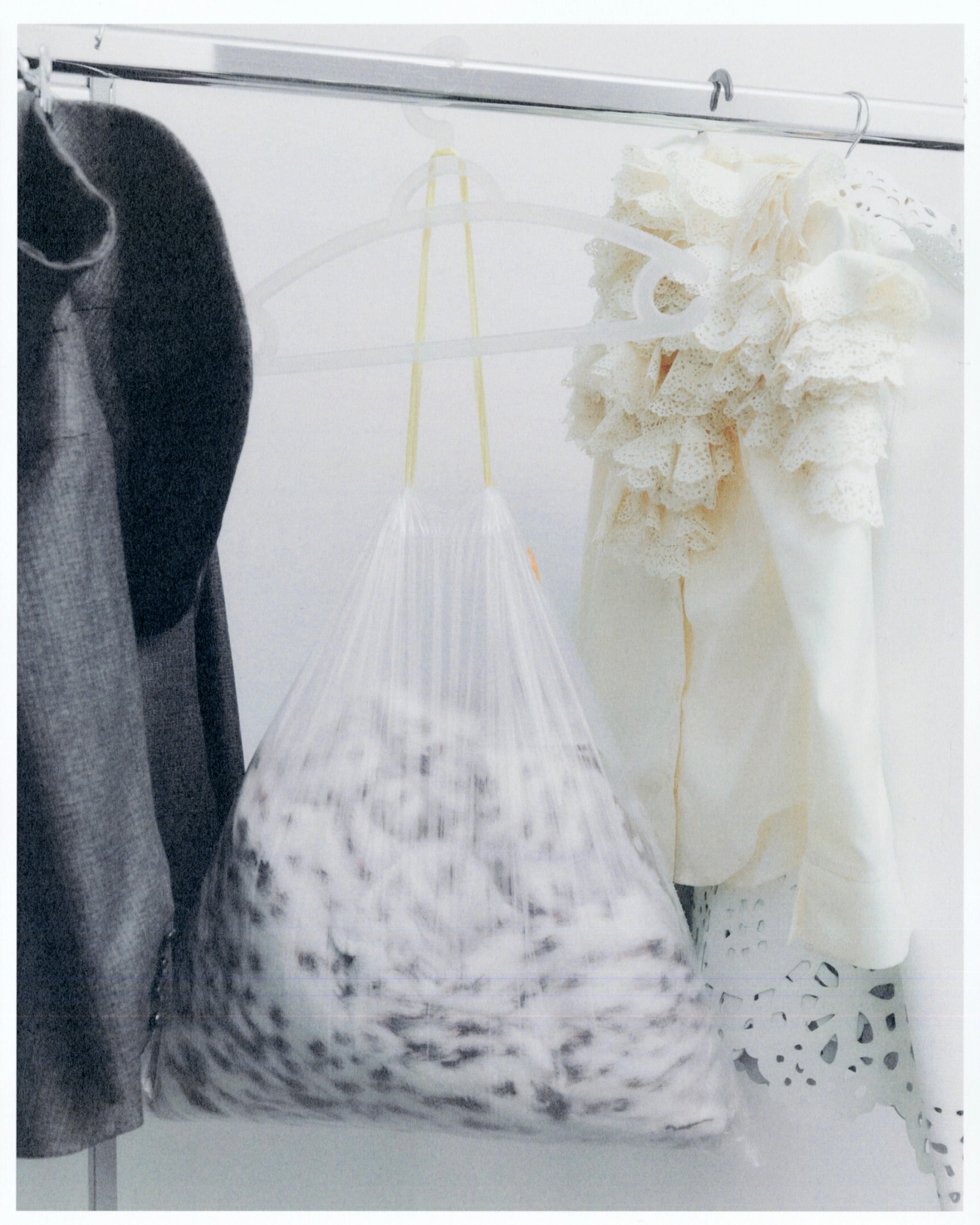
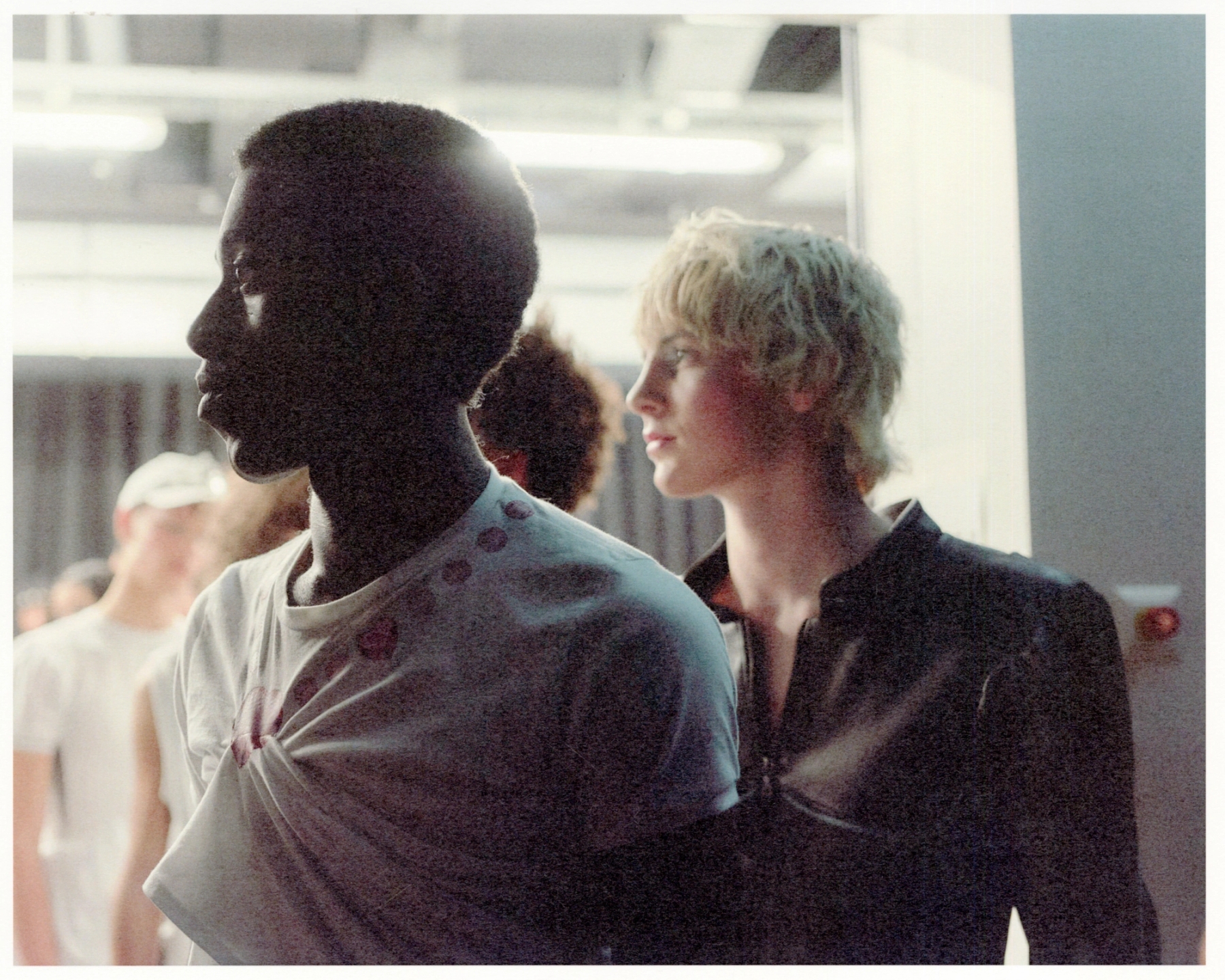
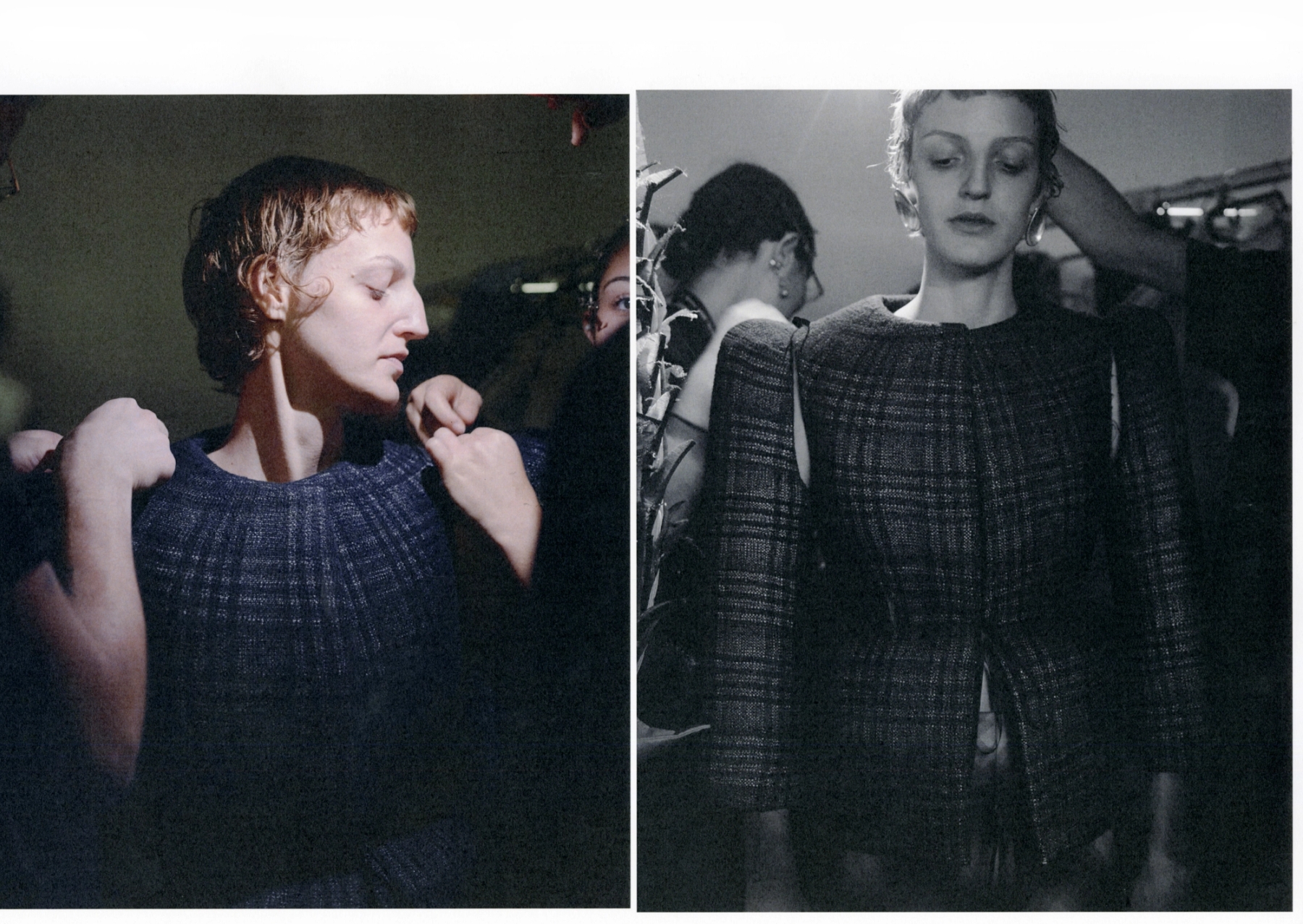
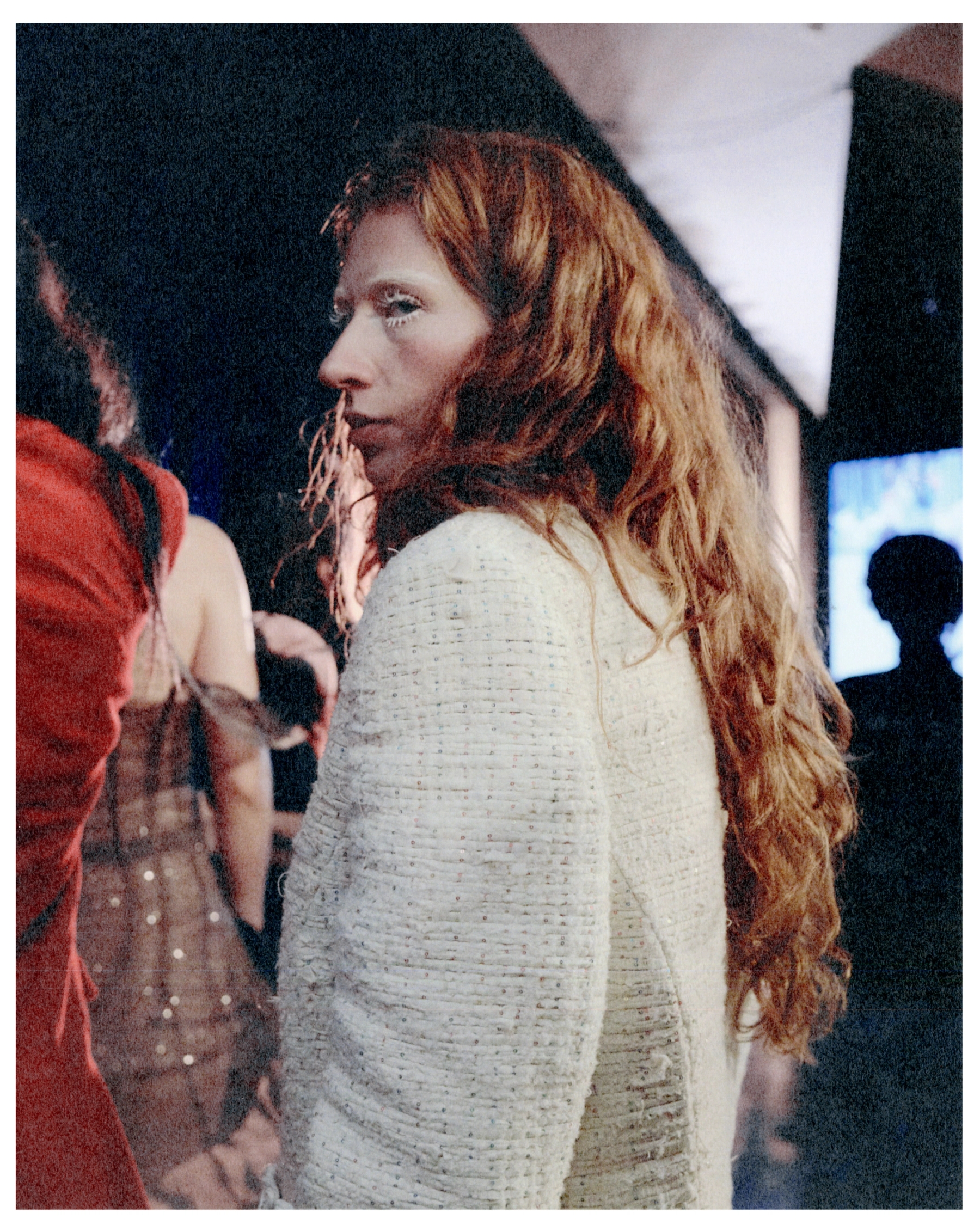
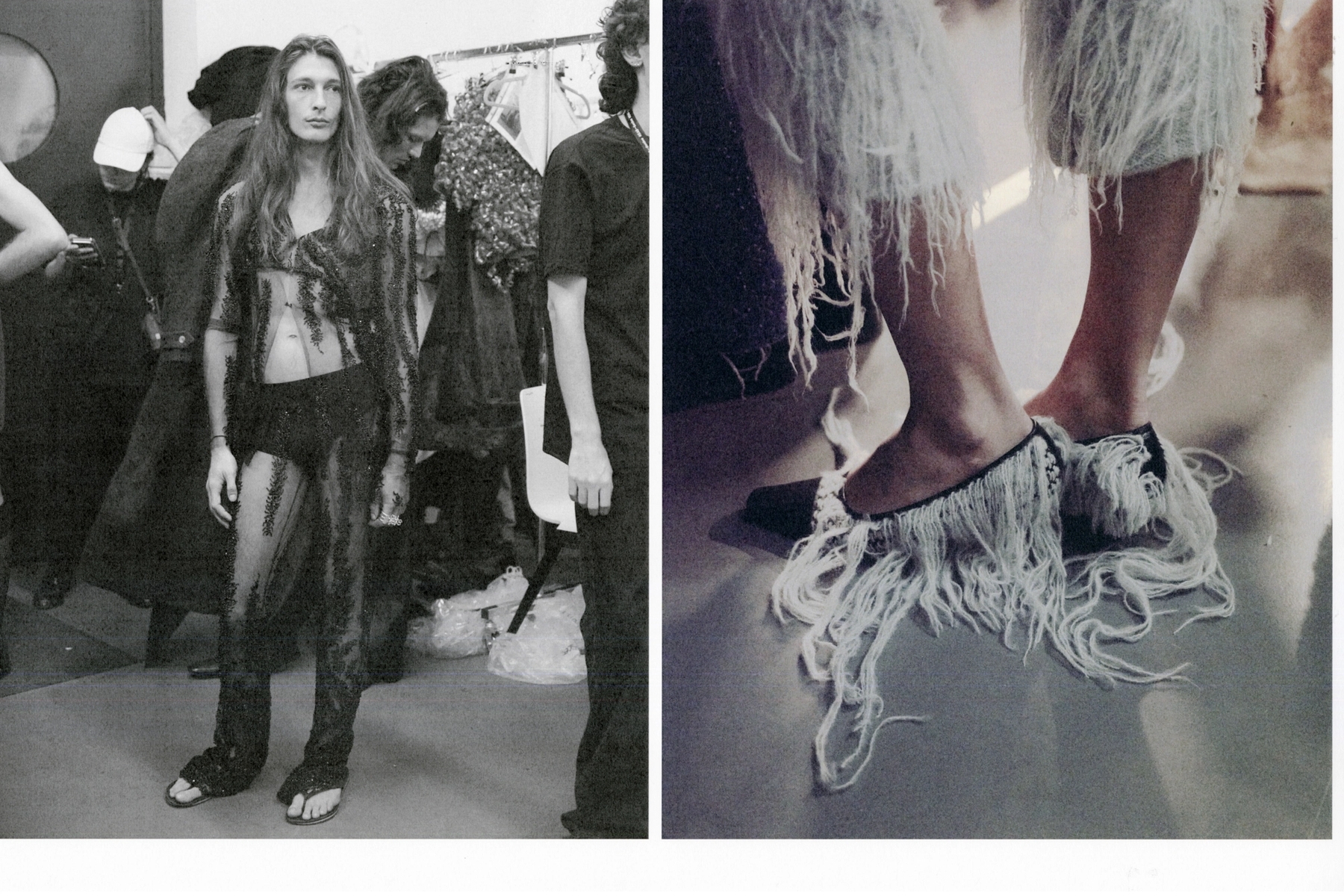
Behind the scenes, or better, behind the runway, we’re ushered into a room filled with racks of clothes, models, stylists, and folks in black HEAD Genève shirts. It seems like everyone in the room is under 25 and stressed, so it’s hard to guess who could be who. The racks are organised by model. More than one person is documenting the fervour with an early-2000s handycam. This room is noticeably colder, and I wonder if it’s to compensate for the ‘heat of the moment’ that abounds backstage.
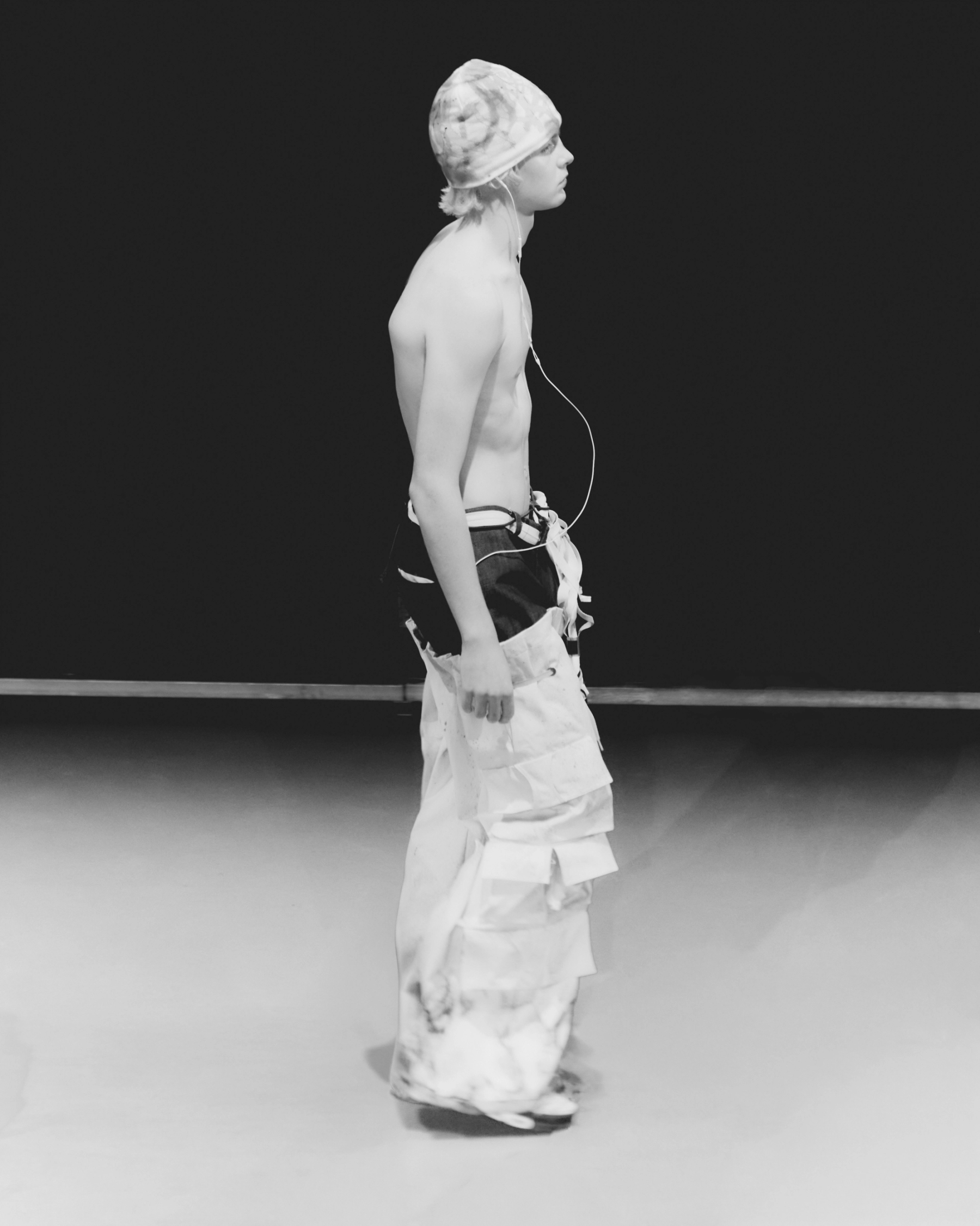
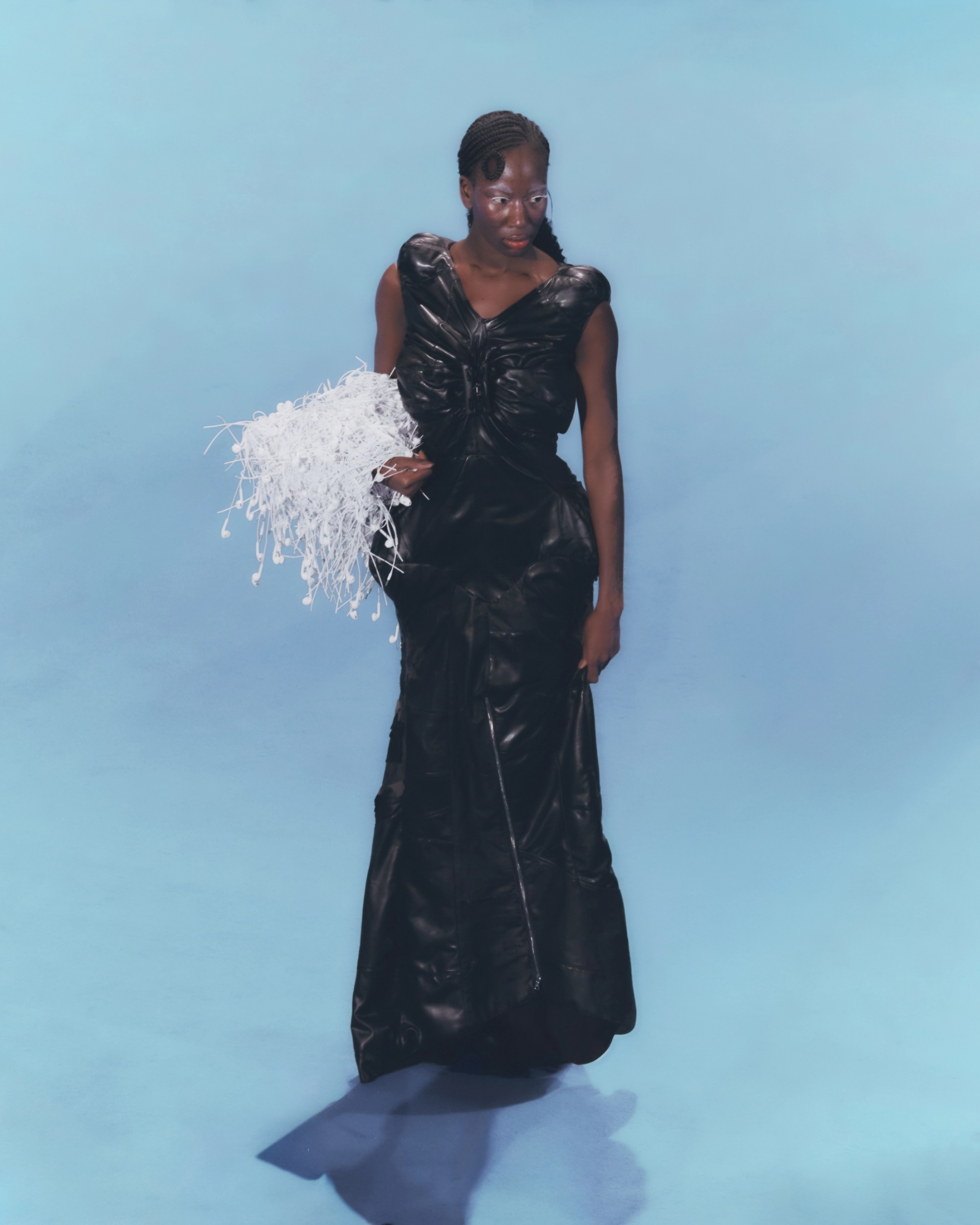
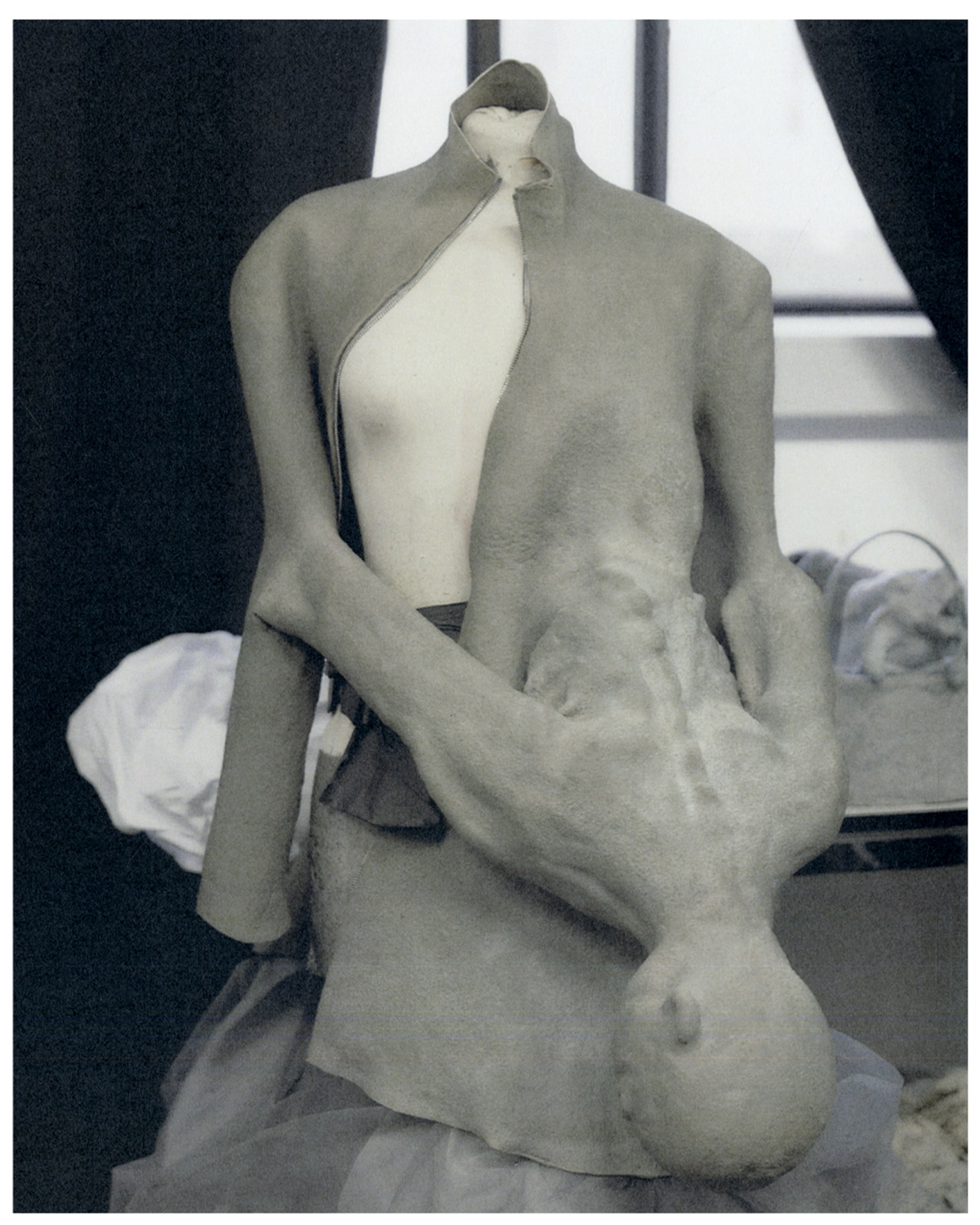
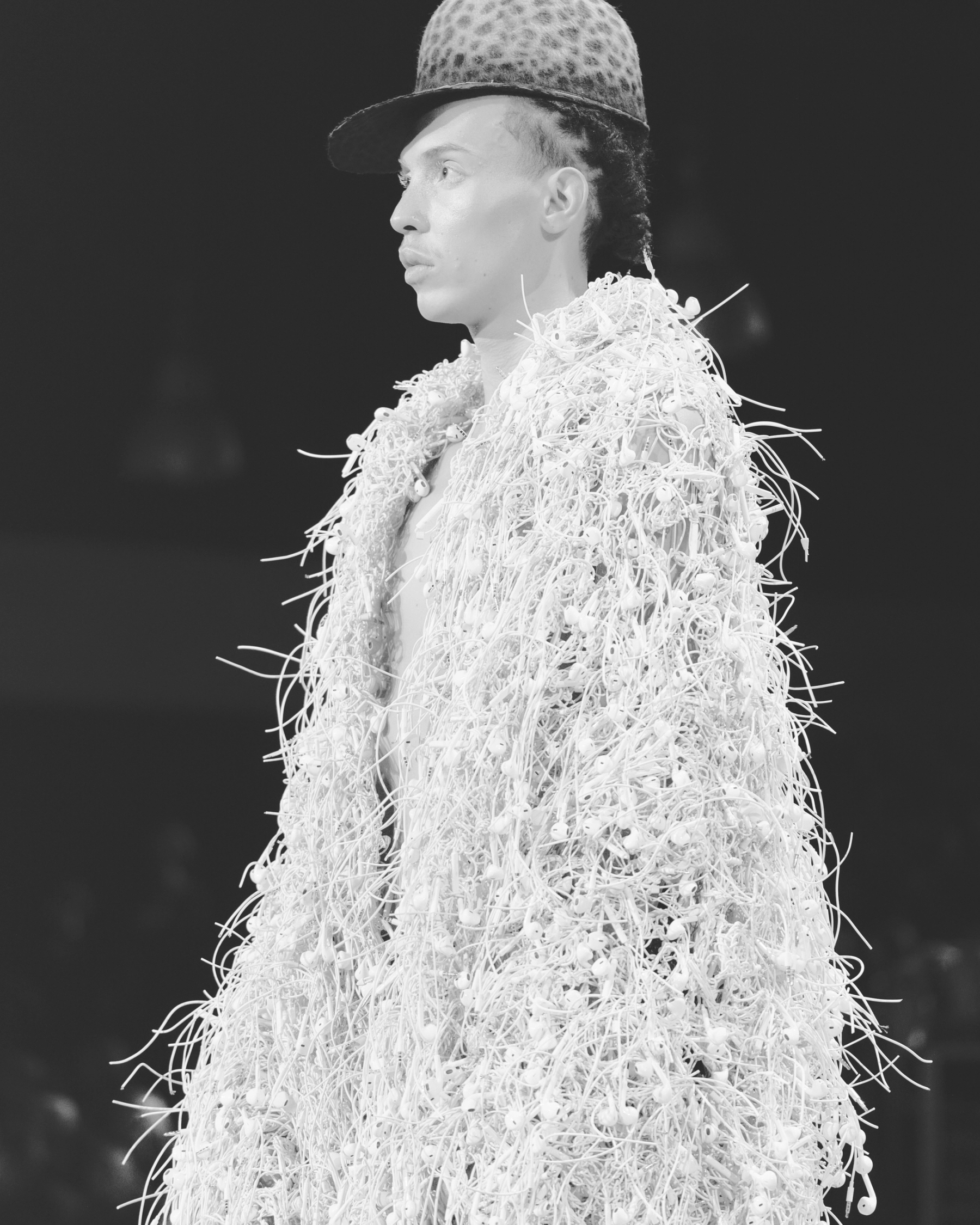
Near the table of accessories, one of Antoine Panabière’s pieces is resting, disembodied. It’s a garment that’s somewhere between a blouse and a corpse. It’s made from a very grey, very fleshy substance. There are clothes, shoes, and purses bursting from every corner. It’s as if this room has become the suitcases decorating each of their studios. Each trash can is more filled than the next with the carcasses of coffee cups. A tangle of headphone wires hang off a rack. On closer inspection, it’s a floor-length gown.
IV.
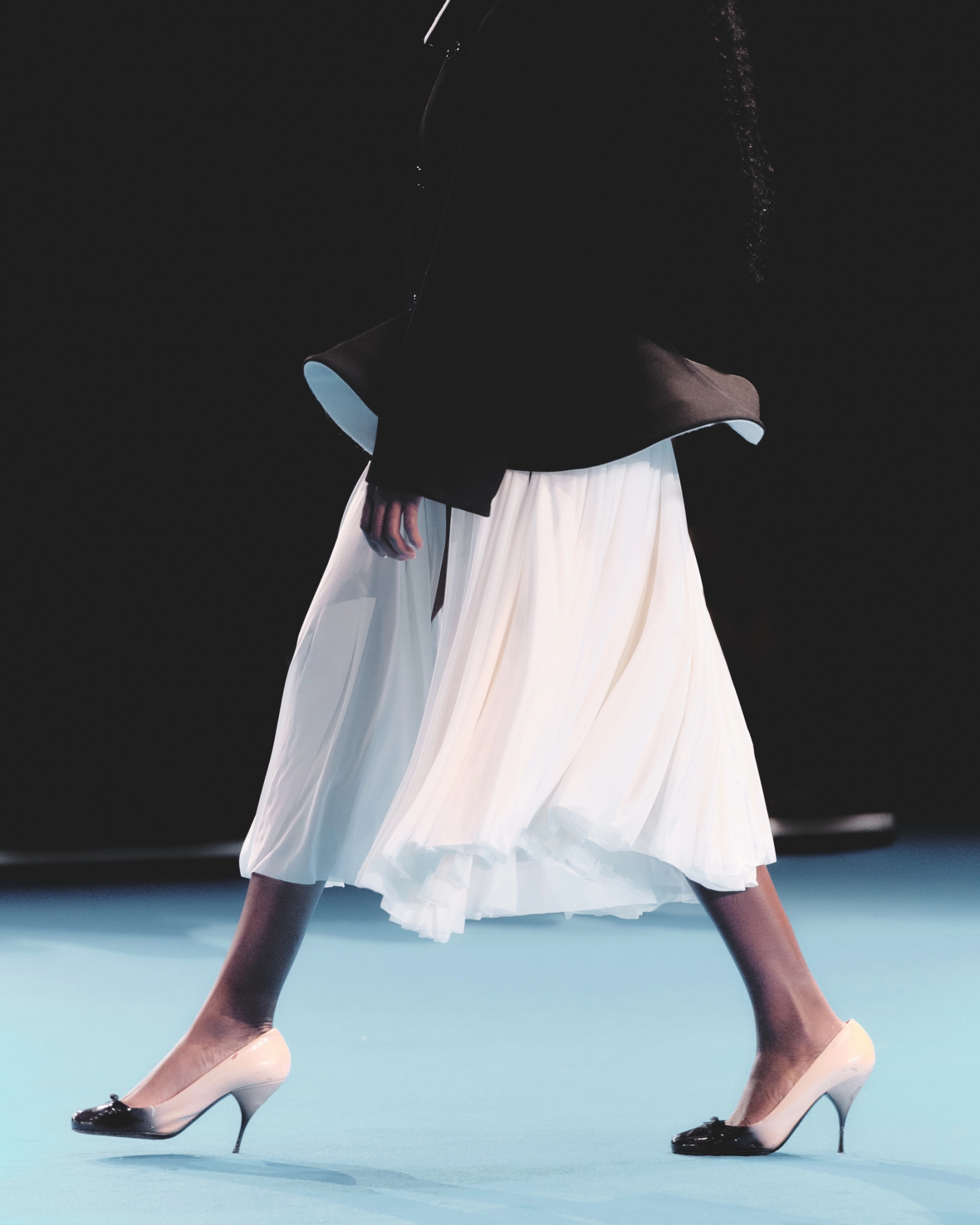
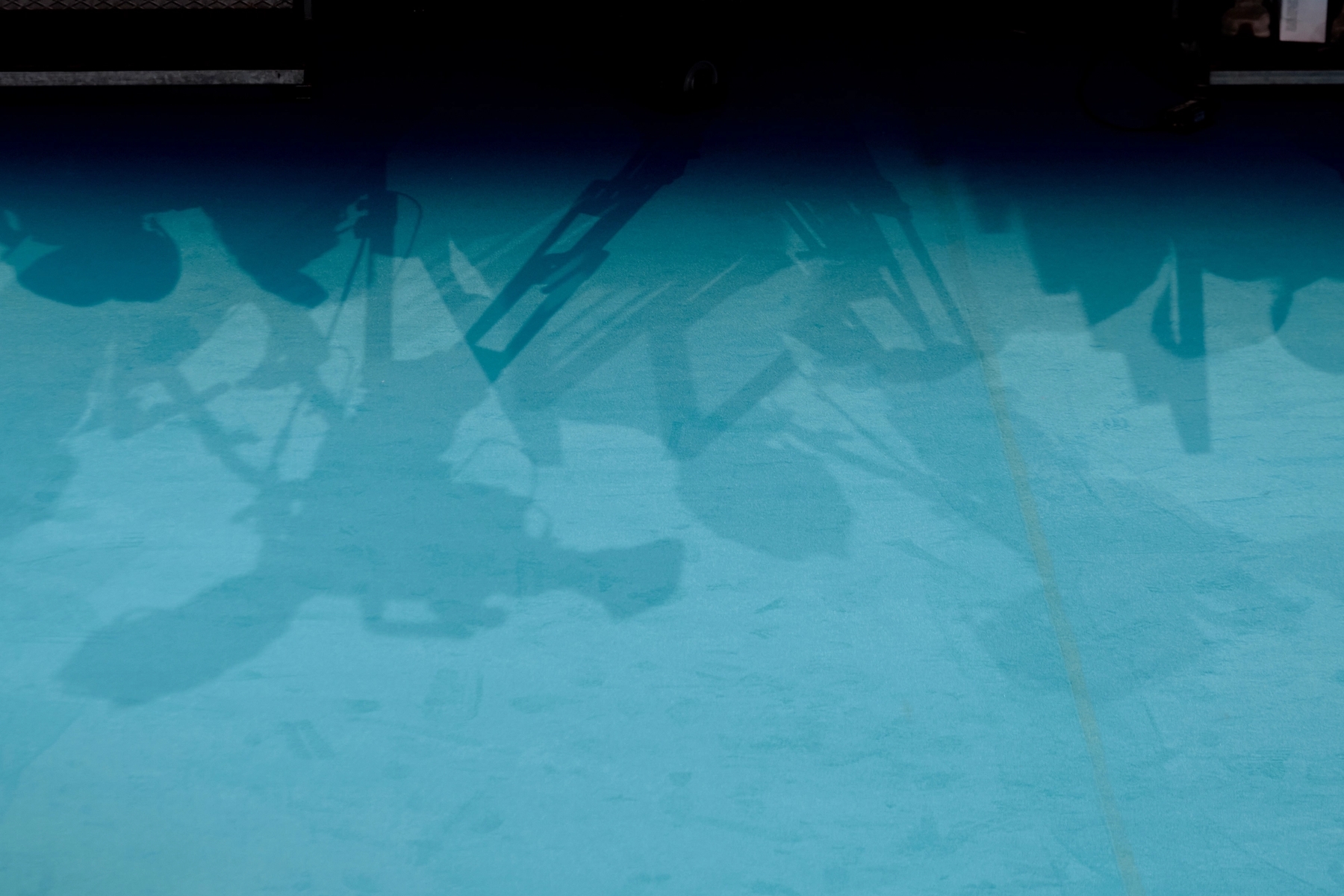
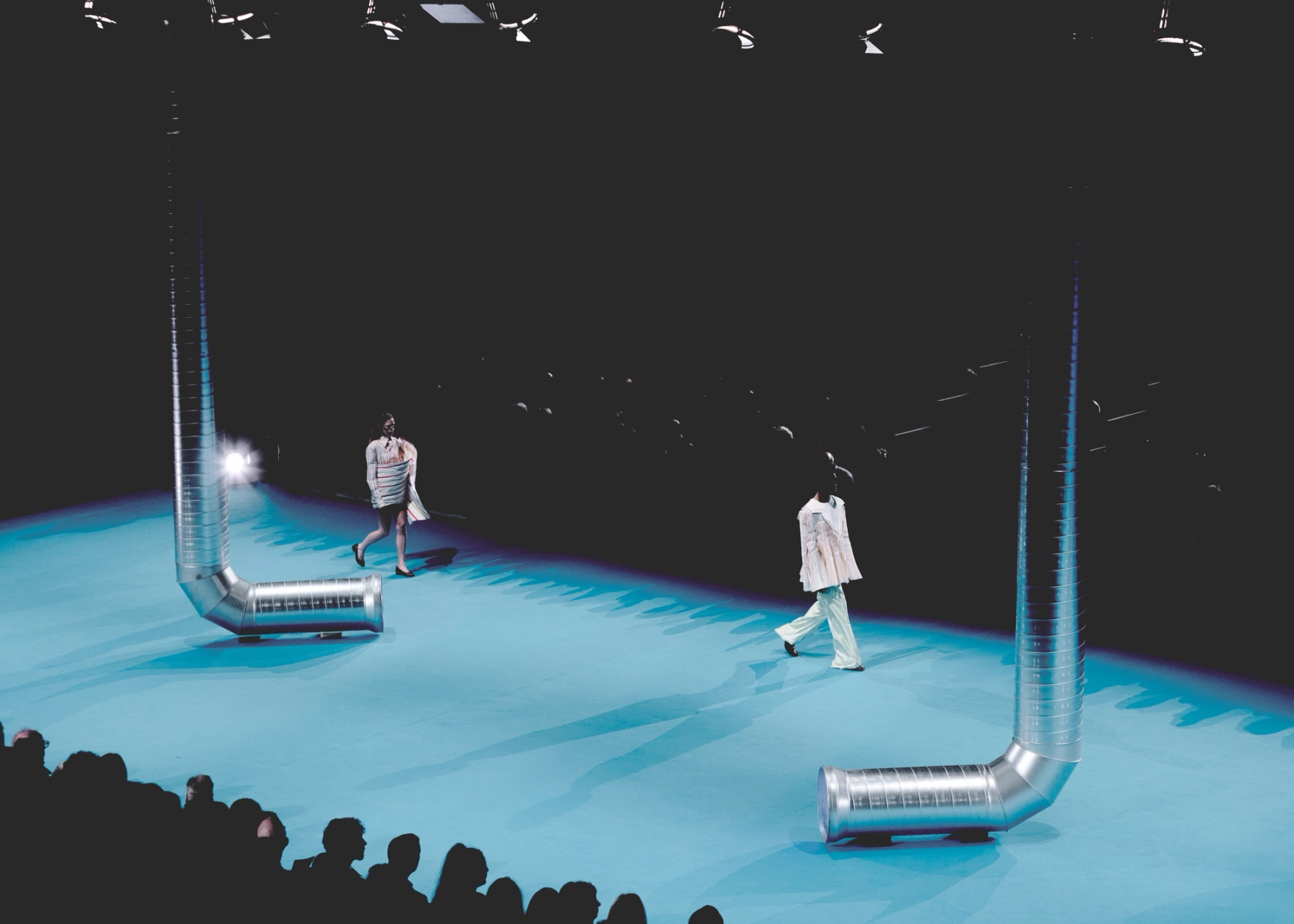
In the early afternoon, the bright blue carpet covering the runway was covered in strips of semi-opaque plastic. That day, French designer Matali Crasset was wearing a very bright red jacket, in striking contrast to the setting. Under her tutelage, the students from HEAD’s MA in Installation Design (Théo Chalendar, Rumet Contay, Mailys Lochowicz, and Lucie Terranova) created the runway. They installed industrial aluminium tubes to resemble organs. The space that will become the runway is fully lit, and everyone is wearing normal clothes for normal people. I just have to nod when everyone tells me their vision.
Over lunch, they mentioned that part of the course involved sourcing and ordering the materials needed to create the scene. Rumet said that the best thing to do in Genève in the summer was to row a homemade boat to abandoned factories for a daytime rave.
V.
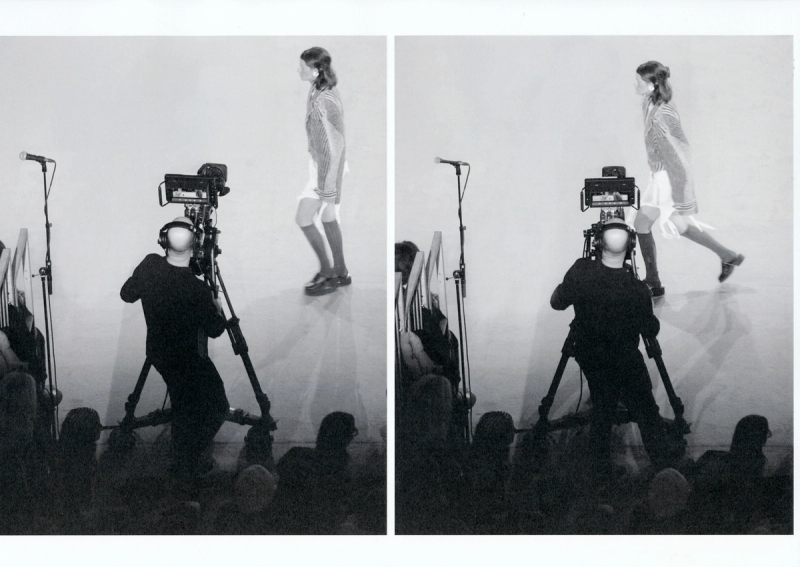
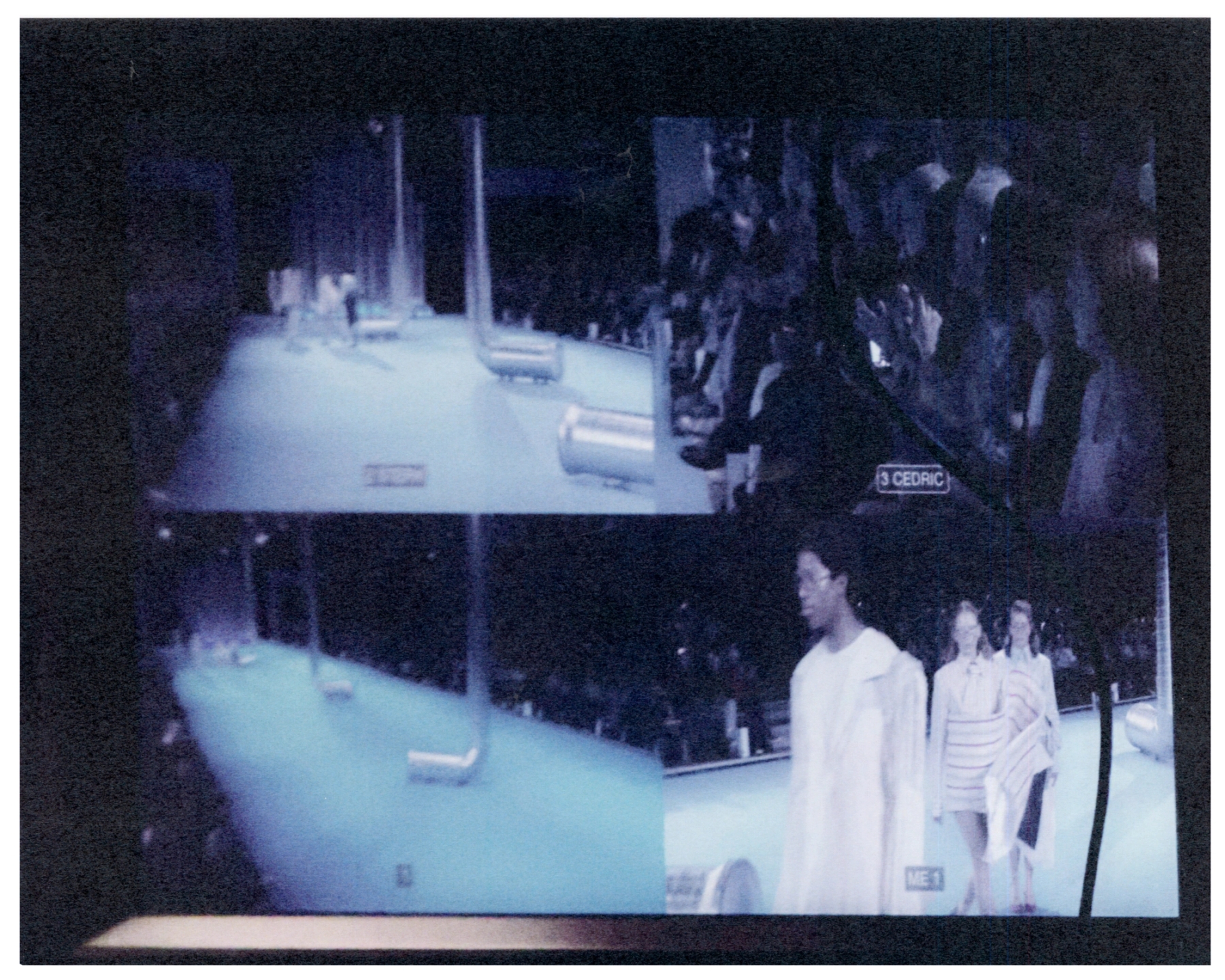
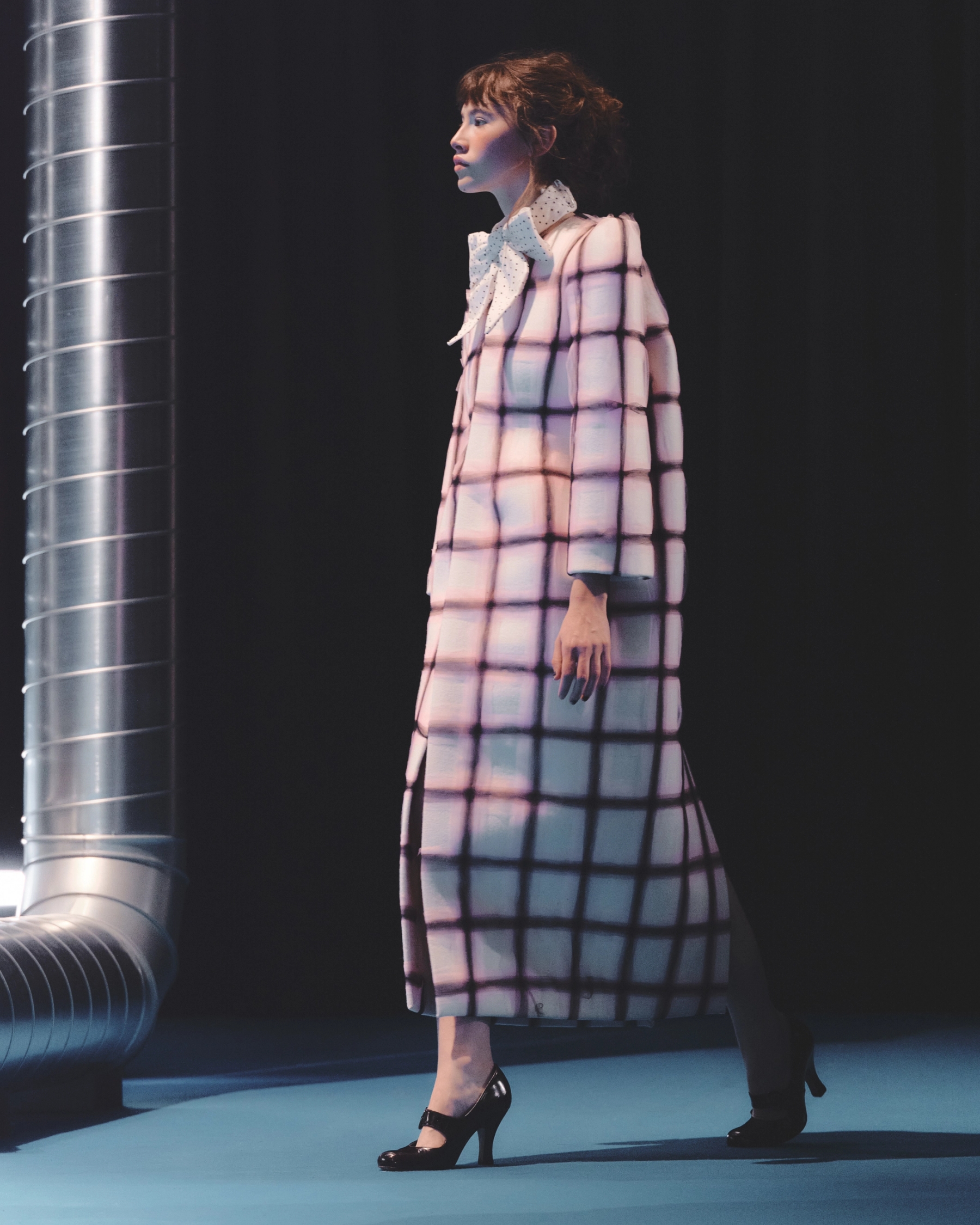
During a recorded dress rehearsal, I find myself tucked behind a cameraman who seems as tall as the tripod his camera is mounted on. There are at least three cameras capturing the collections from distinct angles. The plastic is still on the carpet, but those aluminium tubes have now taken on a new vibe of intrigue and mystery under the fully activated mood lighting. The carpet is a little richer; their cast shadows feel like inverse spotlights.
As the collections make their first pass, some of the shoes are a bit wonky, as some designers decided to take a go at the industrial machines in the leather lab. There are unfinished hems, and the point where the sleeve meets the armscye is just a bit off-kilter. An ambitious headdress temporarily blinds a model. I take it all as evidence of testing, of trying something new. The by-product of a young designer emerging, something like a lizard shedding its skin. The pieces reflect how this generation is keen on historical references, anxious about the environmental impact of the industry, and excited for online virality.
In the student canteen, which sits fully lit just beyond the runway, I finally catch photographers Inès Riber and Héloïse Tourrenc. They’ve just spent the day photographing backstage and the dress rehearsal. We chat about Novembre and the HEAD designers who caught our eye.
VI.
After more coffees, a quick shower, and glasses of wine at an early dinner, I sit down at around 21:00 pm for the second show. The plastic has been peeled off the carpets and footsteps remain from the earlier show that took place at 18:30. The lights go down, and a group of players from the Geneva Chamber Orchestra get set up to play a composition by Romano Bianchi and Village Pipo. They’re also on the runway, but closer to the entrance, pedal board at foot, which they lug on and off stage each time they perform. Both Bianchi and Pipo worked with the students to create an original soundscape for each of their collections.
VII.
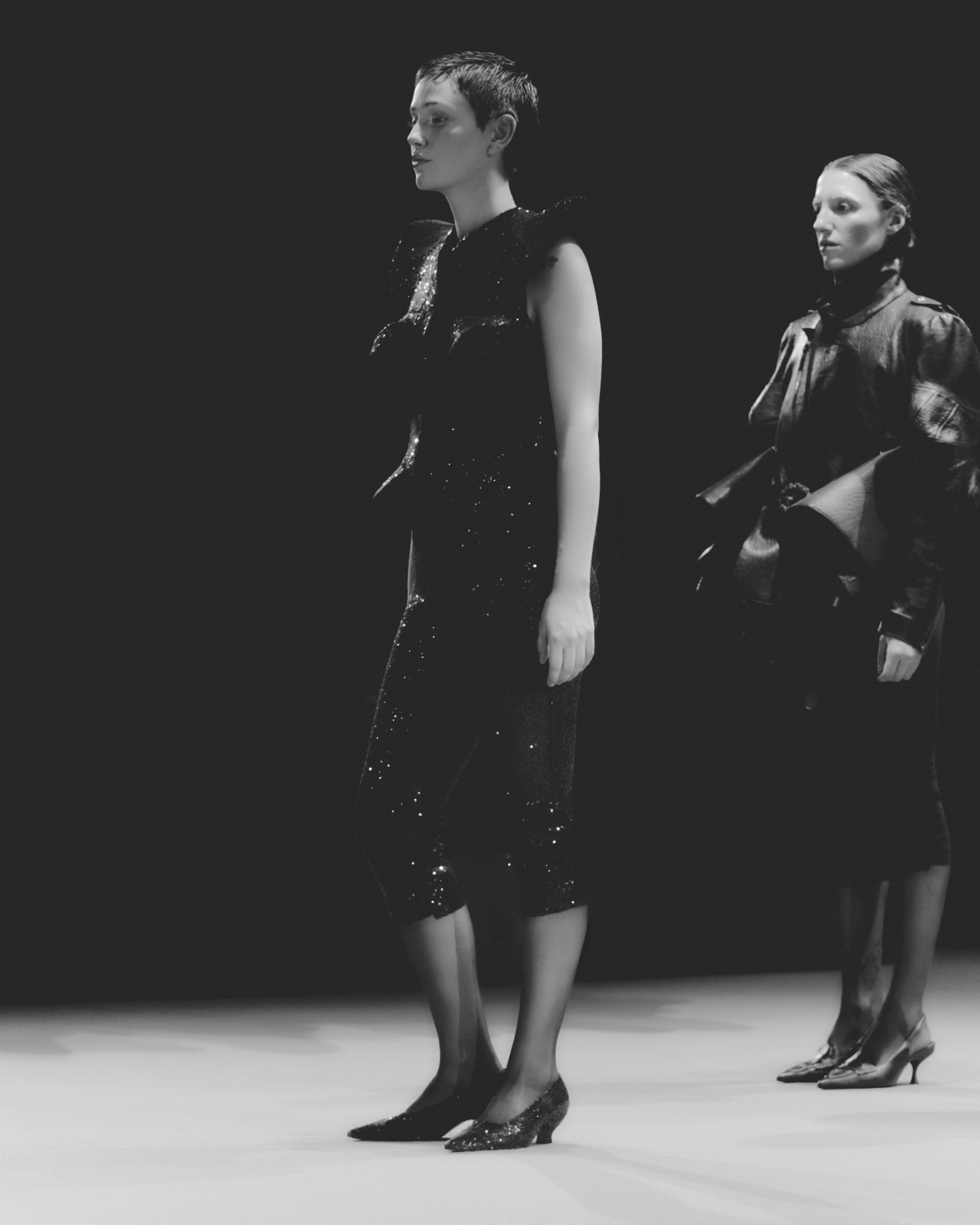
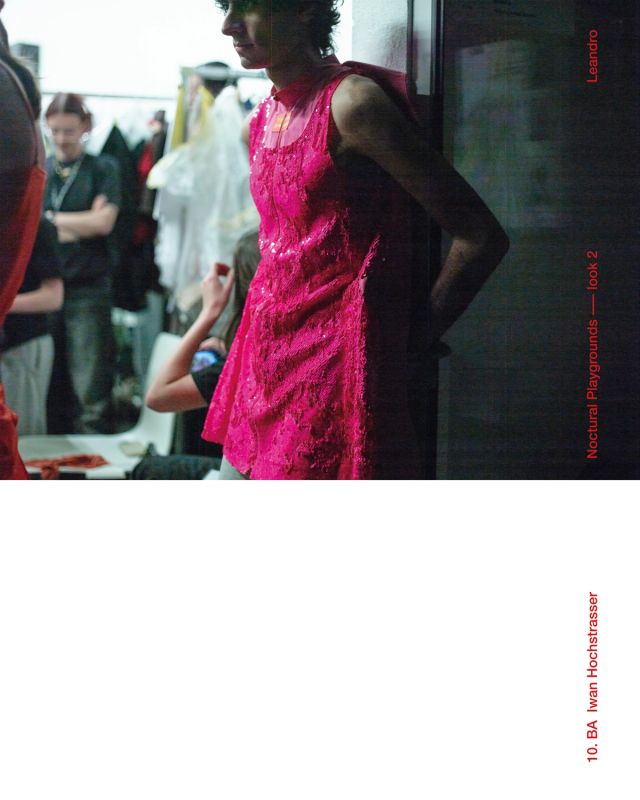
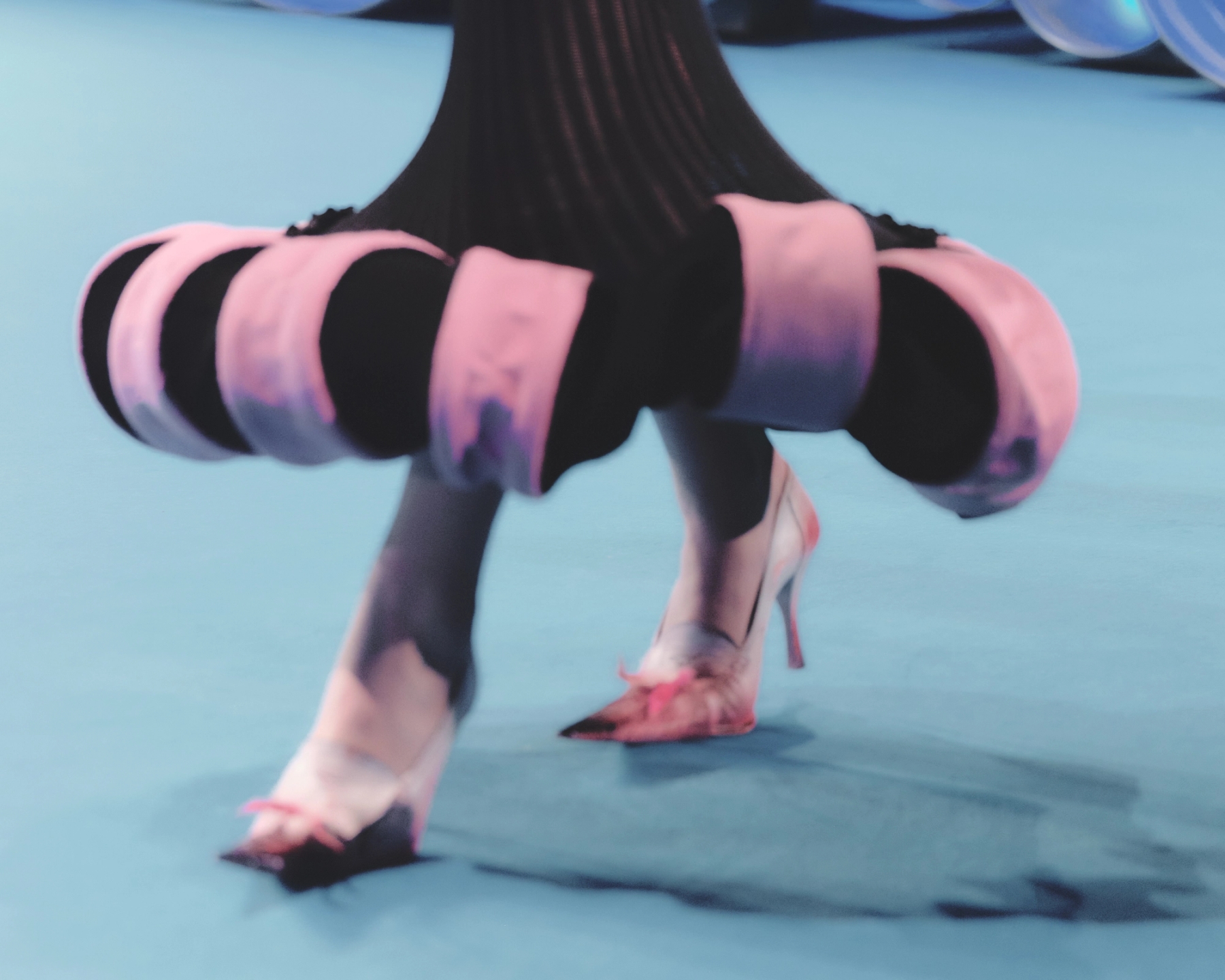
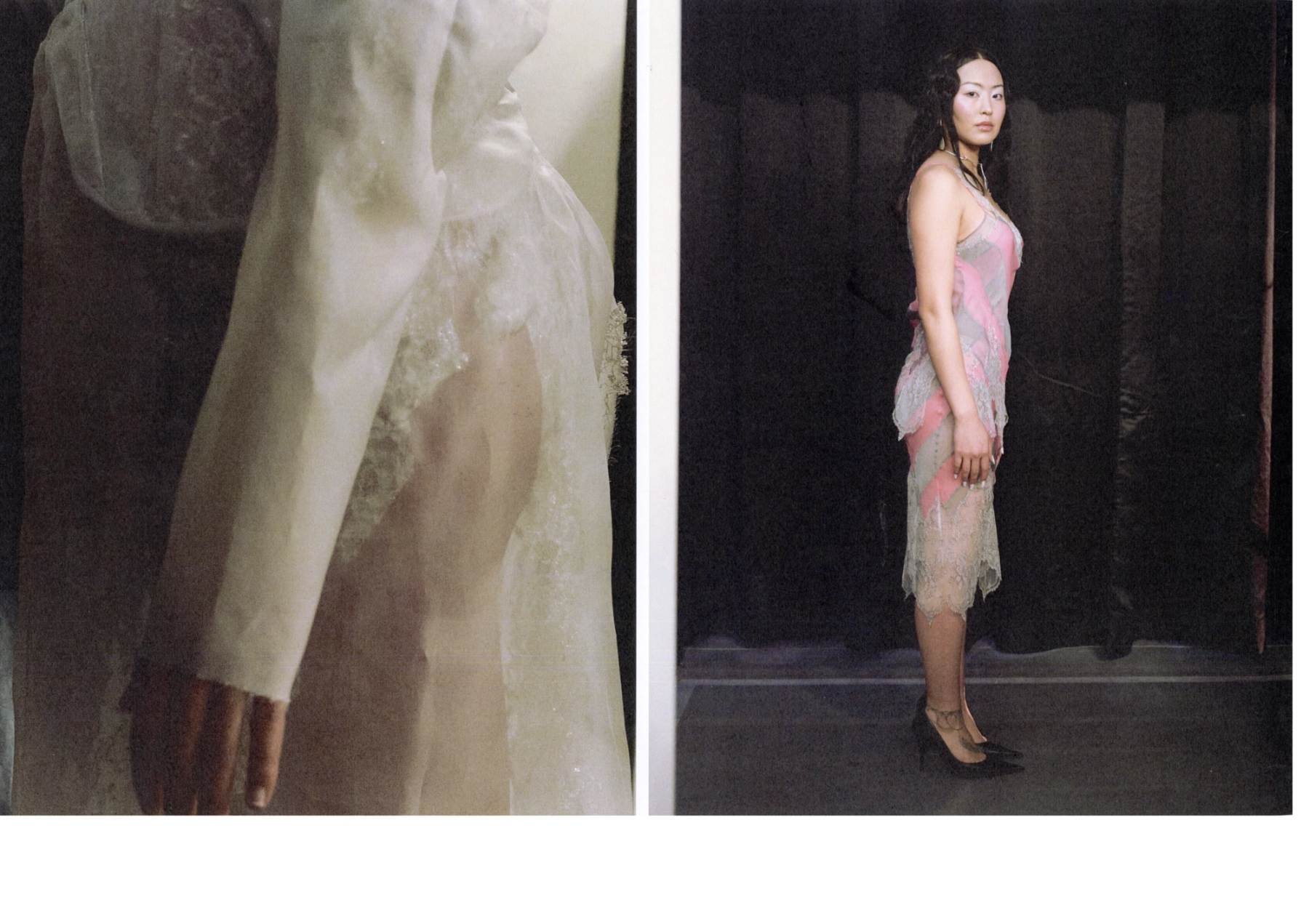
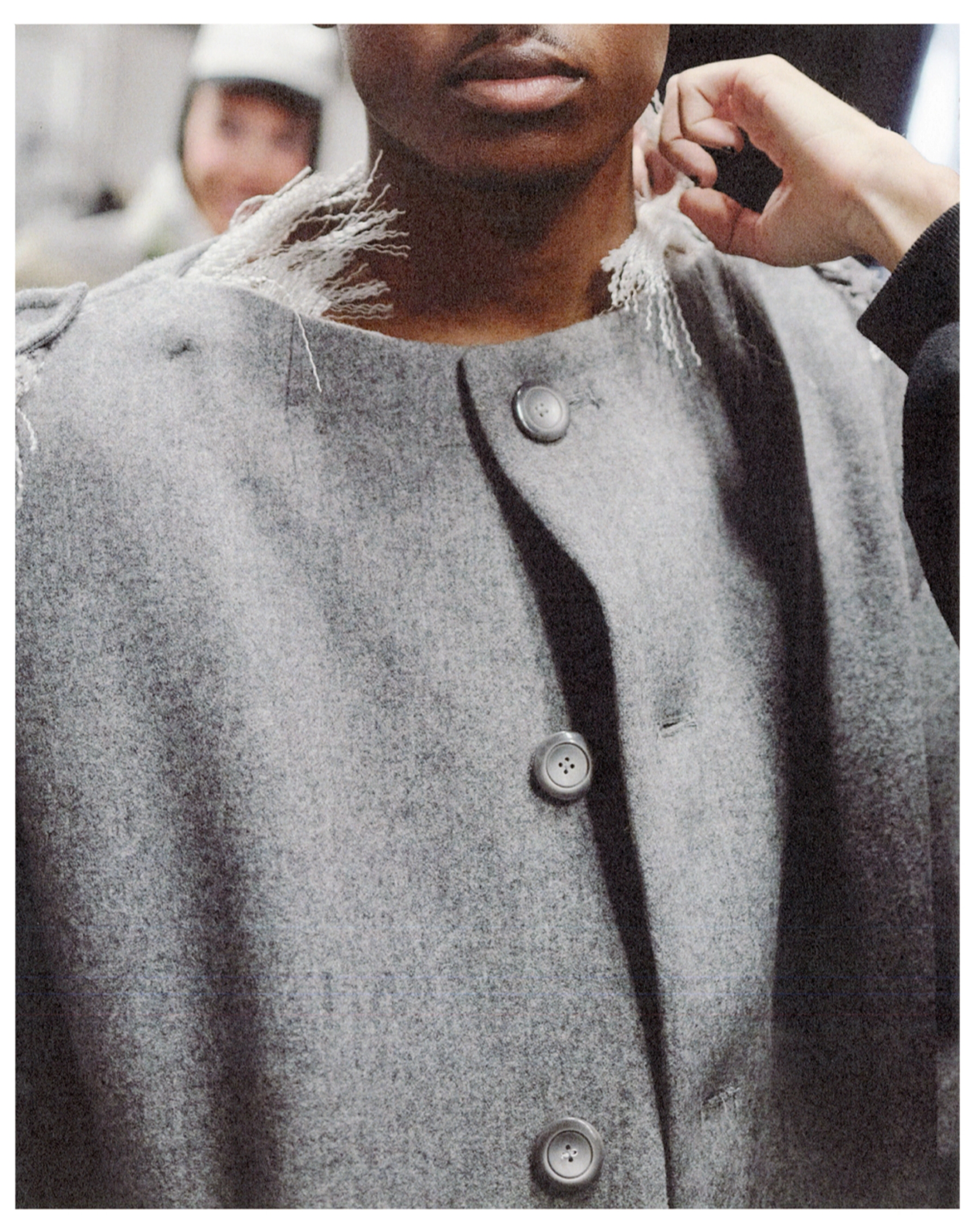
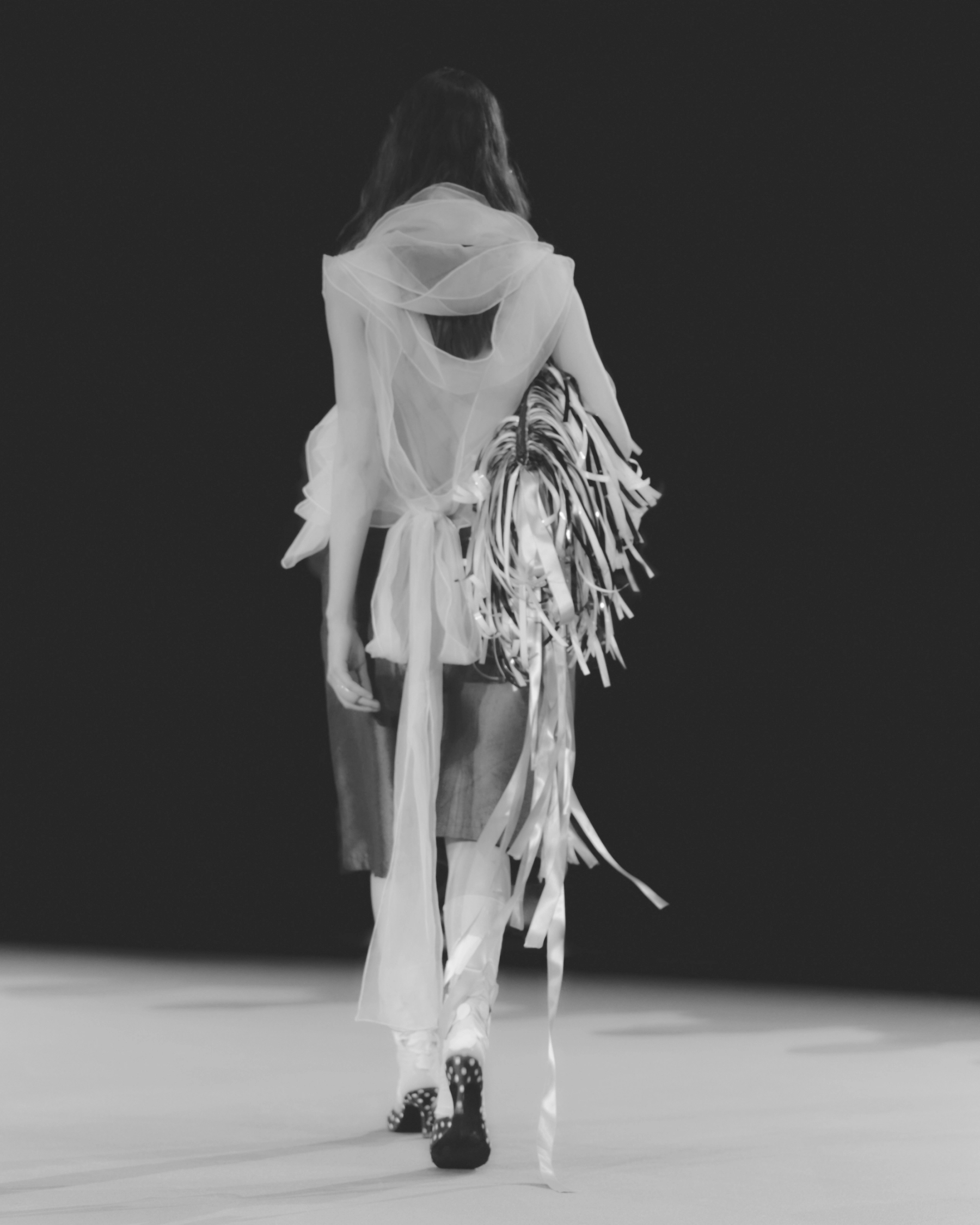
Inès Huber’s collection, Next Girl on Stage, is pink and filled with epaulettes and boning. One of her tops has the breasts cut out, which for me conjures an irresistible throwback to Regina George’s character in the 2004 drama-comedy Mean Girls. One of the standout pieces of her collection is an ankle-length dress that hugs the body except for the giant circular tubes that encircle it, recalling the bouncing minaret dress created by Issey Miyake from the mid-’90s. They’re deliciously structural, both in their bounce and in their candy-pink stripes that run along the perimeter.
VIII.
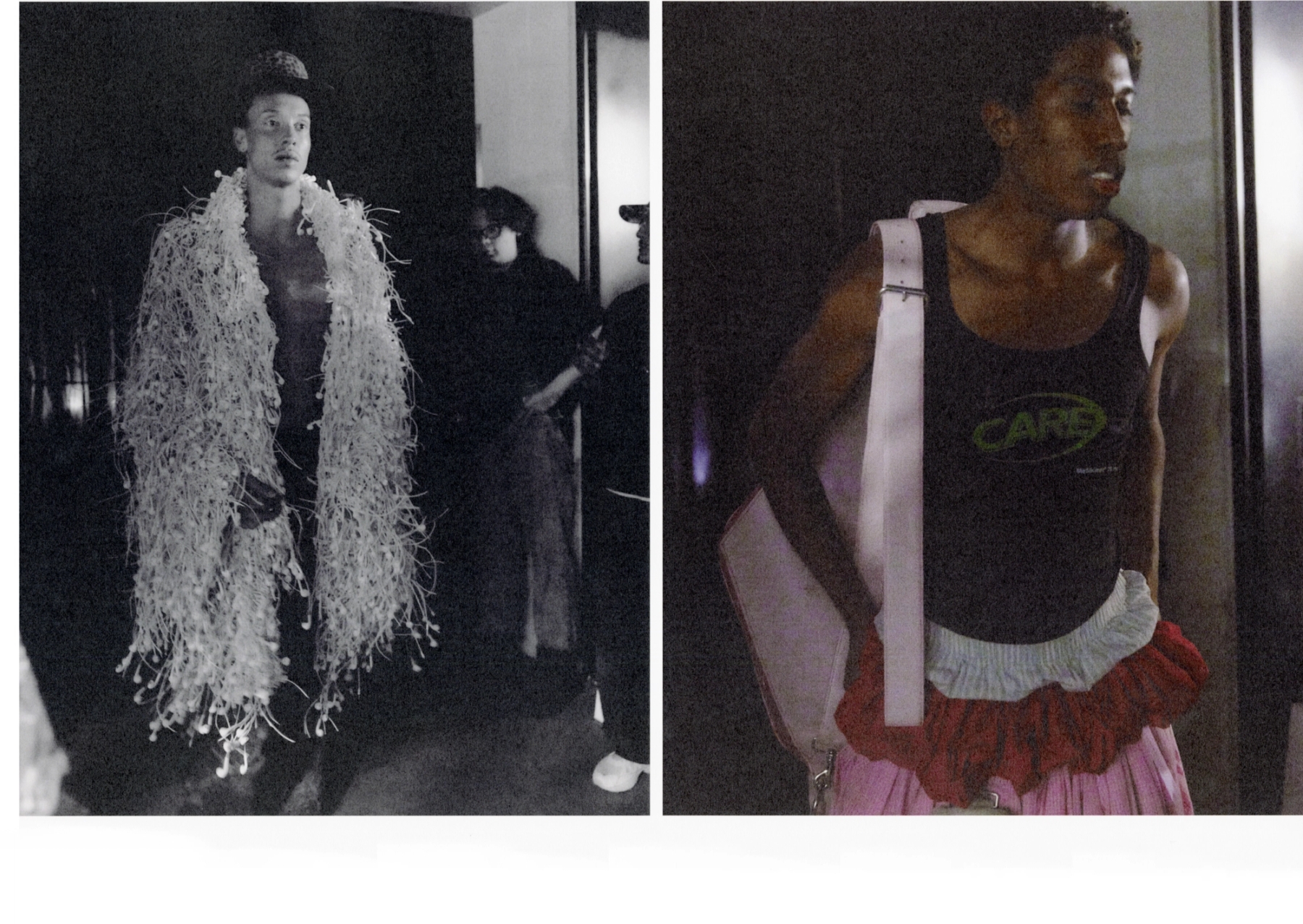
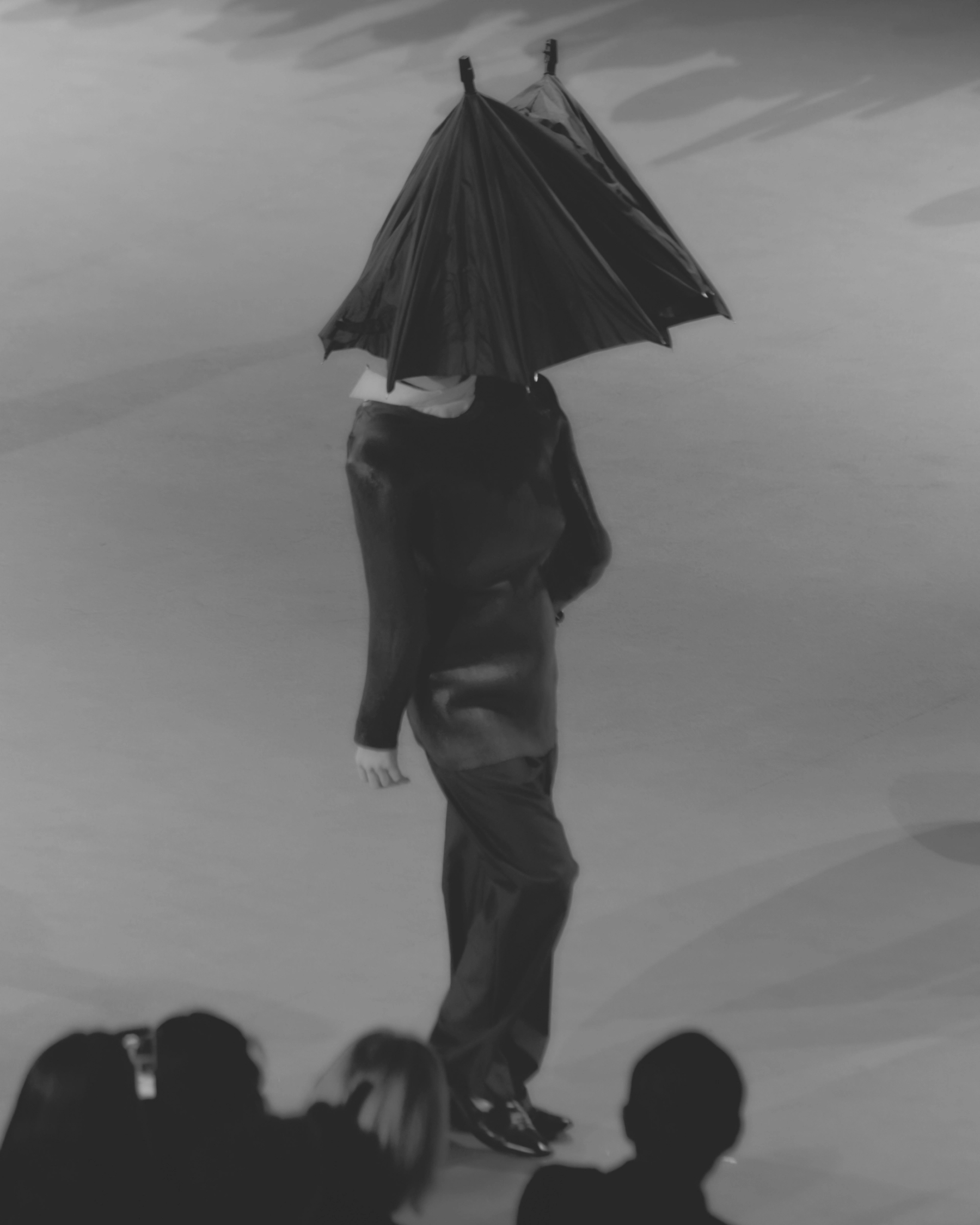
It’s hard to overstate the emotional weight of Antoine Panabière’s L’Autre Main. He sent out a mirage of uncountable models, as each of his looks was a hodgepodge, a smattering of bodies in charcoally blacks and dismal greys. One man strutted his course in a tailored suit, complete with a third leg that walked in smooth synchronisation with the other legs.
The score was romantic, sullen. When the lights went down, I was a little choked up, feeling the same way as I had when I watched Pan’s Labyrinth for the first time.
IX.
That tangle of headphones turned out to be an intricate textile transformed into a coat, dress, and purse by Omar Amorim Esenli. We were told that these pieces were going a bit viral online. There were rumours that he was pleading with a (I believe) K-pop star to send back the white headphone purse so it would be in Genève in time for his graduate show.
X.
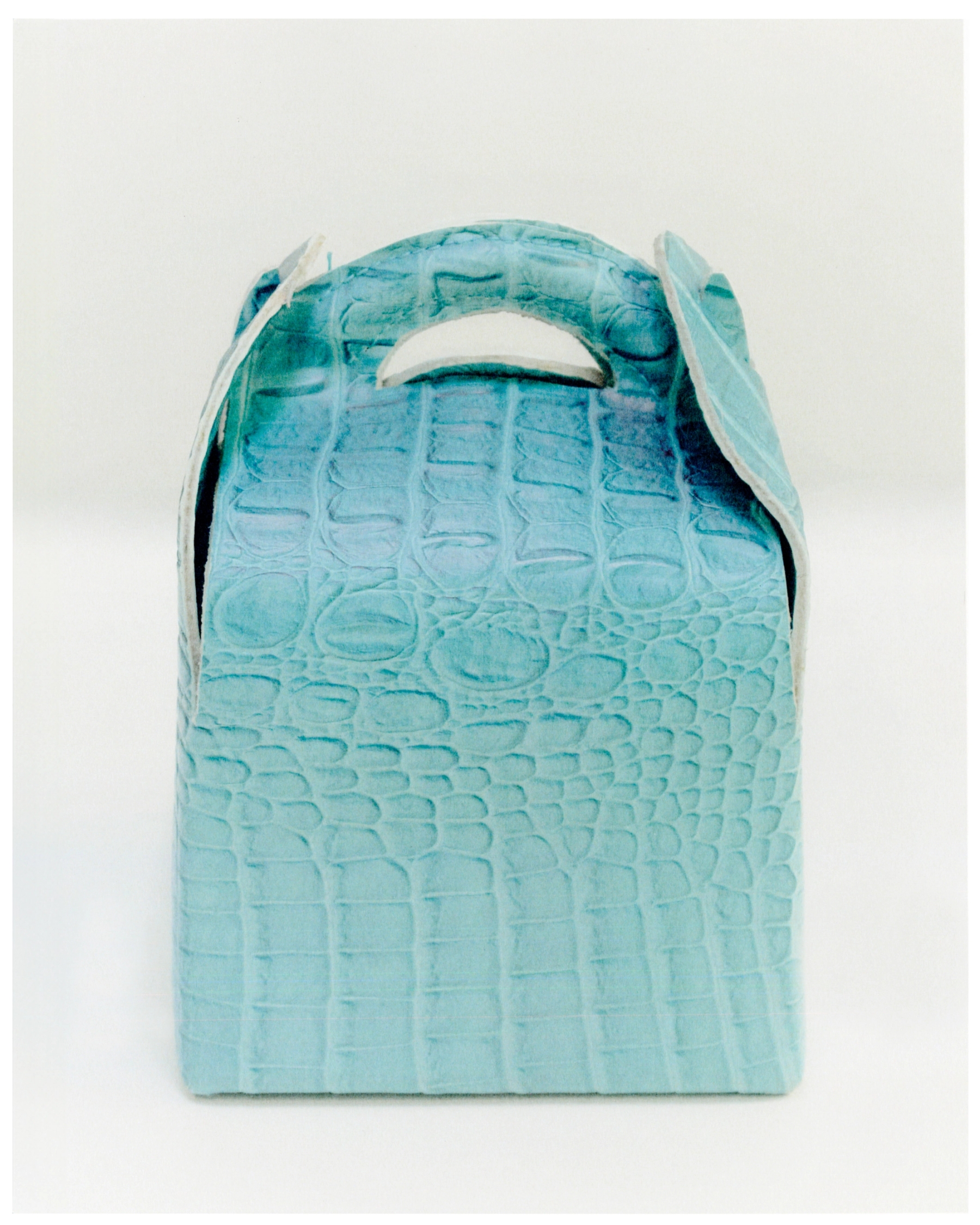
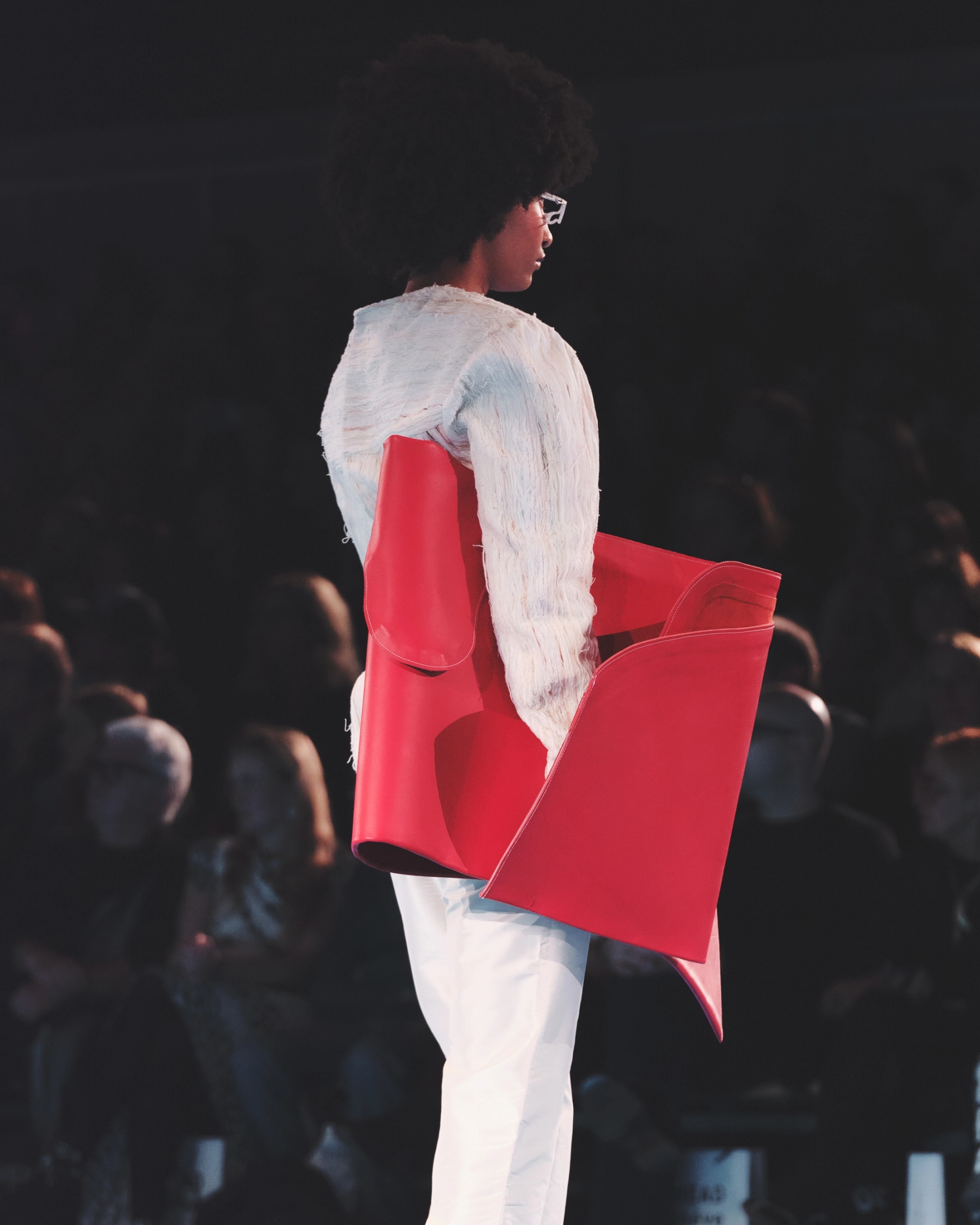
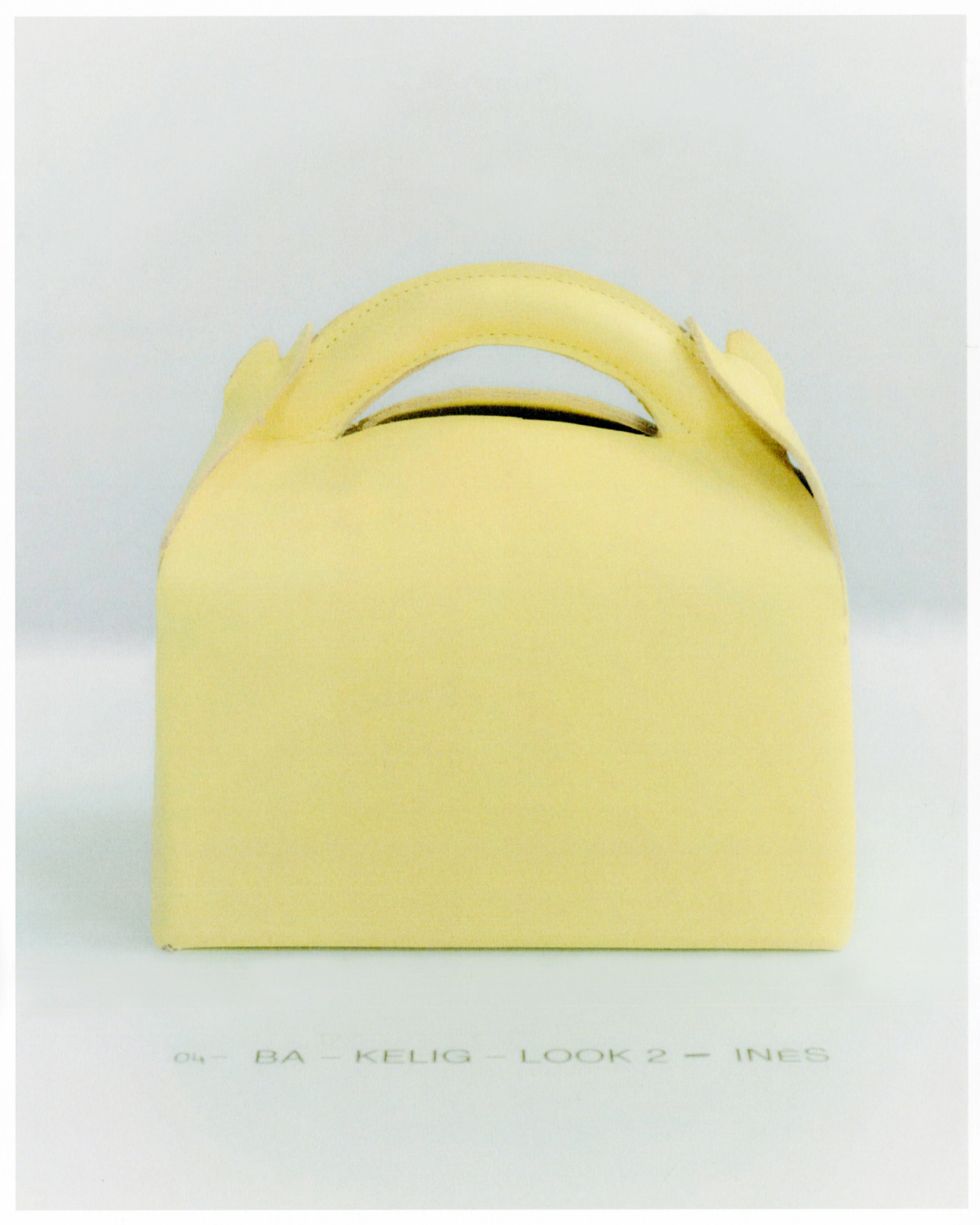
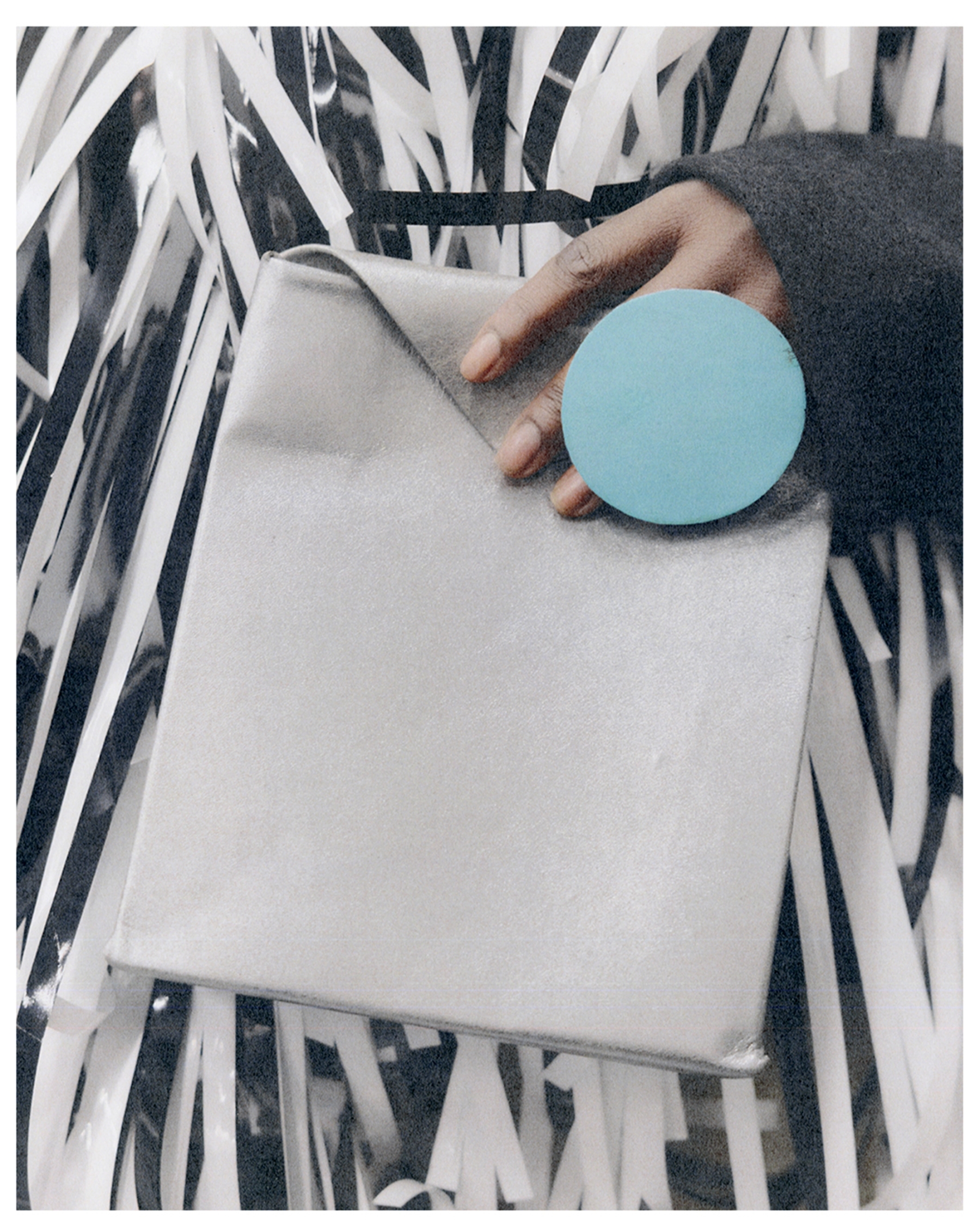
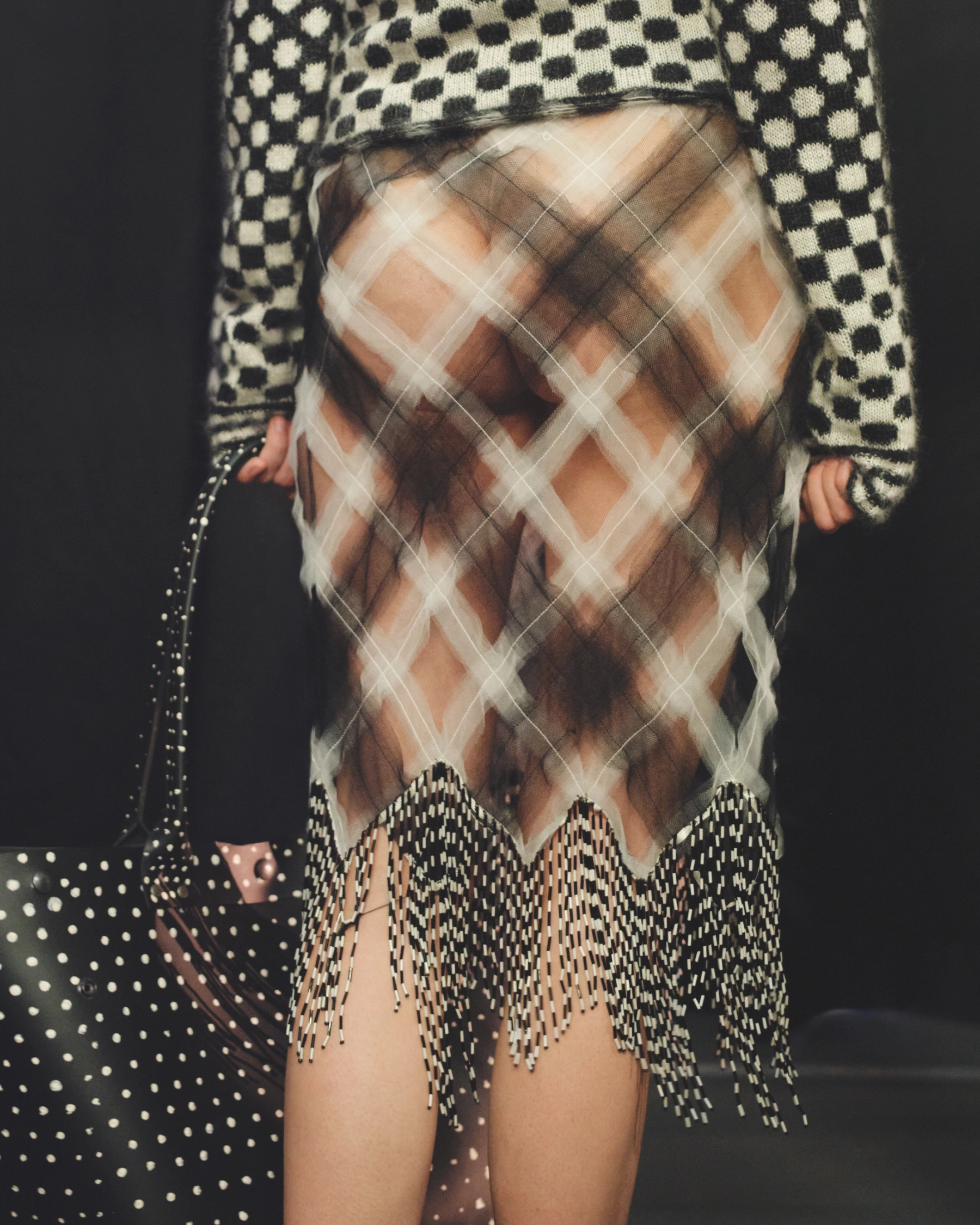
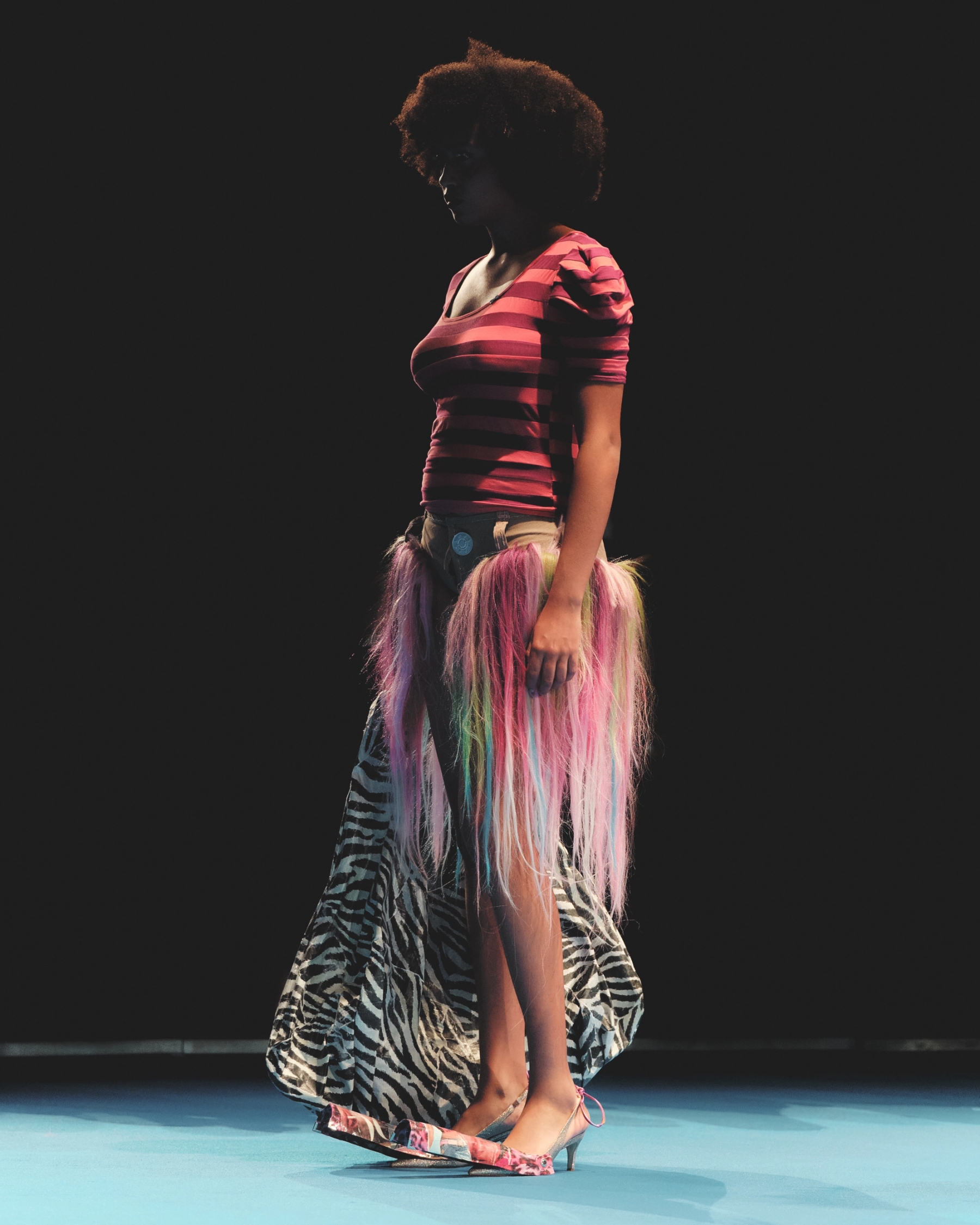
The show closes with Catarina Santos Moreira’s OVERWORKED: bags to share the load. Here, there is no score. Her models, displaying her collection of handbags, arrange themselves on the stage. There is silence before one begins to sing, a cappella, as the models each carry various vessels, circling the runway one last time for the 2026 graduate show. Her clothes are colourful, recalling a Sunday market, bazaar, or shop for notions and textiles. Though her models were mixed in gender, they all wore similar floor-length skirts that just dusted the ground as they made their procession around the stage. It’s undoubtedly feminine, referencing who typically carries the unsung burden of labour.
In Ursula K. Le Guin’s 1986 essay The Carrier Bag Theory of Fiction, she proposes an alternate way of understanding history. She writes, ‘If it is a human thing to do to put something you want, because it's useful, edible, or beautiful, into a bag, or a basket…if to do that is human, if that's what it takes, then I am a human being after all. Fully, freely, gladly, for the first time.’ She suggests an approach to writing, and to storytelling at large, dictated not by wars, plague, and conquest, but one seen through the eyes of gatherers, a role largely designated to the feminine, to the woman, a role that stands in opposition to the dominating man.
When this second show ended, the winners of the six prizes were announced, and a large majority of them went to men. While each of the collections recognised had undeniable strengths, many of the female students expressed that they weren’t surprised that the gender divide swung this way. In a way, it felt like a solemn preparation for the industry they had ahead of them.
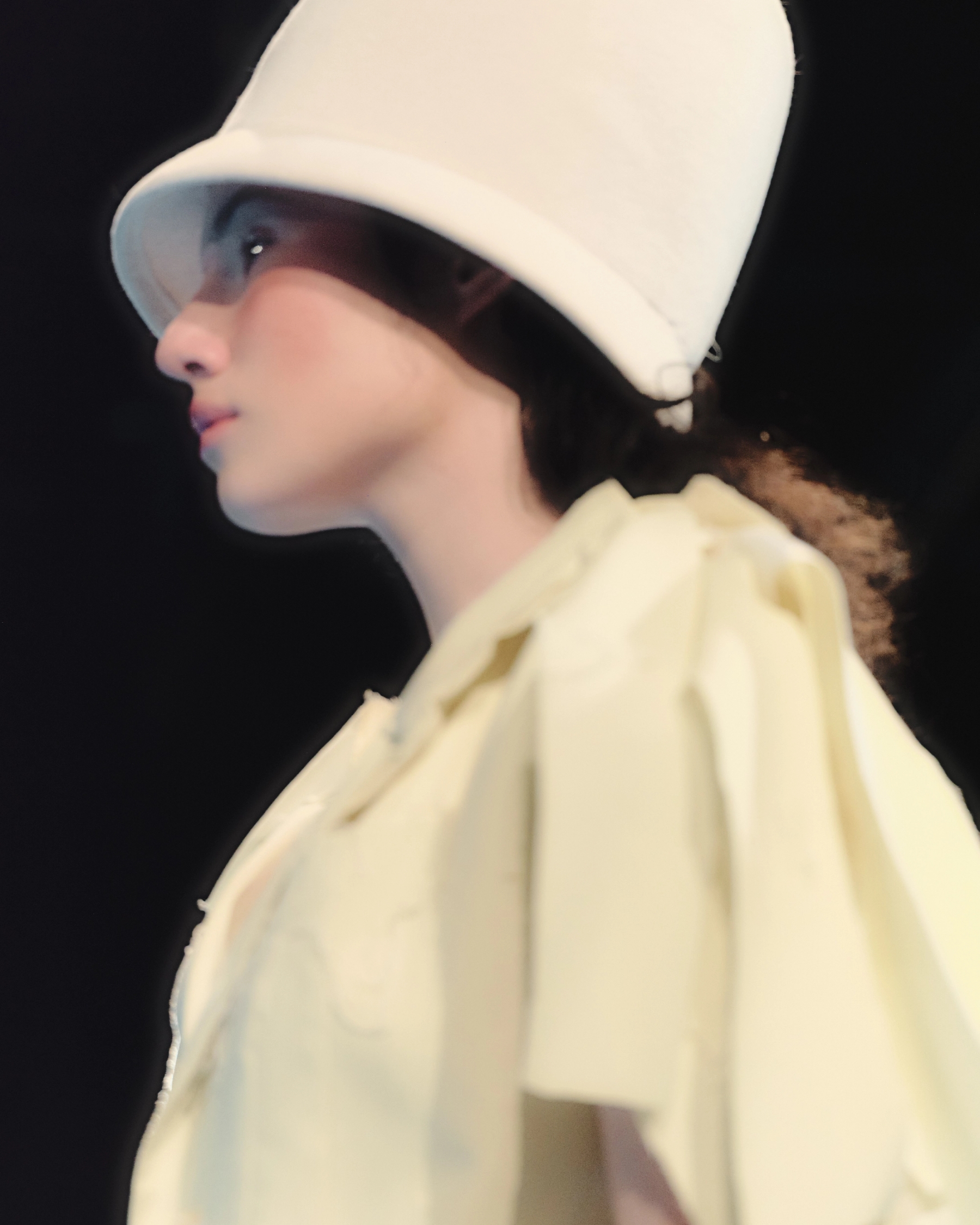
The significance of Moreira’s closing performance, with her female vocalists filling HEAD Genève’s Cube-turned-runway, rang even clearer, seeming to echo beyond the performance and into the night, as the packed house filtered out of their seats, looking for a beer, a cigarette, and their friends in the crowd.
What was particularly striking about each of these collections was its micro-instantiation of potential. The work was effusive with glittering silk, sequins, and leather. What a pleasure to witness beginnings.