REAL EYES REALISE REAL LIES AT HODAKOVA SS27
Words & photography Veronica Tlapanco Szabó
Show Hodakova
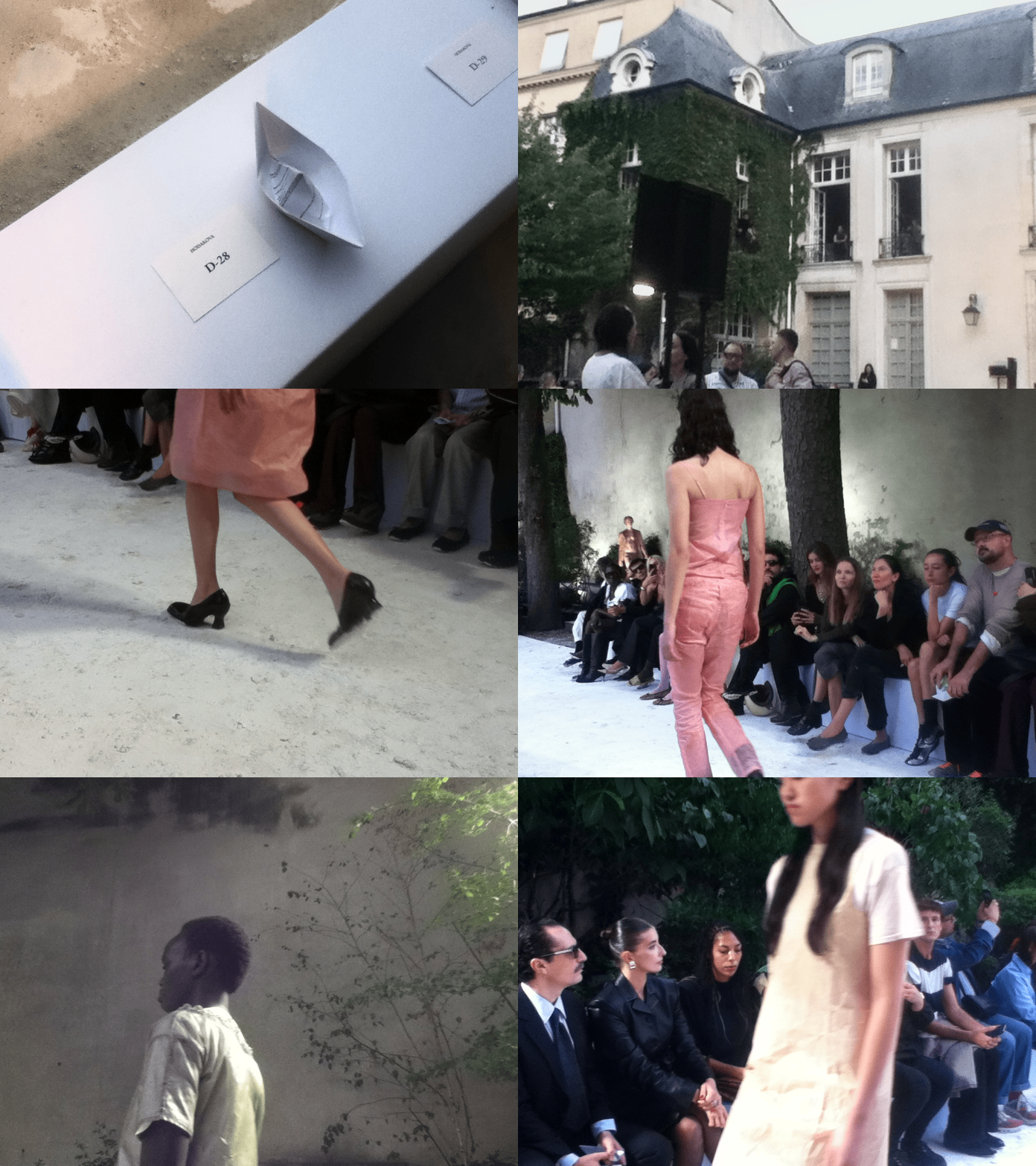
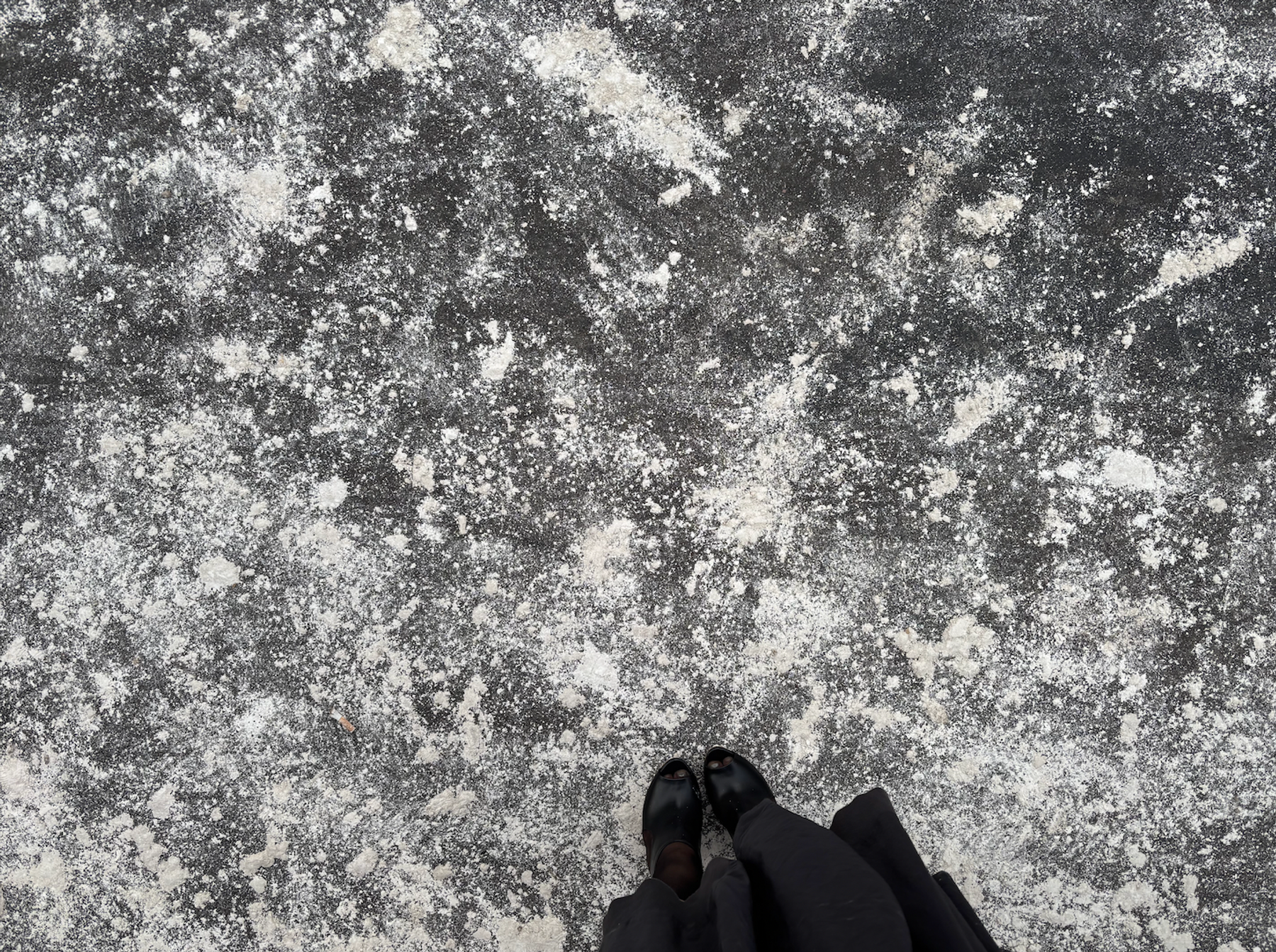
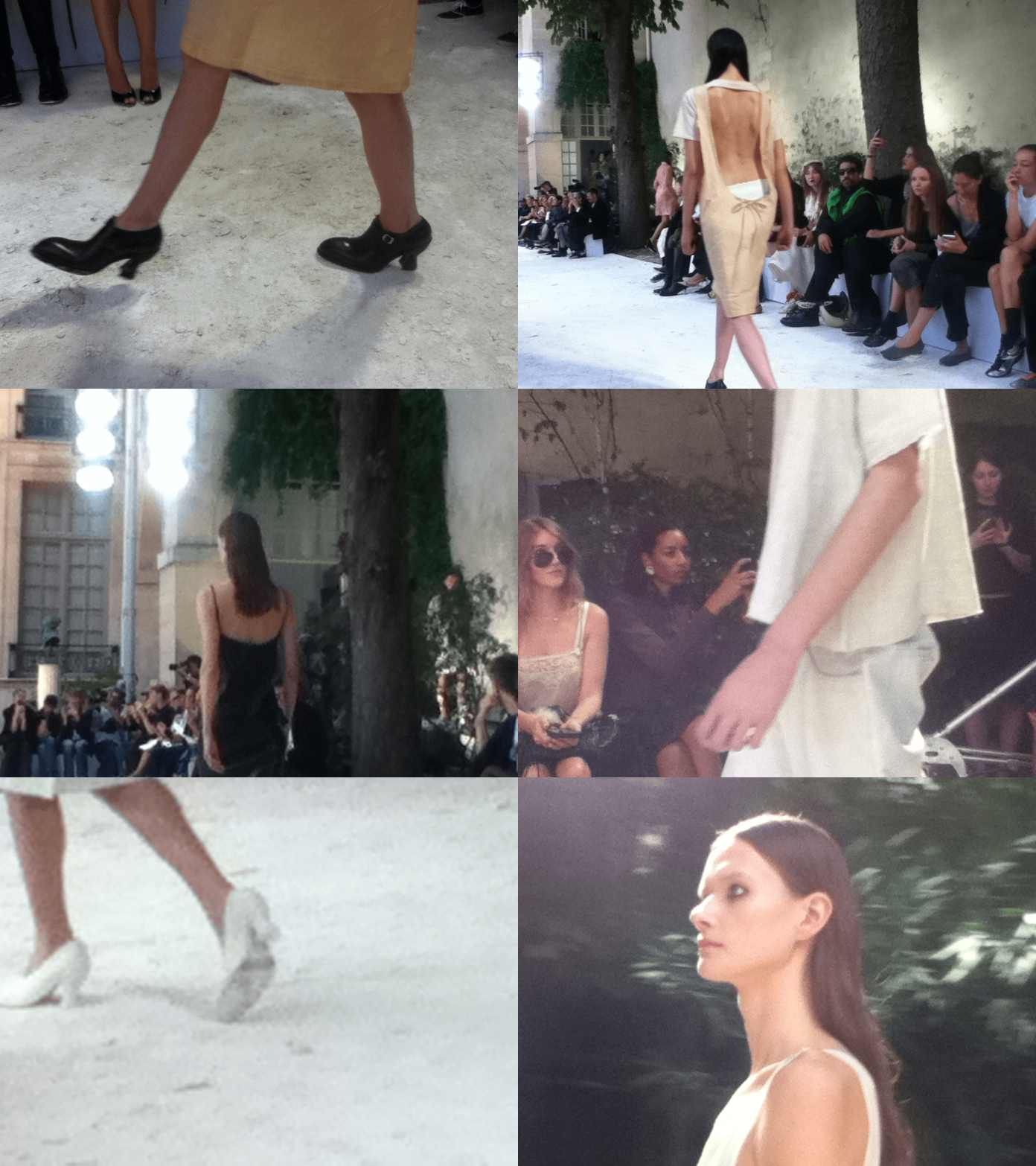
One step inside the incandescent courtyard of the Swedish Institute and everyone’s eyes darted to the ground. A chalky white slurry pooled across the floor, hitching itself onto every passing shoe. Whispers of confusion diffused amongst the attendees, whose grimaces were swiftly softened by the sweet folded paper boats placed on the seats. The sense of unease swiftly returned—in lieu of show notes— designer Ellen Hodakova Larsson wrote a poem. Each line punctuated by a mounting sense of doom:
“Save us
Shave us
Shame us
What a wonderful world!”
A torrent of thoughts lamenting the harm we have wrought upon our surroundings and upon ourselves. Not a single item of clothing has paced the runway and the Hodakova has already slipped into a surrealist pace where reality is warped just enough to make its truths harder to evade.
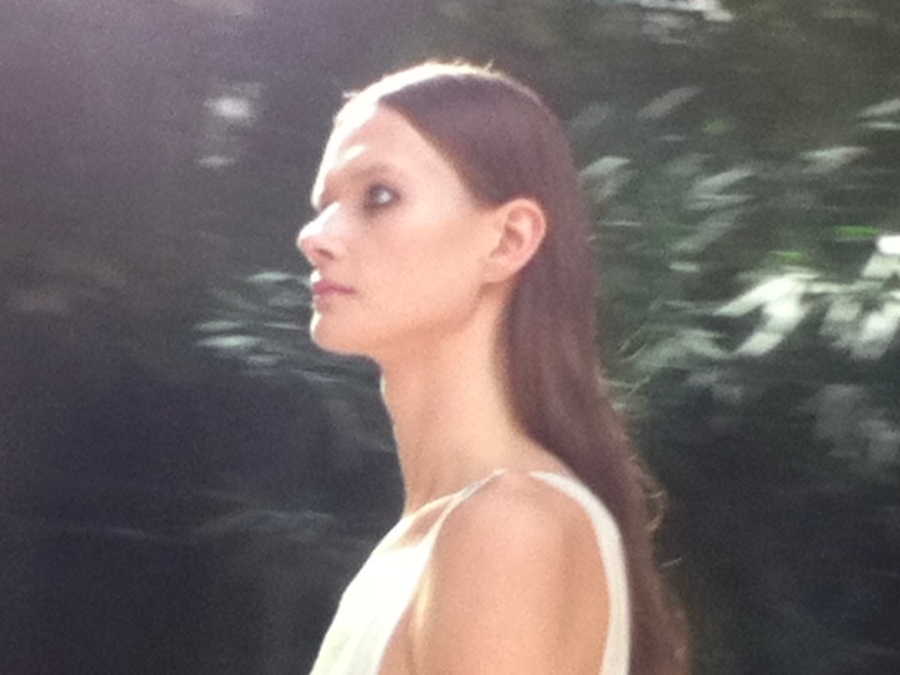
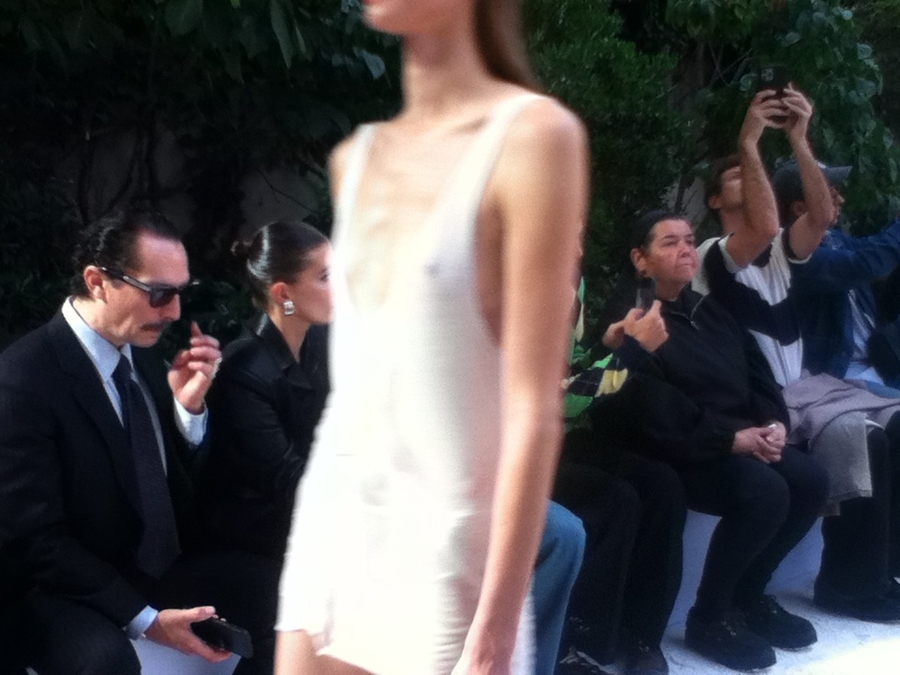
The show opened on what seems like a sweet, sheer baby pink dress, its subtle sheen revealing, as it swept past me, that it was in fact crafted from beeswax-coated linen. On its eighth show, the Stockholm label has perfected an art of material deception, transforming surplus stock and discarded everyday objects into something that is rarely quite what it appears to be. The same trick extends to the models themselves, whose large, arresting eyes offer another kind of misdirection. Bizarrely uncanny eyes were painted or pasted onto each model’s eyelids by makeup artist Thomas de Kluyver. With eyes wide shut, each model kept their gaze fastened to the ground, so spectators met only the faux deadpan expression.
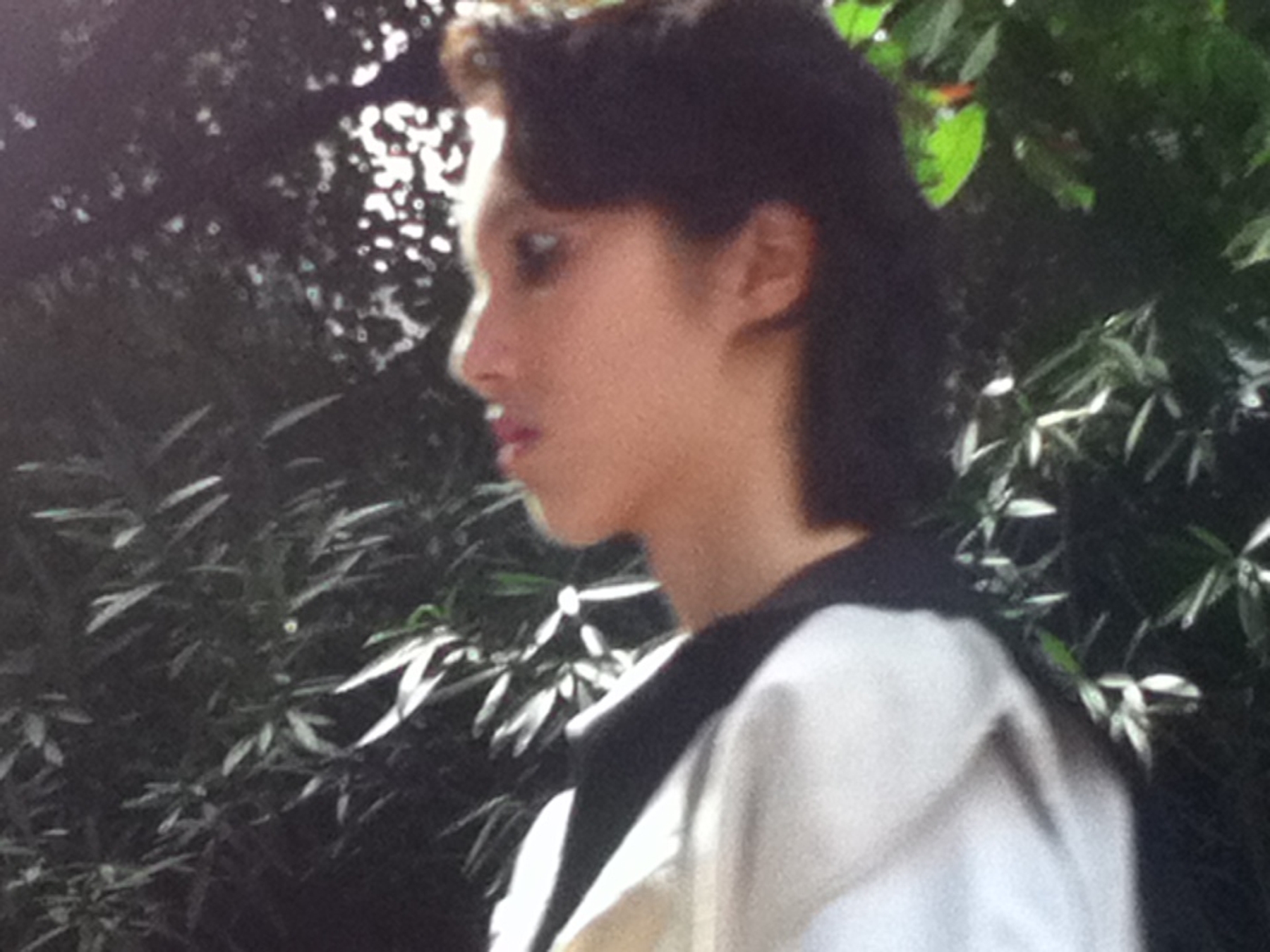
The visual sleight of hand is not without precedent. Man Ray employed a similar technique in his 1926 film Emak Bakia, starring Kiki of Montparnasse. Who, then, really gets to see? Are our own eyes truly open? Faced with the catastrophic climate conditions, how can they be? If they were, surely our inaction would be harder to bear. The lowered eyes of Hodakova’s models thus feel like an expression of the shame articulated in the show notes. There is shame in refusing to look, in refusing to engage.
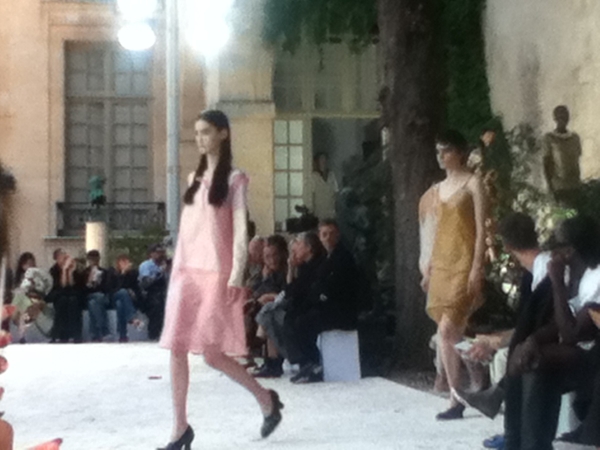
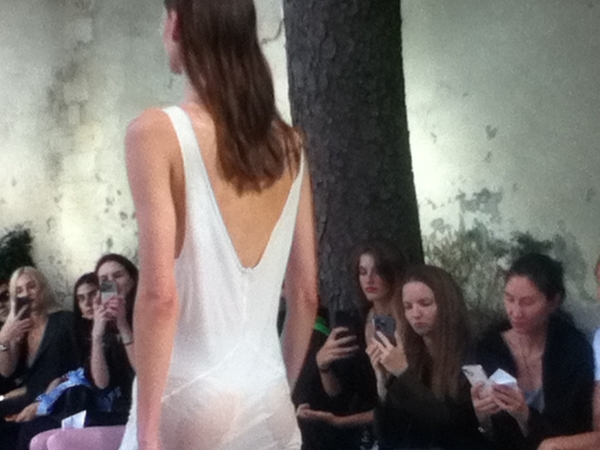
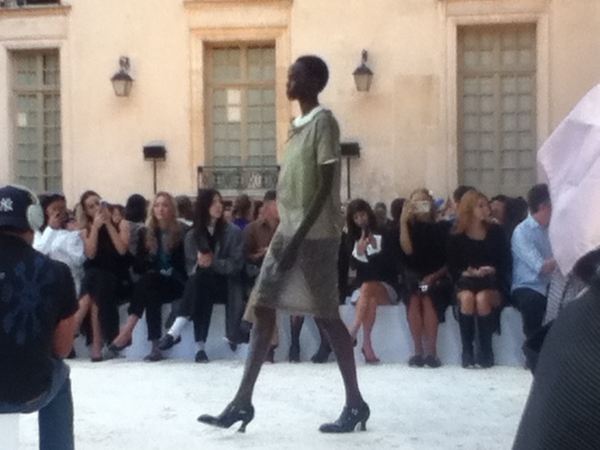
The following succession of handcrafted looks immediately conjured a narrative in my mind: a sailor setting out in search of a better land to call home. The first looks, rendered water-repellent with beeswax, seem made for the voyage ahead. Dyed with natural elements such as avocado pits or turmeric, the palette of the first few looks denotes the warm tones of a sandy beach, from which to set off. Headed for deep waters, Hodakova finds smooth sailing, if only briefly. A series of white looks made from antique linen evokes sails, reworked into boat-neck nightgowns and sailor dresses. Trenches and leather pieces further reinforce the collection’s waterproof armour, preserving this fleeting sense of control. Even spinnaker fabrics and heavy sailcloth are repurposed into utilitarian garments.
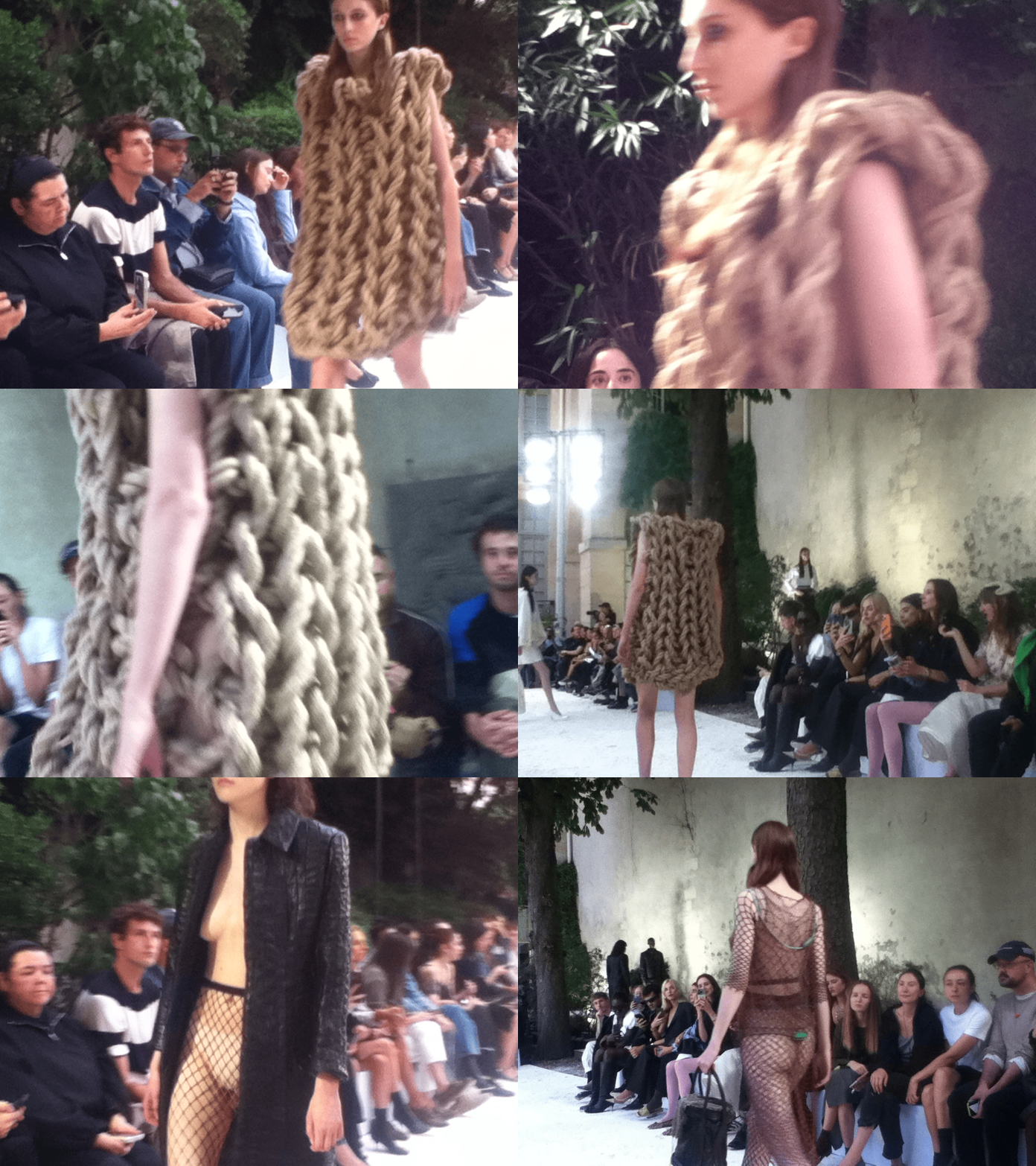
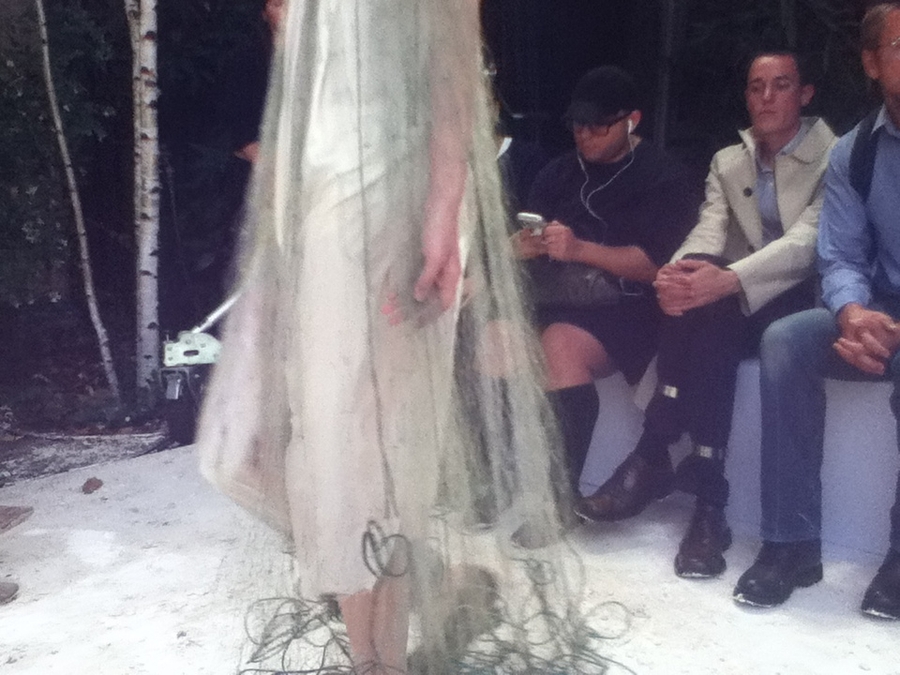
But the calm does not last. Suddenly, the Hodakova sailboat begins to tip. As it takes on water, fishnet and literal fishing nets seep into the collection. The show now becomes a reminder of everything that might pull us under. Vintage industrial netting, sourced from the harbours of Stockholm, tangles its way through several of the looks. Models are either being fished out of the water or left to wash ashore, thoroughly soaked. In the final looks, they emerge barefoot in drenched linen-jersey pieces. A styling gesture I had scarcely encountered before, save for those increasingly familiar summer moments when the heat becomes so unbearable that one simply throws oneself into the sea, fully clothed.
With the spring-summer ahead inevitably promising more heat, Hodakova appears to have traded her hunchbacked silhouettes for slick skin-sucking tightness in its wetness. Even the boat’s paraphernalia follows us ashore. Thick, utilitarian anchor rope is fashioned into a sleeveless top and a dress.
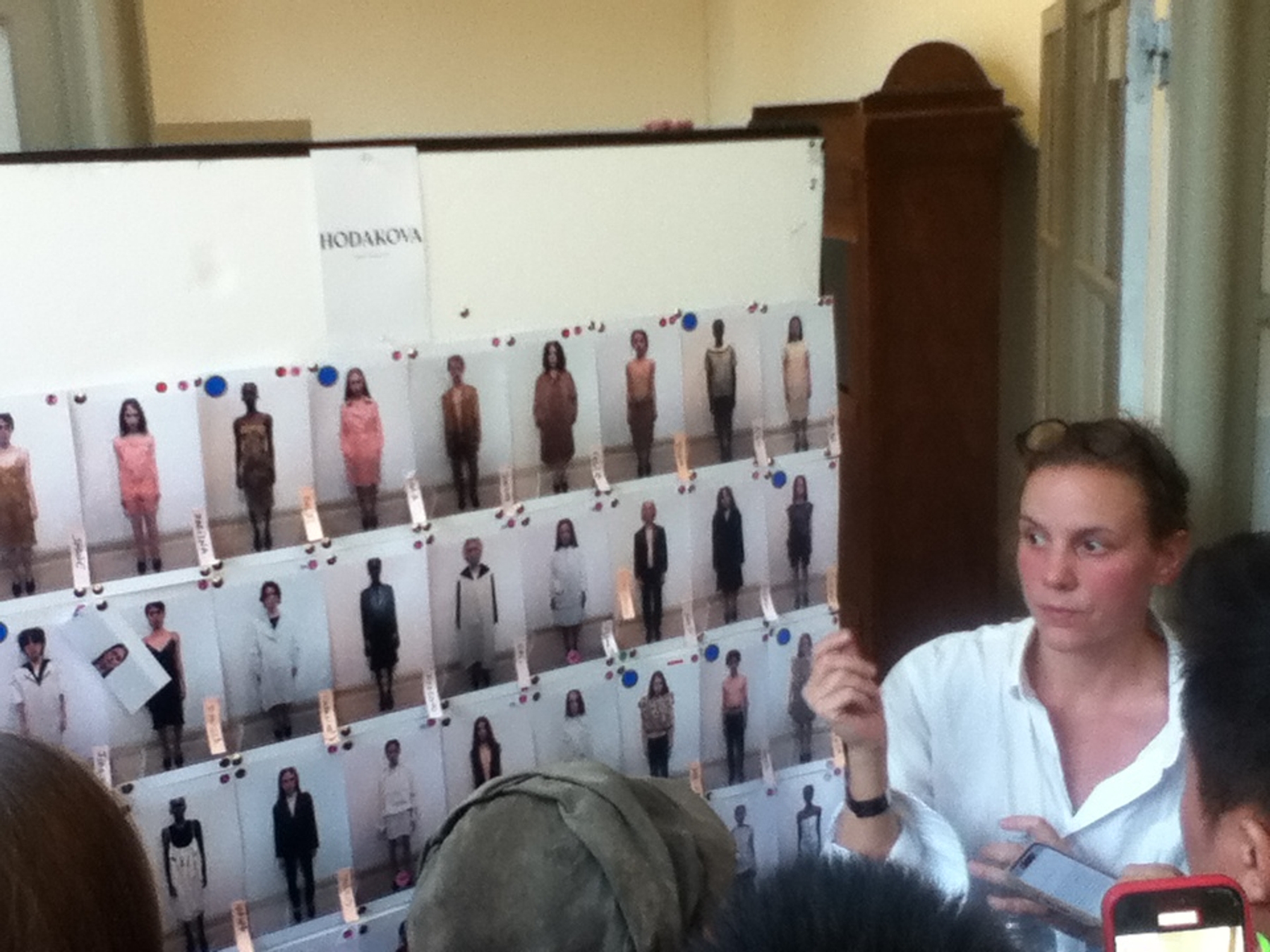
After the show, everyone gathered around Ellen Hodakova Larsson, who stood holding the look board and spoke candidly about her anxiety. There is no rain, she tells us. No wind. No escape route, no better shore to sail towards. Leaving the venue, my chalk-coated soles dragged their way through Paris, scattering traces of the show as they went. The medium is the message, they say. Hours after the show, I am still thinking about it as I sweep the chalky remnants from my doorstep, fallen from my shoes, before washing them away with the very thing the collection reminds us may soon become scarce: water.
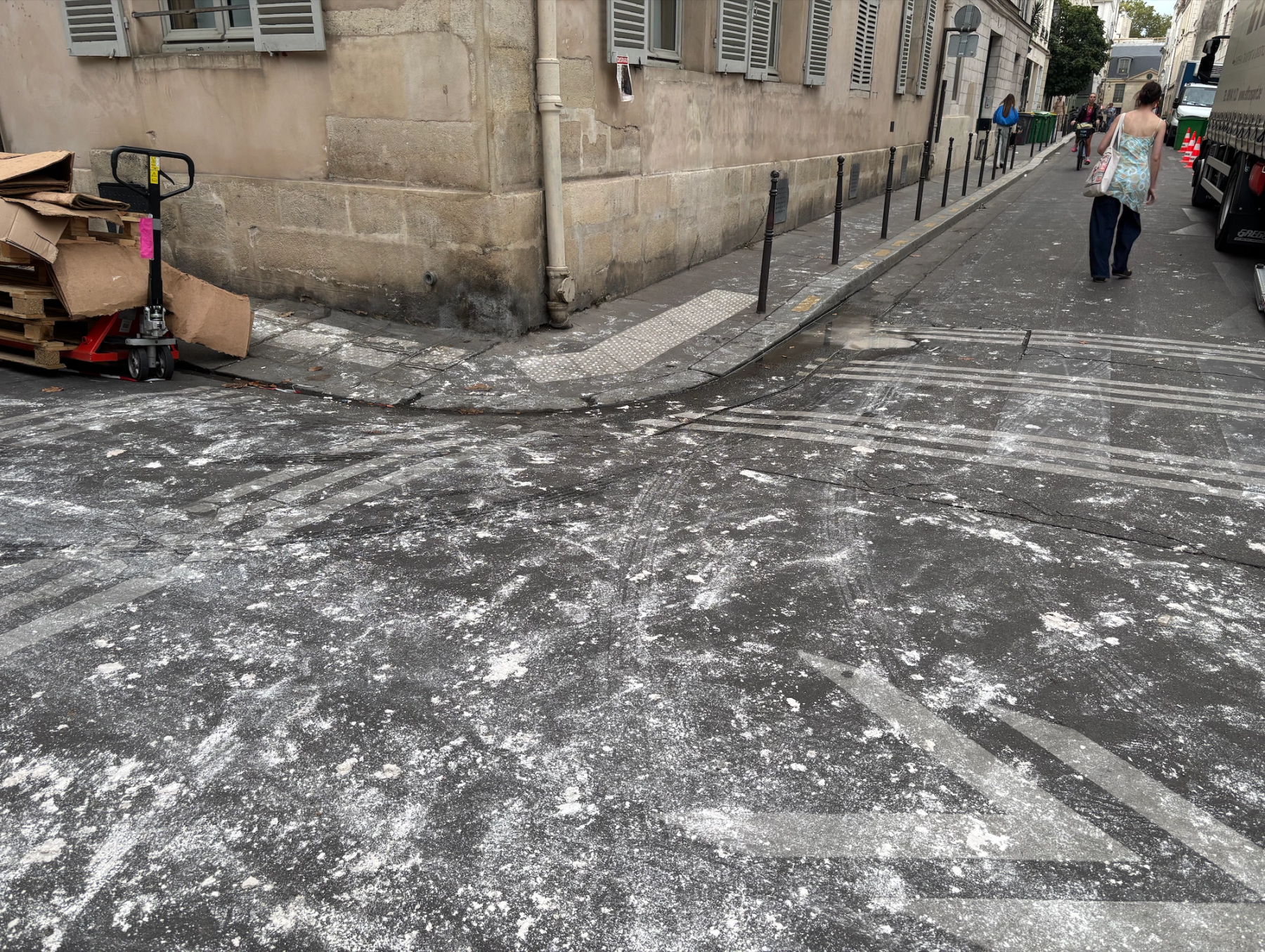
Hodakova truly left a mark with this one...